
They Bet Against Trump’s Tariffs. Now They Stand to Make Millions
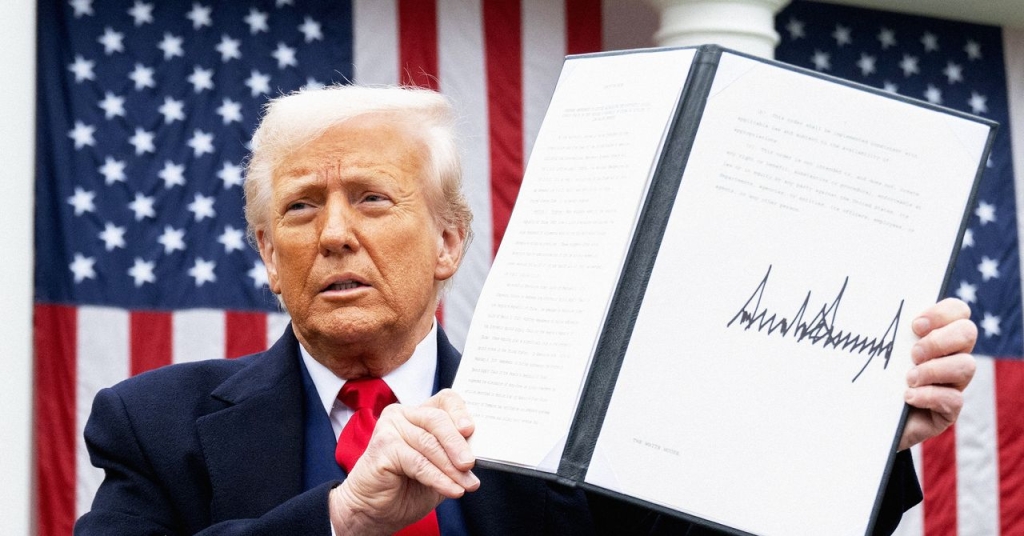
Wall Street’s High-Stakes Bet Against Trump’s Tariffs Pays Off as SCOTUS Delivers Legal Knockout
In a stunning turn of events that has Wall Street buzzing, investment firms who placed a calculated gamble against President Donald Trump’s controversial tariff policies have positioned themselves for what could become one of the most lucrative trades of the decade. The Supreme Court of the United States delivered a decisive blow to Trump’s signature economic strategy on Friday, ruling that the administration had exceeded its legal authority when implementing sweeping tariffs under the International Emergency Economic Powers Act (IEEPA).
What began as a desperate financial maneuver for struggling importers has transformed into a potential goldmine for savvy hedge funds and specialized investment firms who recognized an opportunity where others saw only economic chaos. When Trump unleashed his extensive tariff regime last April—a move that would later culminate in the infamous “Liberation Day” tariffs—a select group of Wall Street operators began positioning themselves for what they believed was an inevitable legal reckoning.
“We were like, [Trump] is capriciously applying the law,” Thomas Braziel, founder of investment firm 117 Partners, told reporters. Braziel personally invested $925,000 of his own capital into purchasing tariff refund claims, a decision that now appears extraordinarily prescient. “That was the play.”
The mechanics of this high-stakes financial chess match were both ingenious and opportunistic. Investment firms began acquiring the theoretical right to tariff refunds from importers who were desperate for immediate liquidity. These importers, facing cash flow crises due to the unexpected tariff burdens, were willing to sell their potential future refunds for pennies on the dollar—essentially trading a lottery ticket for guaranteed cash today.
Neil Seiden, president at Asset Enhancement Solutions, one of the brokerages facilitating these transactions, explained that the trade attracted only the most sophisticated players. “They didn’t want to deal with anything small,” Seiden noted, revealing that participating hedge funds typically purchased claims worth tens of millions of dollars. The barrier to entry was deliberately high, creating an exclusive club of investors who recognized the legal vulnerabilities in Trump’s tariff architecture before the broader market caught on.
The Supreme Court’s ruling on Friday didn’t just validate these investment firms’ legal analysis—it potentially multiplied their stakes many times over. Braziel anticipates an eight-fold return on his investment, a performance that would make even the most successful venture capital funds envious. However, the path to these profits remains fraught with uncertainty.
While the Court struck down the IEEPA-based tariffs as illegal, it notably did not explicitly mandate that the government issue refunds for tariffs already collected. “That’s the billion-dollar question,” Seiden admitted, capturing the collective anxiety of the investment community. The refund issue has been kicked back to lower courts, creating a complex legal labyrinth that could delay or even derail the anticipated windfall.
Lawrence Friedman, partner at law firm Barnes Richardson, suggests that the administration may resist refund obligations even if lower courts rule in favor of importers. “The President does not like district courts making nationwide injunctions,” Friedman observed, hinting at the administration’s likely strategy of prolonged legal resistance.
When directly questioned about potential tariff refunds on Friday, Trump’s response was characteristically noncommittal. “I guess it has to get litigated,” he said during a public appearance, before the White House declined to provide further clarification on the administration’s position.
This uncertainty has created a fascinating dilemma for the investment firms holding these refund claims. Should they capitalize on their current position by selling to other buyers at a substantial profit, or should they weather the potential legal storm that could yield even greater returns? Braziel acknowledges the psychological challenge of betting against Trump’s determination. “Trump is Trump is Trump, man,” he said. “I’m not sure if you want to be on the other side of him, no matter how good the legal arguments are.”
Despite the lingering uncertainties, legal experts maintain an optimistic outlook for the refund claimants. “It’s a much better day than it was yesterday,” Friedman concluded, suggesting that the legal framework strongly favors eventual refund payments. The combination of the Supreme Court’s ruling and the fundamental illegality of the tariff collection creates a compelling case for importers and their financial backers.
The story represents a remarkable convergence of legal acumen, financial engineering, and political foresight. While Trump’s tariff policy was designed to pressure foreign trading partners and protect American industries, it inadvertently created a lucrative arbitrage opportunity for Wall Street’s most sophisticated investors. These firms essentially placed a multi-billion dollar bet on the American legal system’s ability to check executive overreach—and for now, that bet appears to be paying off handsomely.
As the legal proceedings unfold in the coming months, all eyes will be on both the courts and the administration’s response. The resolution of this issue will not only determine the financial fate of the investment firms involved but could also set important precedents for the limits of executive power in trade policy. For now, though, the hedge funds who saw opportunity in chaos are celebrating what may become one of the greatest trades of the Trump era.
Wall Street, hedge funds, tariff refunds, Supreme Court, SCOTUS, Trump tariffs, IEEPA, International Emergency Economic Powers Act, Liberation Day tariffs, investment firms, 117 Partners, Asset Enhancement Solutions, legal arbitrage, Wall Street trade, tariff policy, refund claims, legal victory, financial engineering, executive power, trade war, economic policy, market opportunity, legal strategy, investment opportunity, billion-dollar question, legal wrangling, financial windfall, economic chaos, sophisticated investors, legal reckoning, cash flow crisis, immediate liquidity, lottery ticket, legal vulnerabilities, legal architecture, eight-fold return, venture capital, legal labyrinth, prolonged legal resistance, noncommittal response, psychological challenge, legal framework, executive overreach, legal proceedings, legal fate, legal precedents, trade policy, greatest trades, Trump era.
,


Leave a Reply
Want to join the discussion?Feel free to contribute!