
This Boeing Prototype Pioneered The Aerial Refueling Tech America Still Uses Today
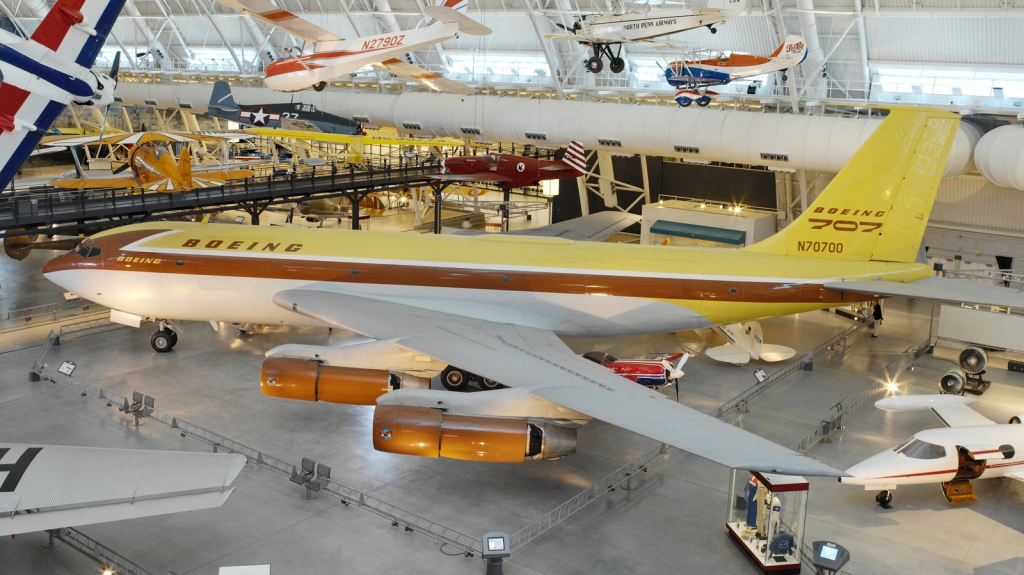
The Boeing Dash 80: The Prototype That Revolutionized Aerial Refueling and Changed Aviation Forever
In the annals of aviation history, few aircraft have played as pivotal a role in shaping modern military operations as the Boeing Dash 80. This groundbreaking prototype not only pioneered the aerial refueling technology that America still relies on today but also laid the foundation for the commercial jet age. The story of the Dash 80 is one of innovation, versatility, and enduring legacy—a tale that continues to captivate aviation enthusiasts and historians alike.
The Birth of a Revolutionary Prototype
In the early 1950s, the world was in the throes of the Cold War, and the United States was racing to maintain its technological edge. Boeing, already a titan in the aviation industry, saw an opportunity to create a versatile aircraft that could serve both military and civilian needs. The result was the Dash 80, a prototype that would go on to redefine aerial refueling and pave the way for the iconic Boeing 707.
The Dash 80, officially designated as the Model 367-80, was a marvel of engineering. Its sleek, swept-wing design and four-engine configuration were revolutionary for the time. The aircraft was powered by four Pratt & Whitney JT3C turbojet engines, each producing 10,000 pounds of thrust. This gave the Dash 80 a top speed of over 600 miles per hour and a range of more than 3,500 miles—figures that were unheard of in the early 1950s.
A Dual-Purpose Marvel
Boeing had a dual-purpose vision for the Dash 80. On one hand, it was designed to showcase the potential of jet-powered commercial aviation. On the other, it was intended to demonstrate the capabilities of aerial refueling to the U.S. military. The timing couldn’t have been better. Just a decade after World War II, the Cold War was in full swing, and the need for long-range, flexible military operations was greater than ever.
In 1954, Boeing unveiled the Dash 80 to military officials, and the reaction was overwhelmingly positive. The aircraft’s ability to refuel other planes in mid-air was a game-changer. It meant that fighter jets and bombers could extend their range and stay airborne for longer periods, a critical advantage in the era of nuclear deterrence. The military ordered 29 aircraft that year, which would eventually evolve into the KC-135 Stratotanker.
The KC-135: A Legacy of Innovation
The KC-135 Stratotanker, derived from the Dash 80, became one of the most successful military aircraft in history. Over 732 units were built, and it remains in service with the U.S. Air Force and Air National Guard to this day. The Stratotanker’s design was a testament to Boeing’s engineering prowess. It featured a widened fuselage to accommodate both refueling and transport missions, making it a versatile workhorse for the military.
One of the most fascinating aspects of the Dash 80’s story is how it bridged the gap between military and civilian aviation. The same year it was introduced to the military, Boeing also showcased the aircraft to commercial airlines. The response was equally enthusiastic. The Dash 80’s design and capabilities were the blueprint for the Boeing 707, which would go on to become one of the most iconic passenger jets in history.
A Barrel Roll for the Ages
The Dash 80’s debut was not without its dramatic moments. In 1955, test pilot Tex Johnston performed a daring barrel roll with the prototype during a demonstration for potential buyers. The maneuver, which was as dangerous as it was spectacular, was Johnston’s way of proving the aircraft’s stability and performance. It worked—the barrel roll left a lasting impression on everyone who witnessed it and helped secure orders for both the military and commercial versions of the aircraft.
The Evolution of Aerial Refueling
Aerial refueling, also known as in-flight refueling, is a complex and risky operation. It involves transferring fuel from one aircraft to another while both are in flight. The technology has come a long way since the early days of the Dash 80, but the basic principles remain the same. The KC-135, and its successor the KC-46 Pegasus, use a flying boom system, where a long, rigid tube is extended from the tanker to the receiving aircraft. This method allows for a high rate of fuel transfer and is particularly effective for large aircraft like bombers and cargo planes.
The impact of aerial refueling on military operations cannot be overstated. It has enabled the U.S. military to project power across the globe, conduct long-range missions, and maintain a constant presence in strategic locations. Without the ability to refuel in mid-air, many of the military’s most significant achievements would have been impossible.
The Dash 80’s Enduring Legacy
Today, the Dash 80 is remembered as a pioneering aircraft that pushed the boundaries of what was possible in aviation. Its influence can be seen in the design of modern airliners, military tankers, and even spacecraft. The KC-135, its direct descendant, continues to serve as the backbone of the U.S. Air Force’s aerial refueling fleet, a testament to the enduring quality of Boeing’s original design.
The aircraft is also preserved for posterity. The original Dash 80 is on display at the Smithsonian National Air and Space Museum’s Steven F. Udvar-Hazy Center in Virginia, where it stands as a symbol of innovation and progress. Visitors can marvel at its sleek lines and imagine the excitement of those early test flights, when the future of aviation was still being written.
Conclusion: A Prototype That Changed the World
The Boeing Dash 80 is more than just a piece of aviation history; it is a symbol of human ingenuity and the relentless pursuit of progress. From its role in pioneering aerial refueling to its influence on commercial aviation, the Dash 80 has left an indelible mark on the world. As we look to the future of flight, we can only wonder what new innovations will emerge to carry on its legacy.
Viral Tags:
BoeingDash80 #AerialRefueling #AviationHistory #KC135 #Boeing707 #ColdWarTech #MilitaryAviation #Innovation #FlightTech #Smithsonian
Viral Phrases:
“Revolutionized aerial refueling”
“Pioneered the technology America still uses today”
“Changed the course of aviation history”
“A prototype that bridged military and civilian aviation”
“The aircraft that started it all”
“A legacy of innovation and versatility”
“From prototype to legend”
“The Dash 80’s enduring impact”
“A barrel roll that sealed the deal”
“Engineering marvel of the 1950s”
,


Leave a Reply
Want to join the discussion?Feel free to contribute!