
This Chinese Startup Wants to Build a New Brain-Computer Interface—No Implant Required
China’s Brain-Computer Interface Revolution: Ultrasound Tech Aims to Unlock the Mind Without Surgery
China’s brain-computer interface (BCI) industry is experiencing explosive growth, with a new player emerging that could fundamentally change how we interact with our own brains. Gestala, a freshly launched company headquartered in Chengdu with additional offices in Shanghai and Hong Kong, is pioneering a revolutionary approach to brain-computer interfaces that doesn’t require the invasive surgical implants that have dominated the field thus far.
The company’s ambitious vision centers on using ultrasound technology—the same technology that allows expectant parents to see their unborn children—to both stimulate and eventually read from the human brain. This approach represents a significant departure from the current BCI landscape, where companies like Elon Musk’s Neuralink have focused on surgically implanting electrodes directly into brain tissue.
Phoenix Peng, CEO and cofounder of Gestala, explains that their technology leverages focused ultrasound waves to interact with neural tissue. Unlike traditional BCIs that detect electrical signals from neurons, Gestala’s ultrasound-based system would measure changes in the brain’s blood flow, potentially offering a less invasive pathway to understanding and influencing brain activity.
The timing of Gestala’s emergence is particularly noteworthy, as it comes on the heels of another major ultrasound BCI development. Just weeks prior, OpenAI announced a substantial investment in Merge Labs, a startup cofounded by OpenAI CEO Sam Altman. This parallel development suggests that the tech world is increasingly recognizing ultrasound’s potential in the BCI space.
Ultrasound technology has long been a staple of medical diagnostics, using high-frequency sound waves to create images of internal organs and visualize blood flow. While most commonly associated with prenatal care, researchers have been exploring ultrasound’s therapeutic potential for years. Depending on the intensity and focus of the ultrasound waves, the technology can either destroy abnormal tissue—such as blood clots or tumors—or modulate neural activity without requiring any surgical intervention.
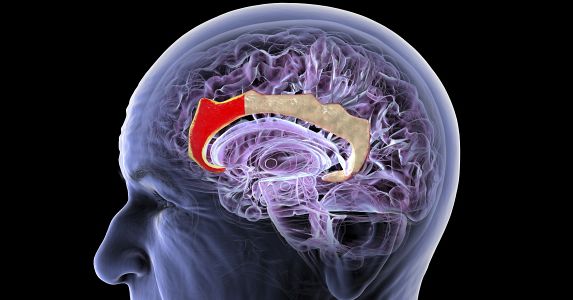
Gestala’s initial focus is pragmatic and addresses a significant medical need: chronic pain management. The company plans to develop a stationary benchtop device that would deliver focused ultrasound to the anterior cingulate cortex, a brain region crucial for processing the emotional component of pain. Pilot studies have demonstrated that stimulating this area can reduce pain intensity for up to a week, offering hope for millions suffering from chronic pain conditions.
The company is already in discussions with several hospitals in China interested in testing this technology. Peng envisions a progression from this initial stationary device to a more sophisticated wearable helmet that patients could use at home under medical supervision. This wearable approach could revolutionize chronic pain treatment by making it more accessible and convenient for patients.
Beyond chronic pain, Gestala has ambitious plans to expand into treating depression and other mental illnesses, stroke rehabilitation, Alzheimer’s disease, and sleep disorders. The company’s ultimate goal is to develop a bidirectional system that can both read brain states and deliver therapeutic stimulation to address specific neural abnormalities.
Peng emphasizes that Gestala’s mission is focused on restoring healthier neural functions rather than human enhancement. “The goal is not ‘enhancement’ of humans but healthier neural functions,” he states, positioning the company’s work within a therapeutic rather than transhumanist framework.
The company’s name, Gestala, draws inspiration from Gestalt psychology, a German school of thought emphasizing that “the whole is greater than the sum of its parts.” This philosophical foundation reflects the company’s holistic approach to understanding and treating brain disorders.
However, significant technical challenges remain. Maximilian Riesenhuber, a professor of neuroscience and codirector of the Center for Neuroengineering at Georgetown University, points out that extracting detailed information from the brain using ultrasound is considerably more ambitious than simply delivering targeted stimulation. The skull presents a formidable barrier, weakening and distorting ultrasound signals. Currently, researchers can only interpret neural activity with ultrasound by creating a “window” into the brain through surgical removal of a portion of the skull—a limitation that Gestala will need to overcome to achieve its bidirectional interface goals.
Peng brings substantial experience to this challenge, having previously served as CEO and cofounder of NeuroXess, a Shanghai-based company developing brain implants for paralyzed individuals. His background in both invasive and non-invasive BCI approaches provides valuable perspective as Gestala navigates the technical hurdles ahead.
The company’s other cofounder, Tianqiao Chen, brings both business acumen and philanthropic support to the venture. Chen founded Shanda Interactive Entertainment, a major online gaming company, and established the California-based nonprofit Tianqiao and Chrissy Chen Institute, which supports neuroscience research.
As China’s BCI industry continues to mature, Gestala represents an intriguing alternative to the surgical approaches dominating Western BCI development. If successful, the company’s ultrasound-based technology could democratize access to brain-computer interfaces by eliminating the need for invasive surgery, potentially bringing the benefits of BCI technology to millions who might otherwise be excluded due to medical risks or cost considerations.
The race to develop effective, accessible brain-computer interfaces is intensifying, with ultrasound emerging as a promising avenue that could bridge the gap between current invasive technologies and the long-term vision of seamless brain-machine communication. As Gestala and its competitors push the boundaries of what’s possible, the future of human-computer interaction may be shaped as much by sound waves as by electrical signals.
#BrainComputerInterface #UltrasoundBCI #Neurotechnology #Gestala #ChinaTech #NeuralEngineering #MedicalInnovation #FutureOfHealthcare #BrainStimulation #NonInvasiveBCI #TechRevolution #Neuroscience #MedicalDevices #PainManagement #MentalHealthTech #ChineseInnovation #UltrasoundTechnology #BrainReading #NeuralModulation #HealthcareInnovation
China’s BCI revolution, ultrasound brain technology, non-invasive brain interfaces, Gestala ultrasound, brain-computer interface without surgery, Phoenix Peng Gestala, China’s neurotech industry, ultrasound for chronic pain, brain stimulation without implants, future of brain-computer interfaces, ultrasound neural modulation, Gestala brain tech, China’s answer to Neuralink, ultrasound brain reading, next-gen neurotechnology, medical ultrasound applications, brain-computer interface breakthrough, China’s tech innovation, ultrasound neural therapy, Gestala brain-computer interface, non-surgical brain tech, ultrasound brain stimulation, China’s BCI industry growth, ultrasound for mental health, brain-computer interface revolution, ultrasound neural interface, Gestala ultrasound helmet, China’s neurotech startup, ultrasound brain treatment, future of brain-computer interaction,


Leave a Reply
Want to join the discussion?Feel free to contribute!