
This Cool New OLED Display Might Be The Future Of TVs
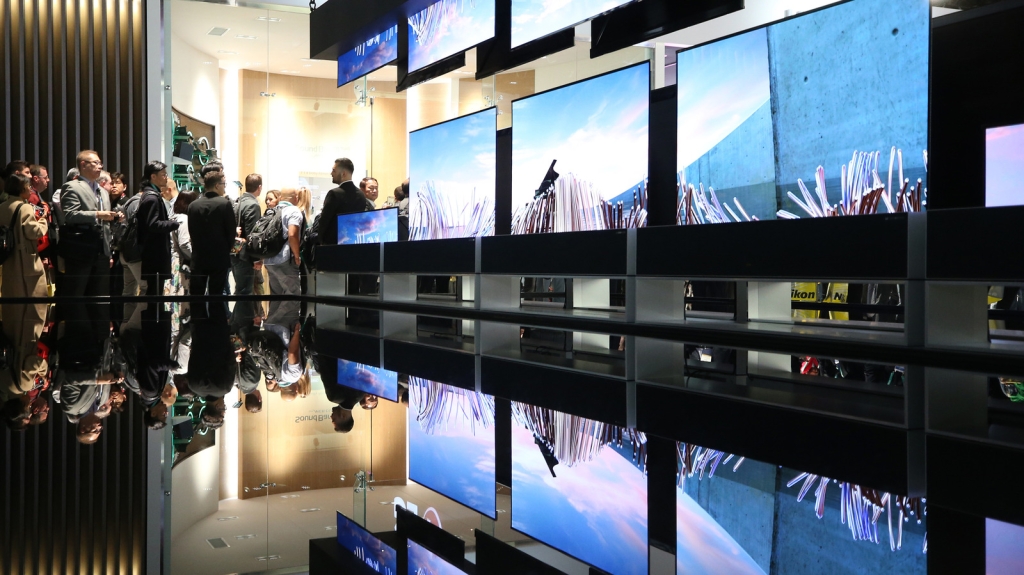
This Cool New OLED Display Might Be The Future Of TVs
OLED technology continues to revolutionize the display industry, setting itself apart from other display types with its wider viewing angles, deeper blacks, superior contrast ratios, and more vibrant color reproduction. While early OLED TVs faced significant challenges including longevity concerns and prohibitively expensive price tags, modern iterations have overcome many of these hurdles. Current OLED televisions boast dramatically improved lifespans, though burn-in risks remain one of the few persistent drawbacks for potential buyers.
However, the latest breakthrough in OLED technology could fundamentally transform how we think about displays entirely. Researchers have successfully developed an OLED panel capable of expanding up to double its original size, potentially ushering in an era of devices featuring stretchable displays that could reshape everything from televisions to wearable technology.
The Science Behind the Stretch: How Researchers Solved OLED’s Biggest Challenge
The path to creating stretchable OLED displays has been fraught with difficulties for decades, primarily centered around one critical issue: maintaining brightness when the display is stretched. Previous attempts at flexible OLED technology invariably resulted in significant brightness degradation, making them impractical for real-world applications.
The breakthrough came from an international team of researchers at Seoul National University and Drexel University, who approached the problem from a materials science perspective. Instead of relying on the traditional indium tin oxide (ITO) electrodes that have been industry standard for decades, the team turned to a revolutionary material called MXenes.
MXenes represent a class of two-dimensional inorganic compounds consisting of carbides and nitrides. These materials possess unique properties that make them exceptionally well-suited for flexible electronics. Unlike ITO electrodes, which tend to crack and fracture under mechanical stress, MXenes maintain their structural integrity even when subjected to significant stretching forces.
The researchers’ innovative approach using MXene-based electrodes enabled them to create an OLED display that can stretch up to 200% of its original dimensions—effectively doubling in size—without any measurable loss in brightness. This achievement alone would represent a significant advancement, but the team accomplished something even more impressive.
Breaking Records: The 17% External Quantum Efficiency Milestone
Beyond simply maintaining brightness during stretching, the research team achieved a remarkable 17% external quantum efficiency (EQE) with their stretchable OLED prototype. For those unfamiliar with display technology metrics, EQE measures how efficiently a display converts electrical energy into visible light output.
Higher efficiency translates directly to more usable light per unit of power consumed, which becomes critically important for battery-powered and portable devices where energy conservation is paramount. While 17% might seem modest at first glance, the researchers emphasize that this represents a record-breaking achievement for stretchable OLED technology.
To put this in perspective, traditional rigid OLED displays typically achieve EQE values ranging from 20% to 30%, so reaching 17% in a stretchable format demonstrates the remarkable progress made in balancing flexibility with performance. The team’s success suggests that further refinements could potentially narrow the efficiency gap between stretchable and rigid OLED displays even further.
From Concept to Reality: The Path Forward for Stretchable Displays
The journey of OLED technology from laboratory curiosity to mainstream consumer product offers valuable insights into the potential timeline for stretchable displays. While Kodak pioneered OLED technology in digital cameras as early as 1987, it took nearly two decades before the first OLED television reached consumer markets. This historical precedent suggests that groundbreaking display technologies often require substantial development time before becoming commercially viable.
Dr. Yury Gogotsi, a materials scientist at Drexel University and one of the lead researchers on this project, envisions a future where flexible displays become ubiquitous. “Flexible displays can be on the sleeve of your jacket. They can be rolled into a tube or folded and put in your pocket,” Gogotsi explained to IEEE Spectrum, highlighting the transformative potential of this technology.
The applications extend far beyond consumer electronics. Gogotsi specifically mentions robotics and wearable devices as prime candidates for early adoption of stretchable OLED technology. Imagine robotic systems with displays that can adapt their shape and size to different tasks, or wearable devices that can conform to the human body while maintaining full functionality.
The Television Revolution: Stretchable OLED TVs on the Horizon?
Perhaps the most exciting prospect for consumers is the potential application of this technology in home entertainment systems. Picture a television that can literally expand its screen size at the touch of a button, providing additional viewing area for movie nights, sports events, or gaming sessions. When not needed, the display could contract to a more compact form factor, saving space in your living room.
While this might sound like science fiction, the rapid pace of technological advancement suggests it could become reality sooner than many expect. As evidence of how quickly display technology is evolving, consider that Lenovo launched the ThinkBook Plus Gen 6 in 2025—a premium laptop featuring a rollable display with a starting price of $3,500. This demonstrates that manufacturers are already bringing flexible display concepts to market, albeit at premium price points.
The Road Ahead: Challenges and Timeline Considerations
Despite the breakthrough’s significance, several hurdles remain before stretchable OLED displays become commonplace in consumer devices. The research team achieved this milestone in early 2026, but translating laboratory success into mass-produced consumer products typically requires years of additional development, testing, and refinement.
Manufacturing scalability presents one of the most significant challenges. While producing a few prototype displays in a research laboratory is vastly different from establishing production lines capable of manufacturing millions of units with consistent quality and reliability. Additionally, durability testing under real-world conditions—including repeated stretching, environmental factors, and long-term use—will be essential before manufacturers can confidently incorporate this technology into their product lines.
Cost considerations also play a crucial role in determining how quickly this technology reaches consumers. Early iterations of any new display technology typically command premium prices, potentially limiting initial adoption to high-end or specialized applications. However, as manufacturing processes mature and economies of scale come into play, prices typically decrease, making the technology accessible to broader markets.
Industry Impact and Future Possibilities
The successful development of stretchable OLED displays with maintained brightness and respectable efficiency could trigger a cascade of innovations across multiple industries. Television manufacturers might race to be first to market with expandable screens, potentially revolutionizing home entertainment. Smartphone companies could explore devices with displays that adapt their size based on usage scenarios. Automotive manufacturers might incorporate stretchable displays into vehicle interiors, creating more immersive and adaptable user interfaces.
Medical device manufacturers could particularly benefit from this technology, creating wearable health monitors that conform perfectly to patients’ bodies while maintaining clear, readable displays. Similarly, industrial applications could include control panels and monitoring systems that can adapt their form factor to different operational requirements.
The breakthrough also opens doors for entirely new product categories that weren’t previously possible. Designers and engineers will now have a new canvas to work with—displays that can change their physical dimensions while maintaining full functionality and visual quality.
Looking Forward: The Next Chapter in Display Evolution
As we look toward the future of display technology, stretchable OLEDs represent a significant leap forward in our ability to integrate visual information into our physical world in more natural and adaptable ways. The combination of flexibility, maintained brightness, and respectable efficiency creates a foundation upon which numerous innovations can be built.
While it may take several years before we see stretchable OLED televisions available at local electronics retailers, the technological foundation has been laid. The question now shifts from “can we create stretchable displays?” to “how quickly can we refine and scale this technology for mass production?”
For consumers, this breakthrough offers a tantalizing glimpse into a future where our devices can adapt their form and function to our needs rather than forcing us to adapt to their limitations. Whether it’s a television that expands for movie night, a smartphone that can transform into a tablet, or wearable technology that moves with us throughout our day, stretchable OLED displays promise to make our interactions with digital information more intuitive, comfortable, and immersive than ever before.
The revolution in display technology continues, and stretchable OLEDs may well be remembered as one of the pivotal moments that redefined what’s possible in human-machine interaction.
Tags: OLED breakthrough, stretchable displays, MXenes technology, flexible electronics, next-gen TVs, display innovation, Seoul National University research, Drexel University materials science, future of television, wearable technology, robotics displays, quantum efficiency, indium tin oxide replacement, display manufacturing, consumer electronics evolution
Viral phrases: “TV that doubles in size at the touch of a button,” “The future is stretchable,” “Goodbye rigid screens, hello flexible future,” “Science fiction becomes reality,” “Watch your TV grow before your eyes,” “The display that bends without breaking,” “MXenes: The miracle material transforming displays,” “From lab to living room: The stretchable screen revolution,” “Why your next TV might literally expand,” “The $3,500 rollable laptop that paved the way,” “When your jacket becomes a screen,” “The end of one-size-fits-all displays,” “Brightness that survives 200% stretch,” “The material that cracked the stretchable code,” “Your TV is about to get way more flexible”
,


Leave a Reply
Want to join the discussion?Feel free to contribute!