
This Humanoid Is Ready to Bring You a Toothbrush
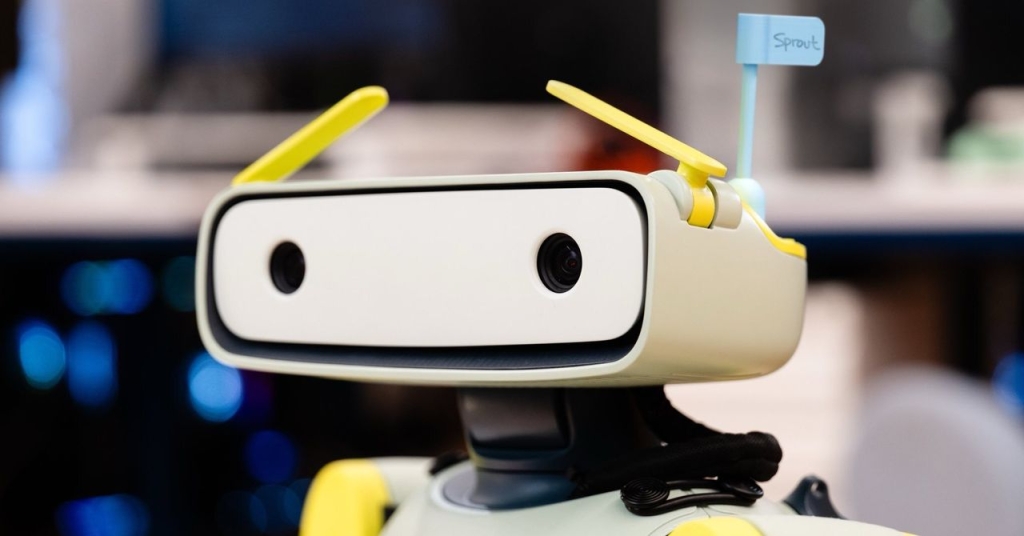
Sprout: The Adorable Humanoid Robot That Could Revolutionize Customer Service
In a groundbreaking move that’s set to shake up the robotics industry, startup Fauna has unveiled Sprout, a charming humanoid robot designed to revolutionize customer service in hotels, shops, and restaurants. This pint-sized marvel, roughly the size of a 9-year-old child, is not your typical warehouse worker robot. Instead, it’s poised to become the friendly face of hospitality and retail.
Sprout’s creator, Robert Cochran, cofounder and CEO of Fauna, explains the vision behind this innovative creation: “We said, ‘What if we could build something lightweight, engaging, and safe to be around, and capable enough to do some exciting things?'” The result is a robot that combines cutting-edge technology with an approachable design, making it perfect for interacting with customers in various service industries.
Priced at $50,000, Sprout is positioned as a relatively affordable option in the humanoid robot market. This competitive pricing strategy could potentially open up new markets for humanoid robots beyond traditional industrial applications. Cochran reveals that Fauna is already in talks with hotels about using Sprout as a robotic butler, capable of delivering toothbrushes and other amenities to guests in need.
The launch of Sprout comes at a time when the humanoid robot industry in the United States is experiencing unprecedented growth. More than a dozen US companies are now working on developing their own versions of these versatile machines. Industry giants like Boston Dynamics, Tesla, and Agility Robotics are all vying for a piece of the humanoid robot pie, alongside innovative startups like Figure AI and 1X.
Boston Dynamics, known for its impressive array of legged robots, recently signed a deal to incorporate Google’s AI technology into its robots, signaling a new era of intelligent automation. Meanwhile, Tesla continues to develop its Optimus system, aiming to create a general-purpose humanoid robot for various applications.
The competition isn’t limited to US companies, either. Unitree, a Chinese robot manufacturer, has found success in selling inexpensive humanoids for entertainment and research purposes. Some of their models are priced under $20,000, making them an attractive option for budget-conscious buyers. However, when fully equipped with sensors and computers, these robots cost roughly the same as Sprout, highlighting Fauna’s competitive pricing strategy.
Fauna’s first customers include industry heavyweights like Disney, which already incorporates robots into some of its theme park attractions, and Boston Dynamics itself. This diverse clientele underscores the versatility and potential of Sprout across various sectors.
Sprout’s design philosophy sets it apart from its competitors. While most humanoid robots are touted as factory workers, with some already being tested by automakers, Cochran believes that the first market for robots might be in the entertainment and service industries. This shift in focus could potentially accelerate the adoption of humanoid robots in everyday settings.
One of Sprout’s key features is its ease of programming. Cochran emphasizes that the robot is designed to be user-friendly, making it particularly useful in research settings. Sprout comes equipped with software libraries that allow it to scan its environment, walk autonomously, access language models, and perform various other tasks. Additionally, the robot can be teleoperated right out of the box, which can be invaluable for robot training purposes.
Scientists at New York University are already putting Sprout to work, using it to research new techniques for robotic manipulation and human-to-robot interaction. This early adoption by academic institutions could lead to further advancements in the field of robotics and artificial intelligence.
Fauna has also developed proprietary technology to help Sprout regain its balance if it stumbles, addressing one of the key challenges in humanoid robot design. This feature ensures that Sprout can navigate its environment safely and effectively, even in unpredictable situations.
Sprout’s user interface is another area where Fauna has focused its efforts. Cochran demonstrated a couple of interfaces for the robot, including an app that shows the robot’s visual perspective and a coding interface that can be used to program the system in real time. These intuitive interfaces make it easier for users to interact with and control Sprout, potentially lowering the barrier to entry for businesses looking to adopt this technology.
Unlike most humanoids, Sprout is designed with human interaction in mind. This focus on social engagement is evident in its mechanical eyebrows, which can express emotions like interest, surprise, or confusion. This feature could make interactions with Sprout feel more natural and engaging for customers, potentially enhancing the overall service experience.
As the humanoid robot industry continues to evolve, Sprout represents a significant step towards integrating these advanced machines into our daily lives. Its focus on customer service and hospitality could pave the way for a new era of robotic assistance in various industries.
The success of Sprout and similar robots could have far-reaching implications for the future of work and human-robot interaction. As these machines become more prevalent in service industries, they may complement human workers rather than replace them, handling routine tasks and allowing human employees to focus on more complex or emotionally demanding aspects of their jobs.
However, the widespread adoption of humanoid robots in customer-facing roles also raises important questions about privacy, data security, and the nature of human interaction. As companies like Fauna continue to push the boundaries of what’s possible with robotics, it will be crucial to address these concerns and ensure that the integration of robots into our daily lives is done in a responsible and ethical manner.
In conclusion, Sprout represents an exciting development in the field of humanoid robotics. Its combination of affordability, ease of use, and focus on human interaction could make it a game-changer in the customer service industry. As Fauna and other companies continue to innovate in this space, we may soon find ourselves interacting with friendly robot assistants in hotels, shops, and restaurants on a regular basis.
Tags: Sprout, humanoid robot, customer service, Fauna, robotics, AI, automation, hospitality industry, retail, Disney, Boston Dynamics, Tesla, Unitree, New York University, human-robot interaction, teleoperation, balance technology, mechanical eyebrows
Viral Sentences:
- “Meet Sprout: The adorable robot that could replace your hotel concierge!”
- “Is this the cutest humanoid robot ever made?”
- “Sprout: Bringing a personal touch to robotic customer service”
- “From factories to hotels: The surprising new frontier for humanoid robots”
- “Disney and Boston Dynamics are already fans of this $50,000 robot”
- “Sprout’s eyebrows might be the key to human-robot emotional connection”
- “The future of hospitality is here, and it’s only 4 feet tall!”
- “NYU scientists are using Sprout to push the boundaries of robotics”
- “Forget R2-D2, Sprout is the new face of friendly AI”
- “This robot can dance, deliver toothbrushes, and maybe change the service industry forever”
,
Leave a Reply
Want to join the discussion?Feel free to contribute!