
This startup claims it can stop lightning and prevent catastrophic wildfires
Skyward’s Bold Plan to Tame Lightning: AI-Powered Cloud Seeding Could Slash Wildfire Risks
In a groundbreaking move to combat the escalating threat of wildfires, a cutting-edge technology firm called Skyward is deploying artificial intelligence and cloud-seeding techniques to suppress lightning strikes in high-risk areas. The company’s ambitious initiative, which has already drawn attention from wildfire agencies in Canada, could revolutionize how we approach fire prevention in an era of climate-driven extremes.
The Science Behind the Storm
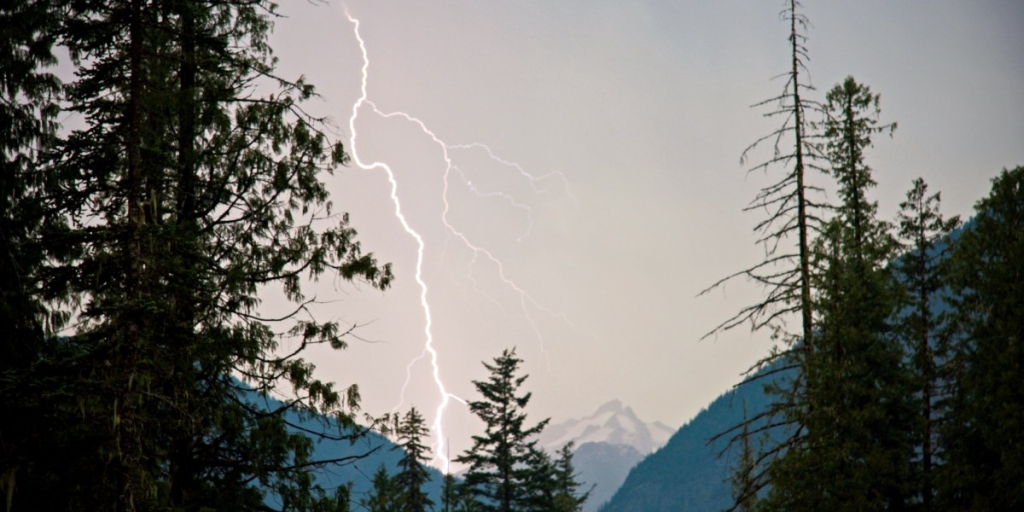
Lightning, one of nature’s most awe-inspiring phenomena, is also one of its most destructive. When ice crystals and graupel (tiny ice pellets) collide within clouds, they generate static electricity. This buildup of positive and negative charges eventually discharges as a lightning bolt, often igniting wildfires in vulnerable regions. Skyward’s technology aims to disrupt this process by releasing particles into clouds to prevent the formation of lightning.
According to Skyward’s diagrams, planes and drones will be used to disperse these particles, effectively reducing the likelihood of cloud-to-ground lightning strikes. The company emphasizes that this approach is not about eliminating lightning entirely but rather targeting specific storm events with elevated wildfire risk. As Skyward’s spokesperson explained, such storms account for less than 0.1% of total lightning activity in any given area, making this a highly targeted intervention.
AI at the Helm
Skyward’s use of artificial intelligence is central to its strategy. The company’s AI systems are designed to forecast lightning storms, prioritize treatment areas, target specific storm cells, and optimize flight paths for maximum efficiency. This level of precision ensures that resources are deployed where they’re needed most, minimizing waste and maximizing impact.
Proven Results in Alberta
In August 2024, Skyward partnered with Alberta Wildfire to test its technology in real-world conditions. The results were nothing short of remarkable: a 60-100% reduction in lightning strikes compared to control cells—storm systems that were not seeded. This success has paved the way for larger-scale trials in the summer of 2025, with wildfire agencies in British Columbia and Alberta set to collaborate on “landscape-level solutions” using more advanced aircraft, sensors, and forecasting tools.
Cautious Optimism from Authorities
The British Columbia Wildfire Service has acknowledged Skyward’s efforts, noting that preliminary trials were conducted to better understand the technology’s applicability in the province. While the agency remains cautious, it has expressed willingness to engage with the project team should the technology advance further. “We would use every tool available to us to respond to wildfire in B.C.,” the agency stated.
However, both the British Columbia and Alberta agencies have been tight-lipped about the specifics of the trials, declining to provide details on materials used, test locations, or public disclosures. This lack of transparency has raised questions among environmental advocates and the public alike.
The Bigger Picture
As climate change intensifies, the frequency and severity of wildfires are on the rise. Lightning strikes, which account for a significant portion of wildfire ignitions, are becoming more common in some regions due to shifting weather patterns. Skyward’s technology offers a promising solution, but it also raises important ethical and environmental questions. For instance, what are the long-term effects of cloud seeding on ecosystems? Could this technology be misused or lead to unintended consequences?
A Step Toward the Future
Skyward’s initiative represents a bold step toward harnessing technology to address one of the most pressing challenges of our time. By combining AI, cloud seeding, and strategic partnerships with wildfire agencies, the company is paving the way for a future where wildfires are less frequent and less devastating. However, as with any emerging technology, careful oversight and transparent communication will be essential to ensure its success and public trust.
As the summer of 2025 approaches, all eyes will be on Skyward and its partners as they prepare to scale up their efforts. If successful, this technology could mark a turning point in the fight against wildfires, offering hope to communities and ecosystems on the front lines of climate change.
Tags:
Skyward, AI, cloud seeding, lightning suppression, wildfire prevention, Alberta Wildfire, British Columbia Wildfire Service, climate change, technology, innovation, environmental science, electrostatic discharge, graupel, ice crystals, storm cells, field trials, MIT Technology Review.
Viral Phrases:
“Taming the storm,” “AI-powered lightning suppression,” “60-100% reduction in lightning,” “Cloud seeding revolution,” “Wildfire prevention 2.0,” “The future of fire safety,” “Climate tech breakthrough,” “Skyward’s bold experiment,” “Lightning under control,” “Eco-friendly wildfire solutions.”
,


Leave a Reply
Want to join the discussion?Feel free to contribute!