
This Startup Thinks It Can Make Rocket Fuel From Water. Stop Laughing
General Galactic Aims to Revolutionize Space Travel by Turning Water into Rocket Fuel
In a bold move that could redefine the future of space exploration, a young and ambitious startup, General Galactic, is setting its sights on a challenge that has long been relegated to the realm of science fiction: turning water into rocket fuel. This innovative approach, if successful, could not only solve the “yada yada” problem that has plagued long-term space programs but also pave the way for sustainable space travel and even the establishment of gas stations on Mars.
The concept of using water as a propellant has been a recurring theme in space exploration discussions since the Apollo era. The idea is simple yet revolutionary: if we can find ice on the Moon or Mars, we can break it down into hydrogen and oxygen, and use these elements as fuel to power spacecraft deeper into the solar system. This vision has been championed by figures like former NASA administrator Bill Nelson and SpaceX’s Elon Musk. However, despite the theoretical promise, no one has ever successfully demonstrated the practical application of this concept—until now.
General Galactic, led by a pair of twentysomething engineers, is poised to change that. This fall, the company plans to launch an 1,100-pound satellite into orbit, using water as its sole propellant. If successful, this mission could mark a significant milestone in space exploration, potentially solving the “yada yada” problem and making US satellites more maneuverable in an era of increasing space conflict.
“Everybody wants to go build a moon base or a Mars base or whatever. Who’s going to pay for it? How does it actually work?” asks Halen Mattison, CEO of General Galactic. “Our vision is to go build a gas station on Mars,” he adds, “but also eventually build out the refueling network” in between.
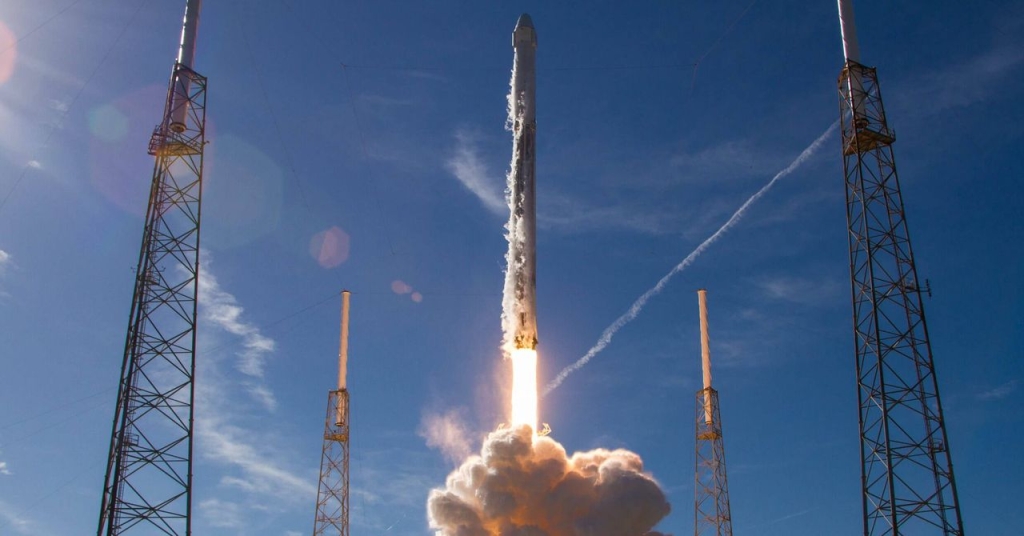
The company’s long-term plan is nothing short of ambitious. For starters, Mattison, a former SpaceX engineer, and his CTO, Luke Neise, a veteran of Varda Space, have secured a spot on a Falcon 9 rocket launch, with a scheduled liftoff in October or later this fall.
To achieve their goal, General Galactic is leveraging two main types of propulsion systems. The first is chemical propulsion, which involves burning a fuel like liquid methane with an oxidizer to produce thrust. This method is commonly used in rockets due to its high thrust output, despite being less efficient. The second is electric propulsion, which uses electricity to ionize a gas like xenon and shoot it out of the spacecraft. While this method provides low thrust, it is highly efficient and can last for extended periods, making it ideal for maintaining satellite orbits or powering deep-space probes like NASA’s Dawn mission.
Water, however, is not an ideal propellant for either system. It lacks the high energy density of liquid methane and the efficiency of xenon. Yet, General Galactic believes that water’s unique properties—such as its stability and ease of storage—make it a viable option for both chemical and electric propulsion.
For the chemical propulsion system, General Galactic plans to use electrolysis to split water into hydrogen and oxygen, then burn the hydrogen with oxygen as the oxidizer. For the electric propulsion system, known as a “Hall thruster,” the company will split the water and apply electrical energy to turn the oxygen into a plasma. This plasma will then be shaped and expelled using a magnetic field, providing the necessary thrust.
If General Galactic’s Trinity mission succeeds, it could open up new possibilities for space exploration. The ability to use water as a propellant could make space travel more sustainable and cost-effective, potentially enabling the establishment of refueling stations on the Moon, Mars, and beyond. This could be a game-changer for long-term space missions, reducing the need to carry large amounts of fuel from Earth and making it easier to explore the far reaches of our solar system.
As the world watches with bated breath, General Galactic’s mission represents a significant step forward in the quest to turn science fiction into science fact. If successful, it could usher in a new era of space exploration, where water—the most abundant resource in the universe—becomes the key to unlocking the mysteries of the cosmos.
Tags and Viral Phrases:
- General Galactic
- Water to rocket fuel
- Space exploration revolution
- Moon base
- Mars base
- Gas station on Mars
- Sustainable space travel
- Chemical propulsion
- Electric propulsion
- Hall thruster
- Electrolysis
- Hydrogen and oxygen
- Plasma propulsion
- Space conflict
- Falcon 9 rocket launch
- SpaceX engineers
- Varda Space veterans
- Trinity mission
- Science fiction to science fact
- Cosmic refueling stations
,


Leave a Reply
Want to join the discussion?Feel free to contribute!