
This Tiny Comet Pulled Off a First-of-Its-Kind Spin Flip
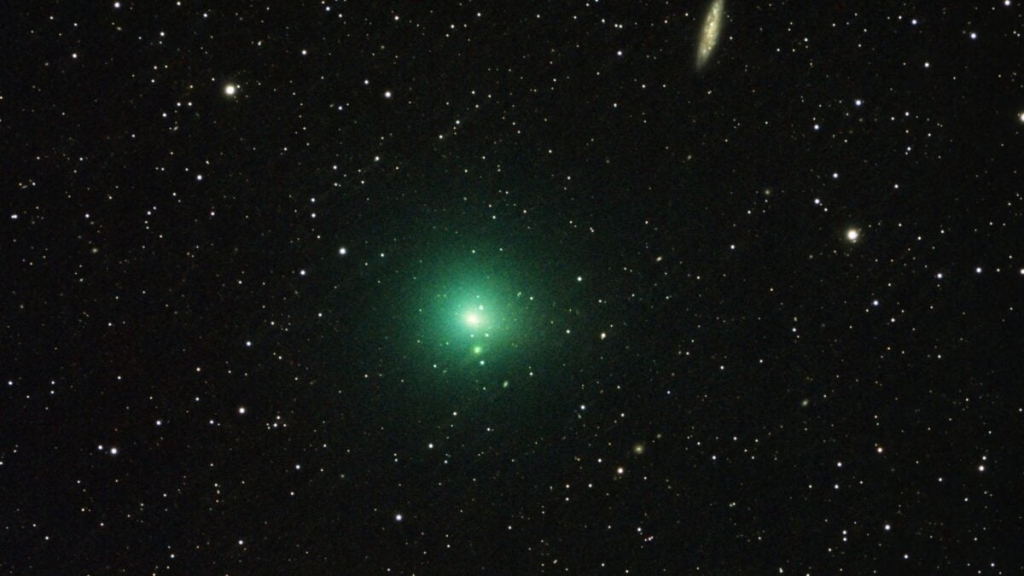
The Cosmic Mystery of Comet 41P: How a Tiny Space Rock Defied the Laws of Spin
In the vast, silent expanse of our solar system, a peculiar little comet has been quietly rewriting the textbooks. Comet 41P/Tuttle-Giacobini-Kresák—try saying that three times fast—has stunned astronomers with behavior so bizarre, it’s like watching a cosmic figure skater suddenly decide to spin in the opposite direction mid-routine.
This isn’t just any space rock. This is a comet with a century-long identity crisis, a flare-throwing rebel of the solar system, and now, the first confirmed case of a comet that literally flipped its spin like a celestial pancake.
The Comet That Took a Century to Be Recognized
The story of 41P reads like a detective novel written in the stars. First spotted in 1858 by Horace Tuttle, it vanished from view, only to be rediscovered by Michel Giacobini in 1907 and Ľubor Kresák in 1951. It took nearly 100 years for astronomers to confirm these sightings were all the same comet—a cosmic case of mistaken identity that would make even Sherlock Holmes scratch his head.
But the real drama began on April Fools’ Day 2017, when 41P made its closest approach to Earth in over a century. Astronomers weren’t laughing when they noticed something extraordinary: this tiny comet’s spin was slowing down at an unprecedented rate.
The Most Dramatic Spin Change Ever Recorded
When Comet 41P zipped past Earth in 2017, telescopes around the world were trained on it like paparazzi at a celebrity wedding. What they witnessed was nothing short of spectacular. The comet’s rotation, which had been completing a full spin every 20 hours, had slowed to a crawl—taking a leisurely 46 hours to complete a single rotation by May.
To put this in perspective, the previous record-holder for spin slowdown was Comet Hartley 2, which took 90 days to slow from 17 to 19 hours. 41P accomplished a tenfold greater change in just 60 days. That’s like going from spinning like a top to barely wobbling in the span of two months.
“The previous record for a comet spindown went to 103P/Hartley 2, which slowed its rotation from 17 to 19 hours over 90 days,” explained Dennis Bodewits, an associate research scientist at the University of Maryland. “By contrast, 41P spun down by more than 10 times as much in just 60 days, so both the extent and the rate of this change is something we’ve never seen before.”
The Plot Thickens: A Complete Spin Reversal
Just when astronomers thought they’d seen it all, David Jewitt from UCLA dropped a bombshell. His analysis of Hubble Space Telescope images taken in December 2017 revealed something even more shocking: 41P hadn’t just slowed down—it had completely reversed its spin direction.
“We’ve seen changes in spin,” Jewitt told the New York Times, “but not this big and so quick.”
Imagine spinning a basketball on your finger, then suddenly it starts rotating in the opposite direction without you touching it. That’s essentially what happened to 41P, and astronomers are still trying to wrap their heads around how such a dramatic reversal could occur so rapidly.
The Science Behind the Spin Flip
The culprit behind this cosmic gymnastics is something called “outgassing torque.” When comets approach the Sun, solar heating causes volatile ices within their nucleus to sublimate—transitioning directly from solid to gas. This process releases jets of gas that act like tiny rocket engines, pushing the comet in different directions.
But here’s the kicker: these jets don’t fire evenly across the comet’s surface. Some areas vent more gas than others, creating an imbalance that generates torque—the rotational equivalent of force. For most comets, this effect is subtle. For 41P, it was like someone had grabbed the cosmic joystick and yanked it hard in the opposite direction.
A Comet So Small, It Shouldn’t Exist
Jewitt’s analysis revealed another surprise: 41P’s nucleus is tiny. We’re talking about a solid core with a radius of just 0.3 miles (0.5 kilometers). To visualize this, imagine a space rock roughly the size of Manhattan’s Central Park—but instead of being a static monument, it’s a dynamic, spinning, gas-spewing celestial object hurtling through space.
This diminutive size is actually part of what makes 41P so fascinating. Sub-kilometer comets like 41P can experience dramatic spin changes from outgassing that larger comets simply don’t feel as intensely. It’s the difference between a small boat being tossed by waves versus an ocean liner barely noticing the same conditions.
Solving a Cosmic Mystery
Here’s where things get really interesting. Astronomers have long noticed a puzzling discrepancy: there are far fewer small comets (under 0.6 miles wide) in our solar system than their models predict should exist. It’s like expecting to find dozens of mice in a field but only finding a handful.
Jewitt believes 41P might hold the key to this mystery. His research suggests that these tiny comets can spin so fast due to outgassing that they literally tear themselves apart. It’s cosmic suicide by rotation—the comet spins faster and faster until centrifugal force overcomes gravity, and the whole thing flies apart like a poorly constructed merry-go-round.
“The evidence is that comets just don’t live that long,” Jewitt explained. “There’s some other process that destroys the comets, and I think it’s rotation.”
The Self-Destruct Sequence
Imagine being on a comet that’s spinning faster and faster. At first, it might just feel like a carnival ride. But as the rotation increases, things get dicey. The loose material on the surface—dust, smaller rocks, ice chunks—starts sliding toward the equator. Eventually, if the spin gets fast enough, these materials overcome the comet’s weak gravity and are flung into space.
In extreme cases, the entire comet could disintegrate. It’s like spinning a raw egg so fast that it explodes, except in this case, we’re talking about a mountain-sized chunk of ice and rock hurtling through space at thousands of miles per hour.
What’s Next for 41P?
The cosmic drama isn’t over yet. Comet 41P will make another close approach to the Sun in 2028, and astronomers around the world are already planning their observation campaigns. Will it have flipped its spin again? Will it have broken apart completely? Or will it surprise us with some new behavior we haven’t even imagined?
“Every time we think we understand comets, one comes along and proves us wrong,” said one planetary scientist who preferred to remain anonymous. “That’s what makes this field so exciting. The universe keeps throwing curveballs, and we keep trying to hit them out of the park.”
Why This Matters
You might be wondering why a spinning comet thousands of miles away should matter to anyone on Earth. The answer lies in what these cosmic events tell us about the fundamental processes that shaped our solar system.
Comets are essentially frozen time capsules from the early solar system, preserving materials and conditions from over 4.5 billion years ago. By studying how they evolve—how they spin, how they break apart, how they interact with solar radiation—we gain insights into the forces that shaped everything from the planets to the asteroids to, ultimately, Earth itself.
Moreover, understanding comet behavior is crucial for planetary defense. If a comet were ever on a collision course with Earth, we’d need to understand its physical properties—including how it might break apart or change trajectory—to mount an effective defense.
The Bigger Picture
41P’s dramatic spin reversal isn’t just a curiosity; it’s a window into the dynamic, ever-changing nature of our solar system. It reminds us that space isn’t a static backdrop but a vibrant, active environment where even small objects can exhibit complex, surprising behaviors.
As we continue to explore our cosmic neighborhood with increasingly sophisticated telescopes and spacecraft, we’re likely to encounter more phenomena that challenge our understanding. Each discovery like 41P brings us closer to comprehending the intricate dance of gravity, radiation, and material that has been playing out for billions of years.
The Future of Comet Science
The study of comets is entering a golden age. With missions like ESA’s Rosetta having already landed on a comet, and future missions planned to explore more of these icy wanderers, we’re on the cusp of understanding these objects in unprecedented detail.
41P has shown us that even well-studied phenomena like comet rotation can still surprise us. As we continue to observe this remarkable object and others like it, we may uncover more secrets about how our solar system formed, how it evolved, and perhaps even clues about how life emerged on our planet.
In the meantime, Comet 41P continues its journey through the solar system, a tiny but mighty reminder that in space, as in life, the most interesting stories often come from the most unexpected places.
Tags: #Comet41P #SpaceScience #Astronomy #HubbleTelescope #CosmicMysteries #SolarSystem #PlanetaryScience #SpaceDiscovery #AstronomicalPhenomena #SpaceResearch #CometBehavior #Astrophysics #SpaceExploration #CosmicEvents #ScientificDiscovery #SpaceNews #AstronomyBreakthrough #CometResearch #SpacePhenomena #CosmicDiscovery
Viral Sentences:
- “Comet 41P just flipped the script on how we understand space rocks!”
- “This tiny comet just proved that size doesn’t matter when it comes to cosmic drama.”
- “Astronomers just witnessed the most dramatic spin reversal in comet history!”
- “Move over figure skaters, this comet’s spin moves are out of this world!”
- “The universe just served up another reminder that we’re still learning the cosmic playbook.”
- “Comet 41P: proving that even space rocks can have identity crises.”
- “This comet’s spin reversal is the astronomical equivalent of doing a 180 on your life choices.”
- “When your comet starts spinning backwards, you know you’re in for an interesting day.”
- “41P just joined the exclusive club of ‘comets that make astronomers question everything.'”
- “The solar system’s tiniest drama queen just stole the cosmic spotlight.”
,


Leave a Reply
Want to join the discussion?Feel free to contribute!