
Thousands of Penguins Are Being Killed and the Reason Is Complicated
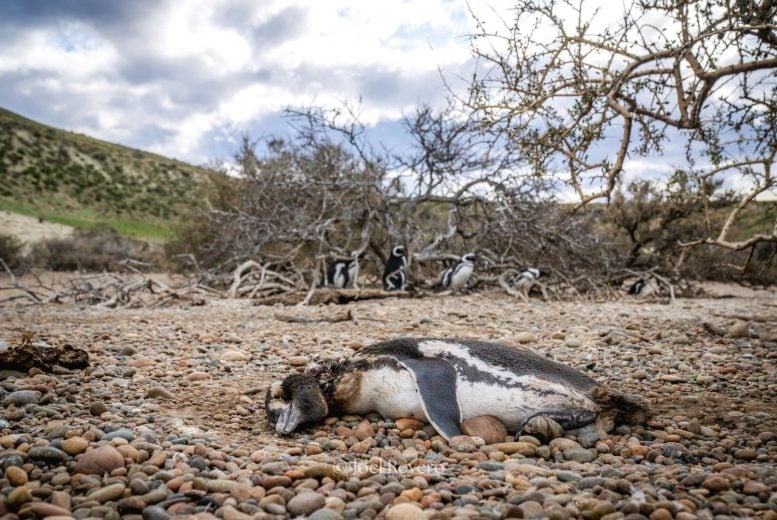
Thousands of Penguins Are Being Killed—and the Reason Is More Complex Than You Think
Along the windswept shores of Argentina’s Patagonian coast, an ecological drama is unfolding that conservationists describe as both fascinating and deeply concerning. Thousands of Magellanic penguins are dying each year, but the cause isn’t as straightforward as it might appear. While the return of pumas to parts of their historic range has certainly led to increased predation on penguin colonies, scientists warn that the true extinction risk facing these charismatic birds may be driven by something far more insidious: climate change.
For decades, pumas were absent from much of coastal Patagonia due to hunting and habitat fragmentation. Their recent return, while ecologically significant, has created an unexpected conflict zone where these apex predators are preying on adult penguins and their chicks. A comprehensive new study published in the journal Biological Conservation meticulously documents this phenomenon, revealing that puma predation is responsible for hundreds of penguin deaths annually at some colonies.
The research team, led by Dr. Alejandro Valenzuela from the National University of Comahue, spent years monitoring penguin colonies, tracking puma movements with GPS collars, and analyzing predation patterns. Their findings paint a complex picture: while puma predation is certainly a factor in penguin mortality, it’s not the primary driver of population decline.
“Initially, we thought pumas were the main threat,” explains Dr. Valenzuela. “But as we dug deeper into the data, it became clear that climate-driven breeding failures are the real extinction risk. The puma predation is more of a localized impact, whereas climate change affects the entire population across their breeding range.”
The study reveals that Magellanic penguins are experiencing increasingly frequent breeding failures due to extreme weather events linked to climate change. Intense storms are flooding nesting burrows, killing chicks, and washing away eggs. Rising temperatures are causing heat stress in adult penguins, reducing their ability to forage effectively and care for their young. Changes in ocean currents and temperature are also disrupting the availability of their primary food sources—small fish and squid.
What makes this situation particularly complex is the interaction between these different stressors. Pumas tend to prey more heavily on penguin colonies that are already weakened by environmental factors. A colony experiencing poor breeding success due to climate conditions becomes more vulnerable to predation, creating a compounding effect that accelerates population decline.
The researchers used sophisticated population viability analysis models to project future penguin numbers under different scenarios. Even in models that assumed puma populations remained stable or declined, the penguin populations continued to trend downward primarily due to climate-related breeding failures. Under worst-case climate scenarios, some colonies could face local extinction within the next few decades.
This research highlights a broader pattern in conservation biology: the challenges of managing ecosystems in an era of rapid environmental change. The return of pumas to Patagonia represents a conservation success story in many ways—it shows that ecosystems can recover when given the chance. However, that recovery is now playing out against the backdrop of global climate disruption, creating new and unexpected challenges.
The study’s authors emphasize that effective conservation strategies must address multiple threats simultaneously. Simply focusing on puma management without tackling climate change would be insufficient. Similarly, climate adaptation measures alone wouldn’t solve the predation problem. The solution requires an integrated approach that considers the entire ecosystem and the various pressures acting upon it.
Local conservation groups are already implementing some of these strategies. They’re working to create climate-resilient nesting sites, restore coastal vegetation that provides shade and protection, and develop early warning systems for extreme weather events. Some are also exploring ways to manage the interface between pumas and penguins, such as creating buffer zones or using non-lethal deterrents.
The Magellanic penguin case also raises important questions about how we prioritize conservation efforts. Should resources be focused on protecting individual species, or should we invest in broader ecosystem resilience? How do we balance the needs of recovering predator populations with those of their prey species? These aren’t easy questions, but they’re becoming increasingly relevant as climate change reshapes ecological relationships worldwide.
For the penguins of Patagonia, the path forward remains uncertain. While the immediate threat of puma predation can be managed through targeted interventions, the long-term impacts of climate change present a more daunting challenge. The fate of these birds may ultimately depend on global efforts to reduce greenhouse gas emissions and limit warming—a reminder that local conservation success stories can still be undermined by planetary-scale environmental changes.
As Dr. Valenzuela puts it: “We’re seeing nature’s complexity in action. The return of pumas is a sign that our conservation efforts can work, but climate change is showing us the limits of what we can achieve without addressing the bigger picture. These penguins are telling us a story about interconnected threats, and we need to listen.”
The Magellanic penguins of Patagonia have become unlikely messengers in the global conversation about climate change and conservation. Their struggle illustrates how environmental challenges rarely come in isolation—they interact, compound, and create cascading effects that can push species toward extinction even when individual threats might be manageable. As the world continues to warm, understanding these complex interactions will be crucial for protecting biodiversity in the decades to come.
MagellanicPenguins #ClimateChange #Patagonia #WildlifeConservation #PumaPredation #EcosystemRecovery #ClimateCrisis #BiodiversityLoss #MarineLife #ConservationScience #ClimateResilience #WildlifeProtection #EnvironmentalThreats #SpeciesExtinction #OceanConservation #ClimateAdaptation #PredatorPreyDynamics #EcologicalResearch #ClimateImpact #WildlifePhotography
Thousands of penguins are dying in Patagonia, and the reason is more complicated than you think
Pumas are back in Patagonia, penguins are paying a price—but climate-driven breeding failures may be the real extinction risk
Magellanic penguins face multiple threats: puma predation and climate change
Climate change is the real extinction risk for Patagonian penguins, study finds
Puma comeback in Patagonia creates unexpected conflict with penguin colonies
Research reveals complex web of threats facing Magellanic penguins
Climate-driven breeding failures pose greater risk than puma predation
Patagonian penguins caught between predator recovery and climate crisis
Study shows how climate change compounds wildlife conservation challenges
Magellanic penguin populations declining due to extreme weather events
Pumas return to historic range, creating new conservation dilemmas
Climate change disrupts penguin breeding success in Argentine Patagonia
Wildlife conservation faces new challenges as ecosystems change
Magellanic penguins serve as indicator species for climate impacts
Research highlights need for integrated conservation strategies
Patagonian ecosystem recovery complicated by global climate disruption
Multiple stressors threatening penguin colonies along Argentine coast
Climate resilience becomes key focus for penguin conservation efforts
Study documents complex interactions between predators and climate
Magellanic penguins illustrate interconnected nature of environmental threats
,

Leave a Reply
Want to join the discussion?Feel free to contribute!