
TikTok’s First US-Exclusive Feature Is a Local Feed That Wants Your Location Data
TikTok’s New Local Feed: A Double-Edged Sword for U.S. Users
In a bold move that’s sending shockwaves through the social media landscape, TikTok has unveiled its latest feature: the Local Feed. This new addition, exclusive to U.S. users, promises to revolutionize how Americans discover and engage with content in their immediate vicinity. But as with any innovation that involves location tracking, it’s not without its controversies and concerns.
The Birth of a New Feed
Just a month after the U.S. arm of TikTok came under new ownership, the app has surprised users with this unexpected feature. The Local Feed, which bears similarities to the “Nearby Feed” introduced in the U.K. and Europe in December, is designed to help users discover content, businesses, and services specific to their location.
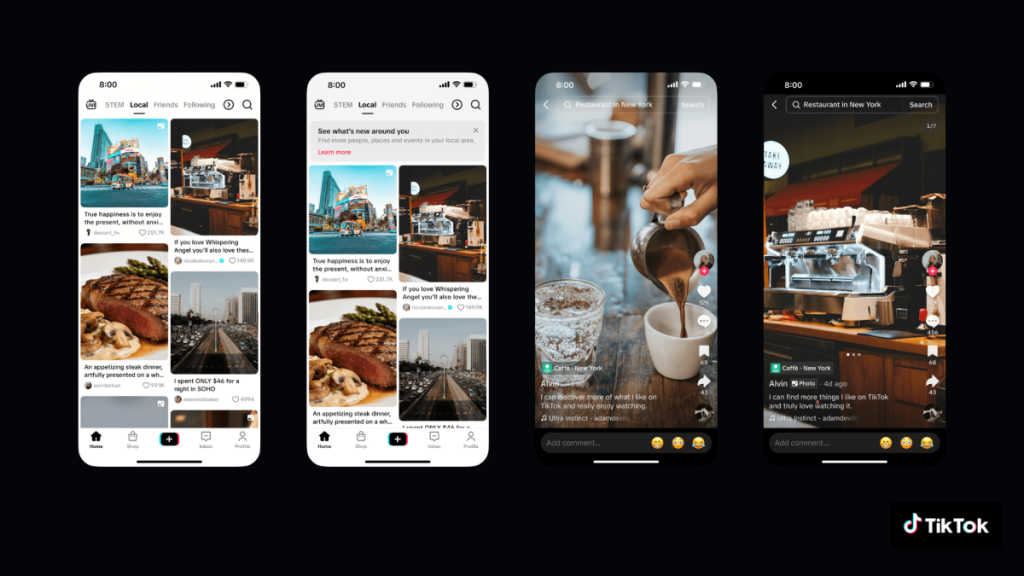
What makes this development particularly intriguing is that the Local Feed appeared for many users without the need for an app update or explicit opt-in. It’s conveniently located to the left of the Following feed, presenting a scrollable list of posts rather than the usual swipe-to-navigate autoplaying videos.
How It Works
TikTok claims that the Local Feed is “designed to help you discover and connect with content, businesses, and services wherever you are.” Initial observations suggest that the feed is currently populated with restaurant recommendations for New York City, indicating a focus on local businesses and attractions.
Interestingly, TikTok’s algorithm has been location-aware for some time, often changing recommendations based on the user’s current location. However, the Local Feed takes this a step further by allowing users to actively choose when to see location-specific content, rather than relying on the For You feed’s discretion.
Privacy Concerns and Opt-In Features
The introduction of the Local Feed has raised eyebrows due to its potential use of GPS data. TikTok has clarified that there are two ways the app can determine your location:
-
Coarse Location Data: This method, which has been in use for years, relies on IP addresses, network information, and posting activity to approximate your location, typically narrowing it down to a county level.
-
Precise GPS Data: This newer feature allows for more accurate location tracking but requires explicit user consent.
It’s crucial to note that the Local Feed can function using only coarse location data, and sharing your precise GPS location is entirely optional. Users who choose not to enable GPS tracking will still see location-relevant content, albeit at a broader level.
How to Access and Control the Local Feed
For most users, the Local Feed appeared automatically upon opening the app. However, there are some restrictions:
- Content from accounts belonging to users under 18 will not be featured.
- Private accounts and accounts with post privacy set to “Friends” or “Only You” will also be excluded.
To control location tracking:
- Coarse Location: Cannot be disabled without deleting the app entirely.
- Precise GPS Data: Can be enabled or disabled in the app’s settings under “Privacy” and “Location Services.”
TikTok has emphasized that if users don’t see the option to enable Location Services in the app or in their device settings, the app cannot access their GPS data.
The Bigger Picture
The introduction of the Local Feed comes at a time when TikTok is under intense scrutiny regarding user privacy and data security. This feature could be seen as a test of user trust, balancing the desire for personalized, location-based content with concerns about data privacy.
For businesses, particularly local establishments, the Local Feed presents a new avenue for reaching potential customers. It could potentially level the playing field, allowing smaller, local businesses to compete with larger brands for visibility on the platform.
However, the feature also raises questions about the future of social media and the increasing integration of our digital and physical worlds. As platforms become more adept at leveraging location data, we may see a shift towards more hyper-localized content and advertising.
Looking Ahead
As the Local Feed rolls out to more users, it will be interesting to see how it evolves and how users respond to it. Will it become a go-to feature for discovering local content, or will privacy concerns limit its adoption?
One thing is certain: TikTok continues to push the boundaries of social media innovation, and its moves are closely watched by competitors and regulators alike. As users, we’re left to navigate the balance between enjoying personalized experiences and protecting our privacy in an increasingly connected world.
The Local Feed is more than just a new feature; it’s a statement about the future of social media – one where our physical location plays an increasingly important role in shaping our digital experiences. As we move forward, it will be crucial for users to stay informed about their privacy options and for platforms to maintain transparency about how they use our data.
In the end, the success of the Local Feed may hinge not just on its functionality, but on how well TikTok can address the privacy concerns it raises. As users, we must remain vigilant, informed, and proactive in managing our digital footprints in this new era of location-based social media.
Tags and Viral Phrases:
TikTok Local Feed, location-based content, GPS tracking, social media innovation, user privacy, hyper-localized experiences, digital privacy concerns, TikTok feature rollout, location services, social media trends, data security, local business promotion, personalized content, app privacy settings, social media evolution, user data protection, location-aware algorithms, TikTok controversies, digital footprint management, social media landscape, privacy opt-in features, location-based advertising, social media competition, user trust, data transparency, hyper-local content discovery, social media personalization, privacy-conscious social media, location data usage, social media user experience, TikTok U.S. features, location-based social networking, app feature announcements, social media user engagement, location-specific recommendations, privacy settings navigation, social media feature adoption, location data ethics, user privacy advocacy, social media innovation impact, location-based user experience, privacy-focused social media use, social media feature analysis, location data implications, user privacy empowerment, social media feature critique, location-based content strategy, privacy-aware social media consumption.
,


Leave a Reply
Want to join the discussion?Feel free to contribute!