
Tiny, 45 base long RNA can make copies of itself
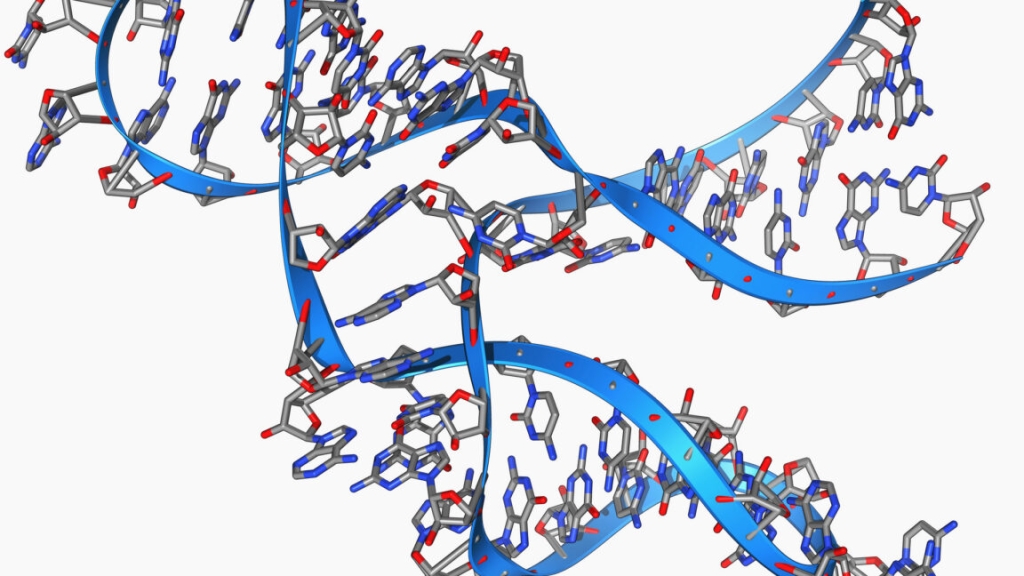
Breakthrough in Abiogenesis: Scientists Create Self-Replicating RNA Enzyme That Could Unlock the Origins of Life
In a landmark discovery that edges us closer to understanding how life emerged from non-living matter, researchers have developed an RNA enzyme capable of self-replication—a feat long considered one of the most elusive goals in the study of abiogenesis. The enzyme, dubbed QT-45, represents a major leap forward in synthetic biology and could reshape our understanding of the chemical pathways that led to the first living cells on Earth.
The study, published in Science in 2026, details how the team engineered an RNA molecule that could synthesize a complementary sequence, which in turn could copy the original strand. While the process was painstakingly slow—taking months to complete—it worked. This self-sustaining replication cycle, albeit inefficient, marks the first time such a mechanism has been demonstrated in a laboratory setting.
The Mechanics of Molecular Self-Copying
At the heart of the discovery is the enzyme’s ability to work with three-base RNA fragments rather than single nucleotides. This might seem like a shortcut compared to modern RNA polymerases, which add one base at a time. However, the researchers argue this approach is more realistic for early Earth conditions. In a primordial soup, long RNA chains would have been rare, while shorter fragments would have been abundant.
The fidelity of the copying process averaged around 95 percent, meaning that for every 100 bases copied, two to three errors occurred. While this might sound problematic, it’s actually a feature, not a bug. These errors introduce random mutations—the raw material for natural selection. In other words, QT-45 isn’t just copying itself; it’s evolving.
Why Short Fragments Matter
The team discovered that QT-45’s reliance on short RNA fragments is likely essential to its function. The ribozyme probably lacks the ability to mechanically separate base-paired RNA strands, a process known as strand displacement. Instead, it leverages the dynamic equilibrium of RNA fragments in solution. Some sequences spontaneously unwind and temporarily pair with shorter fragments, creating opportunities for the ribozyme to act.
This insight suggests that early life may have relied on a communal pool of RNA fragments rather than isolated, self-sufficient molecules. It’s a more collaborative, less individualistic model of prebiotic chemistry—one where the collective behavior of many small molecules gives rise to emergent properties like self-replication.
Room for Improvement
QT-45 is far from perfect. Its efficiency is low, and its copying speed is glacial by biological standards. But the researchers are optimistic. The enzyme has undergone only 18 rounds of directed evolution, a fraction of the work that has gone into optimizing other ribozyme polymerases. With sustained effort, they believe QT-45 could be dramatically improved.
Moreover, the discovery of three distinct ligases from a relatively small sample of the RNA sequence space suggests that self-replicating RNA molecules might be more common than previously thought. The team estimates that there could be on the order of 10^11 ligating ribozymes of this size, hinting at a vast, unexplored landscape of molecular possibilities.
Implications for the Origin of Life
This work doesn’t just advance our understanding of synthetic biology—it offers a plausible pathway for how life could have originated on Earth. The RNA World hypothesis, which posits that RNA was the first self-replicating molecule, has long struggled with the chicken-and-egg problem of how complex RNA molecules could form spontaneously. QT-45 suggests that shorter, simpler fragments could have gradually evolved into more complex, self-sustaining systems.
The findings also raise the tantalizing possibility that life could emerge elsewhere in the universe under similar conditions. If self-replicating RNA is not as improbable as once thought, then the chemical origins of life might be a common feature of rocky planets with liquid water.
Looking Ahead
The next steps for the research team include refining QT-45’s efficiency, exploring the full diversity of ligating ribozymes, and testing whether these systems can evolve more complex functions over time. If successful, this work could pave the way for creating synthetic life forms in the lab—organisms built from the ground up using RNA as both genetic material and catalyst.
In the grand narrative of life’s origins, QT-45 is a pivotal chapter. It bridges the gap between chemistry and biology, showing how the inanimate can give rise to the animate. As we continue to probe the boundaries of life, this discovery reminds us that the line between living and non-living matter may be thinner—and more fascinating—than we ever imagined.
Tags: RNA enzyme, self-replication, abiogenesis, origin of life, synthetic biology, ribozyme, molecular evolution, QT-45, RNA World hypothesis, prebiotic chemistry
Viral phrases: “Self-replicating RNA enzyme,” “Unlocking the origins of life,” “Molecular evolution in action,” “From chemistry to biology,” “The first step toward synthetic life,” “A new chapter in the story of life,” “Bridging the gap between living and non-living matter,” “The RNA World hypothesis comes to life,” “A glimpse into Earth’s primordial past,” “The future of synthetic biology”
,


Leave a Reply
Want to join the discussion?Feel free to contribute!