
To reuse or not reuse—the eternal debate of New Glenn’s second stage reignites
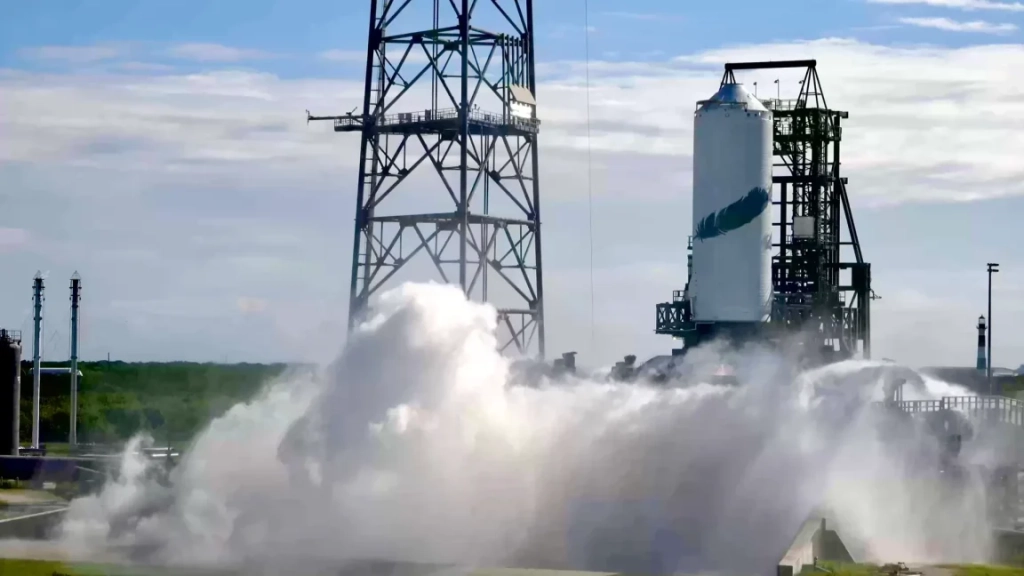
Blue Origin’s New Glenn Rocket Faces Critical Decision on Upper Stage Reusability
Blue Origin engineers are once again wrestling with a fundamental question that has haunted the development of their New Glenn rocket for over a decade: should they attempt to recover and reuse the upper stage, or simply focus on driving down manufacturing costs?
The debate isn’t just an internal philosophical exercise—it represents a pivotal crossroads that could determine whether New Glenn becomes a revolutionary launch system or another expensive rocket that struggles to compete in an increasingly crowded commercial market.
The Historical Context of the Reusability Dilemma
The question of New Glenn’s upper stage reusability traces back to the rocket’s earliest conceptual discussions around 2009-2010. From the outset, Blue Origin engineers knew the first stage would be fully reusable—that was never in question. The booster would return to Earth, land vertically, and fly again, mirroring the approach Blue Origin had already proven with New Shepard.
But the upper stage, powered by two massive BE-3U engines and responsible for delivering payloads to their final orbits, presented a far more complex challenge. Unlike the first stage, which operates only during the initial minutes of flight, the upper stage must perform precise orbital maneuvers and potentially remain in space for extended periods.
This isn’t just Blue Origin’s problem. Around the same time in the early 2010s, SpaceX founder Elon Musk was grappling with identical questions about the Falcon 9’s second stage. The physics are unforgiving: an upper stage must be as light as possible to maximize payload capacity, yet robust enough to survive the stresses of launch and engine firing. Adding the systems necessary for recovery—heat shielding, landing legs, additional fuel for landing burns—directly reduces the payload you can deliver to orbit.
SpaceX’s Path: Abandoning Second Stage Recovery
SpaceX ultimately made a decisive choice. After years of publicly discussing second stage reusability and even filing patents for recovery concepts, Musk and his team concluded that the economics simply didn’t work. The weight penalty of recovery systems was too severe, and the cost of building new upper stages had fallen dramatically through manufacturing innovations and economies of scale.
Today, SpaceX’s internal launch costs for a Falcon 9—including a brand new second stage—are reportedly around $15 million. That’s astonishingly low for a rocket capable of lifting 22,800 kilograms to low Earth orbit. Rather than pursuing the technically impressive but economically questionable goal of second stage recovery, SpaceX focused on recovering payload fairings (saving millions per launch) and relentlessly driving down manufacturing costs across the entire vehicle.
The company has since shifted its full reusability ambitions to Starship, a much larger vehicle where the economics of full reusability look far more favorable due to the massive payload capacity and the ability to carry more fuel for landing maneuvers.
New Glenn’s Unique Position in the Market
New Glenn occupies an interesting middle ground in the launch vehicle landscape. At 98 meters tall with a 7-meter diameter payload fairing, it’s significantly larger than Falcon 9 (70 meters, 3.7-meter diameter) but smaller than the fully reusable Starship, which stands 120 meters tall.
This positioning creates both opportunities and challenges. The larger size means New Glenn can carry heavier payloads and bigger satellites, but it also means higher development and manufacturing costs. The rocket is designed to lift 45,000 kilograms to low Earth orbit—more than double Falcon 9’s capacity—making it attractive for large commercial satellites, national security payloads, and deep space missions.
However, this intermediate size also means New Glenn doesn’t benefit from the same economies of scale that make Starship’s full reusability potentially transformative, nor does it have the manufacturing cost advantages that have made Falcon 9’s expendable upper stage economically viable.
The Ebb and Flow of Blue Origin’s Internal Debate
Over the past decade, Blue Origin’s stance on upper stage reusability has shifted repeatedly, reflecting the genuine uncertainty about the optimal path forward.
In 2019, the company appeared to be moving decisively toward reusability with the launch of “Project Jarvis,” an initiative to develop a stainless-steel upper stage that could be recovered and reflown. The project generated significant excitement within the aerospace community, as stainless steel offered potential advantages in terms of heat resistance and manufacturing simplicity.
However, Project Jarvis was ultimately shelved, with Blue Origin citing technical challenges and shifting priorities. The company continued developing New Glenn with a focus on first stage reusability and manufacturing efficiency for the upper stage.
Recent Developments Signal Renewed Interest
The debate appeared to reach a temporary conclusion in early 2024 when Blue Origin was preparing for New Glenn’s inaugural launch, scheduled for early 2025. In interviews with Ars Technica, both founder Jeff Bezos and CEO Dave Limp indicated that the company was continuing to evaluate options for the upper stage, known internally as GS2, but had not committed to a reusability program.
“We’re constantly trading the options,” Limp told Ars at the time. “The economics of reusability are complex, and we want to make the right decision for the long-term viability of the program.”
However, a recent job posting has reignited speculation that Blue Origin may be pivoting back toward upper stage reusability. Posted on the company’s careers page, the position of “Director of Reusable Upper Stage Development” suggests that senior leadership has decided to dedicate significant resources to exploring recovery technologies for GS2.
The job description calls for someone with “deep expertise in reusable launch vehicle systems, including thermal protection, propulsion for landing burns, and guidance, navigation, and control for precision landing.” This is technical language that strongly suggests Blue Origin is serious about developing actual recovery capabilities, not just conducting theoretical studies.
The Technical Challenges of Upper Stage Recovery
Recovering an upper stage presents engineering challenges that make first stage recovery look relatively straightforward. While a first stage typically operates for only 2-3 minutes before separating at an altitude of around 80-100 kilometers, an upper stage may fire its engines multiple times over several hours to deliver payloads to precise orbits.
The thermal protection requirements are more severe because the upper stage must survive re-entry from orbital velocities of nearly 28,000 kilometers per hour, compared to the first stage’s suborbital re-entry. The stage must also carry additional fuel for landing burns while maximizing payload capacity—a fundamental tension in rocket design.
Blue Origin would need to solve problems like:
- Developing lightweight, reusable thermal protection systems that can survive multiple re-entries
- Creating reliable propulsion systems for precise landing burns using the BE-3U engines
- Designing recovery systems that don’t compromise the stage’s primary mission of payload delivery
- Ensuring the economics of recovery justify the added complexity and mass
Market Pressures and Competitive Dynamics
The timing of this renewed focus on upper stage reusability is significant. The commercial launch market is becoming increasingly competitive, with SpaceX dominating the medium-lift segment, Rocket Lab and Relativity Space pushing into smaller vehicles, and NASA’s Space Launch System and SpaceX’s Starship competing for heavy-lift missions.
New Glenn needs a clear competitive advantage to justify its place in this crowded field. The rocket’s large payload capacity and planned high flight rate offer some differentiation, but without clear cost advantages or unique capabilities, it risks becoming just another expensive heavy-lift option.
Upper stage reusability could provide that differentiation. If Blue Origin can recover and reuse GS2 economically, it could dramatically lower launch costs and potentially enable new mission profiles that require multiple restarts or long-duration upper stage operations.
The Path Forward
The hiring of a dedicated director for reusable upper stage development suggests Blue Origin is moving beyond theoretical discussions and into active development. This person will likely lead a team working on proof-of-concept technologies, conducting trade studies, and potentially developing prototypes for testing.
The company faces a critical decision point. If the economics of upper stage reusability prove favorable, Blue Origin could announce a major shift in New Glenn’s design, potentially delaying the first launch but positioning the rocket for long-term competitiveness. If the numbers don’t work, the company may need to double down on manufacturing efficiency and accept an expendable upper stage.
Either way, the decision will have profound implications for Blue Origin’s future in the commercial launch market and could influence the broader industry’s approach to rocket reusability.
The next year will be crucial as Blue Origin’s engineers and executives work to resolve a debate that has persisted for over a decade. The outcome will determine not just the design of New Glenn, but potentially the economics of heavy-lift launch for years to come.
Tags: Blue Origin, New Glenn, rocket reusability, upper stage recovery, space economics, SpaceX competition, BE-3U engines, Project Jarvis, commercial launch market, aerospace engineering, orbital mechanics, launch vehicle design, Jeff Bezos, Dave Limp, aerospace innovation, rocket manufacturing costs, spaceflight technology, heavy-lift rockets, space industry trends, reusable launch systems
Viral Sentences:
- Blue Origin’s decade-long rocket reusability debate reaches critical juncture
- The upper stage dilemma that could make or break New Glenn
- SpaceX solved this problem by abandoning second stage recovery entirely
- New Glenn sits in the uncomfortable middle ground of rocket economics
- Project Jarvis was shelved, but the dream of upper stage reuse lives on
- A single job posting suggests Blue Origin’s strategy may be shifting dramatically
- The engineering challenges of upper stage recovery make first stage recovery look easy
- Blue Origin needs a competitive advantage in an increasingly crowded launch market
- The decision will determine whether New Glenn becomes revolutionary or just expensive
- Upper stage reusability could enable entirely new types of space missions
- Blue Origin’s internal debate has waxed and waned for over 15 years
- The economics of reusability are complex, but the potential rewards are massive
- This isn’t just about New Glenn—it’s about the future of heavy-lift launch
- The aerospace community watches closely as Blue Origin makes its choice
- Manufacturing costs have fallen so low that recovery economics are questionable
- New Glenn’s 7-meter diameter payload fairing demands unique engineering solutions
- The company that solves upper stage reusability could dominate the launch market
- Blue Origin’s decision could influence the entire space industry’s approach to reusability
,


Leave a Reply
Want to join the discussion?Feel free to contribute!