
Today’s NYT Strands Hints, Answer and Help for Feb. 7 #706
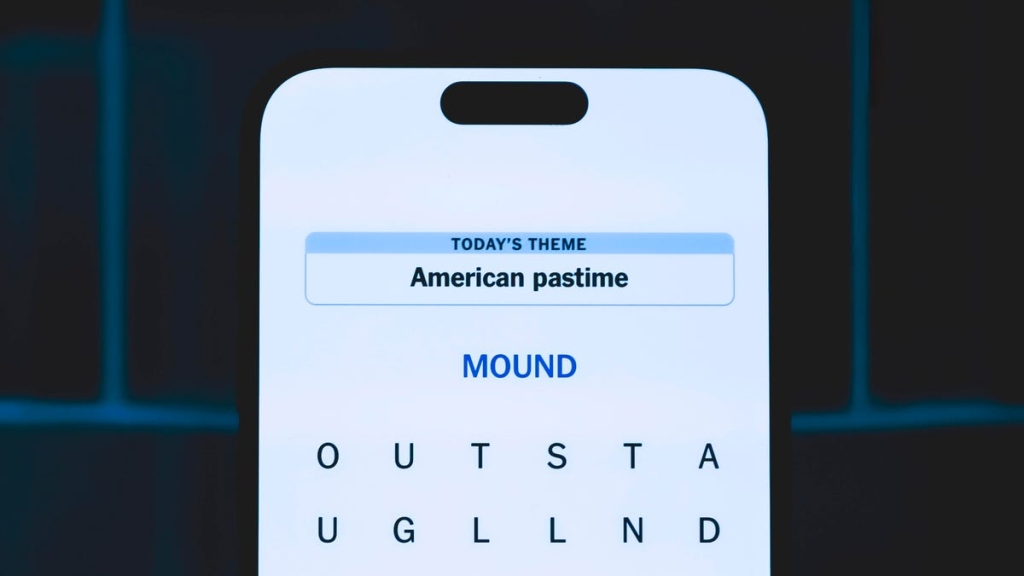
NYT Strands Puzzle for February 7, 2026: “Watching Paint Dry” – A Masterclass in Monotony
The Daily Grind Gets Digital
In the ever-expanding universe of New York Times digital puzzles, Strands has carved out its niche as the sophisticated cousin of Wordle—a game that challenges players to uncover hidden words connected by a central theme. Today’s February 7, 2026 edition delivers what might be the most ironically fitting puzzle yet: “Watching Paint Dry.”
For the uninitiated, Strands presents players with a six-by-eight grid of letters where they must discover words related to a central theme. The game mechanics reward persistence: find three valid words of four letters or more, and the game reveals one of the themed answers. The ultimate goal? Uncover all theme words plus the spangram—a word or phrase that stretches from one edge of the board to the opposite edge, connecting the entire theme.
Today’s Theme: The Art of Boredom
The theme “Boo-o-o-o-ring” immediately sets the tone for what promises to be a cerebral exercise in finding excitement within the mundane. The accompanying clue— “Zzzz… not very exciting”—practically dares players to find the silver lining in life’s most tedious moments.
What makes today’s puzzle particularly devilish is the deceptive nature of the theme itself. Words like “DULL,” “DREARY,” “HUMDRUM,” “MUNDANE,” and “TIRESOME” all fit the bill, but the real challenge lies in the spangram: “WATCHINGPAINTDRY.”
This 15-letter behemoth snakes its way across the grid, starting with the W positioned three letters up from the bottom on the far-left column, then winding up, across, and down in a path that would make even the most dedicated crossword enthusiast pause for thought.
The Strategic Approach
For those finding themselves stuck in today’s lexical labyrinth, the game offers a clever hint system. By discovering any valid words of four letters or more—regardless of whether they fit the theme—players can unlock themed answers. Today’s clue words included “HIND,” “DATE,” “DRUM,” “MOST,” “CHIN,” “PAIN,” “RAIN,” “NOSE,” “TOME,” and “TOMES.”
This mechanic serves a dual purpose: it keeps the game accessible to casual players while rewarding those with expansive vocabularies. The beauty of Strands lies in its ability to make players feel both brilliant and baffled within the same session.
The Cultural Impact of Digital Word Games
The popularity of games like Strands, Wordle, and Connections speaks to something deeper in our digital age. In a world of infinite scrolling and algorithmic content, these daily puzzles offer a finite, satisfying challenge. They’re the digital equivalent of a morning coffee—a ritual that centers the mind before the chaos of the day begins.
The NYT’s puzzle ecosystem has become so robust that CNET maintains a dedicated page for daily hints and answers across all their offerings. This speaks to the cultural moment we’re in: word games aren’t just entertainment; they’re social currency, conversation starters, and for many, a daily necessity.
The Evolution of Word Puzzles
Strands represents the natural evolution of word puzzles from the printed page to the digital screen. Unlike traditional crosswords, which rely heavily on trivia knowledge and cultural literacy, Strands emphasizes pattern recognition, vocabulary breadth, and lateral thinking.
The game’s design philosophy appears to embrace the paradox of modern gaming: we crave challenges that are simultaneously frustrating and rewarding. There’s something deeply satisfying about that “aha!” moment when a seemingly random collection of letters suddenly reveals itself as “WATCHINGPAINTDRY.”
Looking Ahead: The Future of Daily Puzzles
As we move deeper into 2026, the success of Strands and its brethren raises interesting questions about the future of digital entertainment. In an age of high-budget video games and immersive virtual reality experiences, there’s something refreshingly simple about a grid of letters and the promise of a daily mental workout.
The NYT’s puzzle division seems to understand this perfectly, continually iterating on their offerings to keep players engaged. From the social dynamics of sharing results (without spoilers, of course) to the competitive aspect of solving speed, these games have tapped into something elemental about human psychology.
Community and Competition
One of the most fascinating aspects of the Strands phenomenon is the community that has grown around it. Social media platforms light up each morning with discussions about particularly tricky puzzles, strategies for finding the spangram, and debates about whether certain words should count as valid answers.
This communal aspect transforms what could be a solitary activity into a shared experience. Players compare notes, celebrate victories, and commiserate over particularly challenging grids. It’s a reminder that even in our digital age, humans crave connection—even if that connection comes through the shared struggle of finding “HUMDRUM” in a sea of letters.
The Educational Value
Beyond entertainment, games like Strands offer genuine educational benefits. Regular players inevitably expand their vocabularies, improve their pattern recognition skills, and sharpen their problem-solving abilities. For younger players, these games can be particularly valuable, offering a fun way to engage with language and develop critical thinking skills.
The thematic nature of Strands also encourages players to think about words in categories, building associative thinking skills that extend far beyond the game itself. Today’s “boring” theme might inspire players to consider other synonyms or related concepts, turning a simple game into a vocabulary lesson.
The Business of Brain Teasers
From a business perspective, the success of Strands and similar games represents a brilliant strategy for media companies in the digital age. These games drive daily engagement, create habitual usage patterns, and provide a sticky reason for users to visit the NYT’s platforms regularly.
The monetization model is equally clever: while the basic games are often available for free, premium features, ad-free experiences, and bundled subscriptions create multiple revenue streams. In an era where digital advertising is increasingly challenging, these engagement-driven models offer a sustainable alternative.
The Psychology of Puzzle Solving
There’s fascinating psychology at work in games like Strands. The combination of challenge and achievability creates what psychologists call a “flow state”—that magical zone where time seems to disappear and focus becomes absolute. The game’s design, with its escalating difficulty and reward system, is perfectly calibrated to maintain this state.
The frustration of being stuck, followed by the euphoria of solving, creates a dopamine feedback loop that keeps players coming back day after day. It’s the same mechanism that makes video games addictive, but channeled into something that feels intellectually virtuous rather than mindlessly entertaining.
The Future of Strands
As Strands continues to evolve, we can expect to see even more innovative features. The game’s developers have already demonstrated a knack for creating themes that are both challenging and culturally relevant. Future iterations might include collaborative modes, competitive tournaments, or even themed events tied to real-world happenings.
The potential for educational partnerships is also significant. Schools and universities could leverage the game’s popularity to create subject-specific versions that make learning more engaging. Imagine a science-themed Strands or a history-focused variant that turns learning into a daily game.
The Cultural Lexicon
Games like Strands are also contributing to our cultural lexicon. Phrases like “I’m stuck on today’s Strands” or “Did you get the spangram?” have become part of the daily conversation for millions of players. This shared vocabulary creates a sense of community and belonging among players.
The game’s influence extends beyond just language. The satisfaction of solving complex puzzles has become a badge of honor in certain circles, with solving speed and accuracy becoming points of pride and friendly competition.
The Global Appeal
While the NYT is an American institution, games like Strands have found a global audience. The universal appeal of word puzzles transcends cultural and linguistic boundaries, making these games truly international phenomena.
This global reach presents interesting challenges and opportunities for the game’s developers. How do you create themes that work across different cultures? How do you balance accessibility with challenge for a truly global audience? These are the questions that will shape the future evolution of Strands and similar games.
The Environmental Angle
In an age of increasing environmental consciousness, it’s worth noting that digital games like Strands have a significantly lower environmental impact than their physical counterparts. No paper, no printing, no shipping—just pixels on a screen. For environmentally conscious consumers, this digital-first approach is an added bonus.
The Final Word
Today’s Strands puzzle, with its theme of boredom and its challenging spangram, is a perfect microcosm of what makes the game so compelling. It’s simultaneously frustrating and satisfying, simple and complex, solitary and communal.
As we continue to navigate an increasingly digital world, games like Strands offer a welcome respite—a daily moment of focused challenge in a world of endless distraction. Whether you’re a casual player or a dedicated solver, there’s something undeniably satisfying about uncovering that final themed word and seeing the entire grid light up with completion.
So the next time someone tells you they’re “watching paint dry,” you might just smile knowingly and think of today’s Strands puzzle. After all, in the world of word games, even boredom can be transformed into a delightful challenge.
StrandsPuzzle #NYTGames #WordGames #DailyPuzzle #BrainTeaser #WordChallenge #PuzzleAddict #DigitalGames #NYTStrands #February2026 #WatchingPaintDry #BoringButFun #PuzzleCommunity #WordNerd #GameOfTheDay #MentalWorkout #PuzzleSolver #DailyChallenge #NYT #WordleAlternative #ConnectionsGame #PuzzleLovers #BrainGames #DigitalWordplay #PuzzleStrategy #VocabularyBuilding #MindGames #DailyRitual #PuzzleMaster #WordSearch #SpangramChallenge #BoredomBusters #DigitalPuzzles #NYTCommunity #PuzzleTips #WordGameAddict #PuzzleLife #BrainFitness #DailyWordGame #PuzzleSolutions #WordGameStrategy #NYTWordGames #PuzzleEnthusiasts #WordGameCommunity #DigitalEntertainment #PuzzleCulture #WordGameTips #PuzzleAddiction #NYTPuzzles
,


Leave a Reply
Want to join the discussion?Feel free to contribute!