
Toy Story 2 Was Saved By A Pixar Employee Who Diseny Later Fired
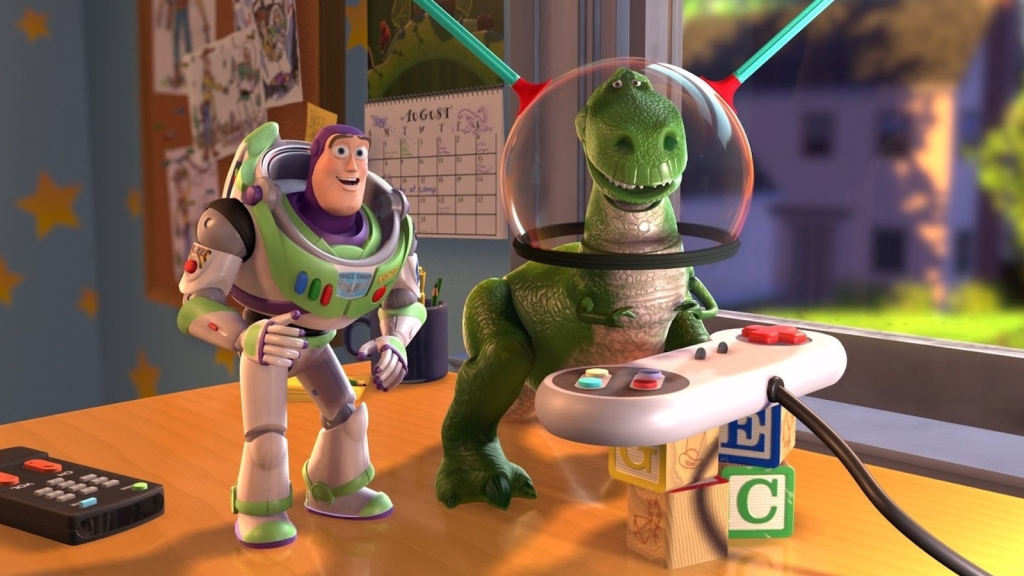
Toy Story 2: The Digital Disaster That Almost Ended Pixar’s Legacy
In the high-stakes world of animation, where millions of dollars and years of creative work hang in the balance, few stories capture the sheer terror of technological catastrophe quite like what happened during the production of Toy Story 2. This isn’t just another Hollywood anecdote—it’s a chilling reminder of how close one of animation’s most beloved franchises came to vanishing into the digital ether forever.
The Accidental Apocalypse: When Pixar’s Servers Went Nuclear
Picture this: It’s 1998, and Pixar’s animation team is deep into production on what would become one of the most successful animated sequels of all time. The pressure is immense—not only must they match the groundbreaking success of the original Toy Story, but they’re also racing against an unforgiving release schedule. Then, in what can only be described as every creative professional’s worst nightmare, disaster strikes.
According to former Pixar Chief Technical Officer Oren Jacob, the incident began innocently enough. Technical Director Larry Cutler was working in a directory containing approximately 40 files related to Woody’s character development. He looked away momentarily, perhaps to discuss a technical fix, and when he glanced back at his screen, the number of files had mysteriously dropped to just four. What followed was nothing short of digital Armageddon.
“As we watched in absolute horror,” Jacob recalled, “entire sequences began vanishing before our eyes. It was like watching our entire world collapse in real-time.”
The culprit? A simple command-line error that cascaded through Pixar’s entire server infrastructure, systematically deleting two months’ worth of meticulous animation work. Every frame, every character model, every painstakingly crafted scene—gone in the blink of an eye. The team watched helplessly as their collective creative output evaporated into the digital void.
The Heroine in Maternity Leave: Galyn Susman’s Brilliant Backup
Just when all hope seemed lost, a remarkable twist of fate intervened. Galyn Susman, a technical direction supervisor at Pixar, had been on maternity leave at the time of the catastrophe. In what would prove to be the saving grace for the entire project, Susman had taken extensive work files home with her to continue developing during her leave—a common practice in the pre-cloud computing era.
Those files, sitting on her home computer, represented the only surviving copy of months of work. When the crisis hit, Susman was contacted in a panic. She rushed to bring her computer to the Pixar offices, where technicians worked feverishly to extract and restore as much data as possible from her personal machine.
The recovery effort was nothing short of miraculous. Thanks to Susman’s foresight and dedication, the team managed to salvage the majority of their lost work. It was a testament to both her professionalism and the serendipitous timing of her maternity leave that the project could continue at all.
The Corporate Irony: Disney’s Cold Calculus
Here’s where the story takes a particularly bitter turn that speaks volumes about corporate priorities in the entertainment industry. In 2023, more than two decades after her heroic intervention saved Toy Story 2 from complete annihilation, Galyn Susman found herself among the 75 employees laid off by Disney during a round of cost-cutting measures.
The irony is almost too perfect to be true: the woman who literally held the fate of a billion-dollar franchise in her hands during its most vulnerable moment was later deemed expendable by the very company that profited immensely from her actions. Industry insiders and fans alike were left shaking their heads at the cold efficiency of corporate decision-making.
The Creative Reckoning: When Pixar Decided to Start Over
Even with Susman’s miraculous recovery, the story of Toy Story 2 doesn’t end there. In fact, the recovered files might as well have been deleted for all the good they ultimately did the final product. When co-director John Lasseter and writers Andrew Stanton, Pete Docter, and Joe Ranft reviewed the recovered material at the end of 1998, they were profoundly disappointed.
The consensus was clear and devastating: the story simply wasn’t working. The characters felt flat, the narrative lacked the emotional resonance that had made the original so beloved, and the overall execution fell far short of Pixar’s now-established standards. In a move that would have sent most studios into bankruptcy, Pixar made the extraordinary decision to completely scrap nearly everything and start from scratch.
This creative reset meant that despite Susman’s heroic recovery efforts, almost none of the salvaged material made it into the final film. Only the core characters from the first installment remained recognizable in the new vision. Everything else—every background, every secondary character, every subplot—was reimagined from the ground up.
The Impossible Deadline: Pixar’s Ultimate Test of Will
The timeline for this creative overhaul was nothing short of absurd. With a November 1999 release date looming and only months to completely rewrite, reanimate, and re-render an entire feature film, most animation studios would have thrown in the towel. But Pixar wasn’t most studios.
The team rallied in a display of creative solidarity that would become legendary in animation circles. Animators worked around the clock, often sleeping under their desks between shifts. Technical directors pushed their rendering farms to the absolute limit. Story artists burned through countless revisions, searching for the perfect narrative beats that would elevate the sequel beyond mere franchise maintenance.
What emerged from this crucible of creativity was nothing short of extraordinary. The new Toy Story 2 retained the heart and humor of the original while expanding the universe in ways that felt organic and earned. The story of Woody’s dilemma—choosing between a life of immortality in a museum or the uncertain but meaningful existence with Andy—resonated deeply with audiences of all ages.
The Triumphant Return: When Art Defied All Odds
When Toy Story 2 finally premiered in November 1999, it didn’t just succeed—it soared. Against a production budget of $90 million, the film grossed over $497 million worldwide, nearly quintupling its investment. Critics were effusive in their praise, with many arguing that the sequel actually surpassed the original in terms of emotional depth and narrative sophistication.
The film’s 100% Rotten Tomatoes score stands as a testament to its universal acclaim, a rare achievement in an industry often plagued by sequel fatigue. Audiences embraced the new characters—Jessie, Bullseye, and the villainous Stinky Pete—as wholeheartedly as they had the returning favorites. The film’s exploration of themes like abandonment, loyalty, and the fear of obsolescence struck chords that resonated far beyond its target demographic.
The Franchise That Could Have Been: What If?
The success of Toy Story 2 fundamentally altered the trajectory of what would become one of animation’s most lucrative franchises. Without this pivotal sequel performing so spectacularly, it’s entirely possible that Pixar might have reconsidered the viability of continuing the Toy Story saga beyond a trilogy.
The film’s success proved that animated sequels could not only match their predecessors but potentially exceed them in both critical and commercial terms. This validation paved the way for Toy Story 3 in 2010, which delivered one of the most emotionally satisfying conclusions in animation history, and Toy Story 4 in 2019, which found new emotional territory to explore despite initial skepticism about its necessity.
Now, with Toy Story 5 in active development for a 2026 release, the franchise continues to demonstrate remarkable longevity and cultural relevance. All of this might never have happened if not for the perfect storm of technological disaster, human heroism, and creative courage that defined the making of Toy Story 2.
The Bigger Picture: Lessons from the Digital Brink
The story of Toy Story 2‘s near-destruction offers several profound lessons for the creative industries. First and foremost is the critical importance of robust backup systems and disaster recovery protocols. What happened at Pixar in 1998 should serve as a cautionary tale for every creative professional who’s ever worked on a digital project of any scale.
Secondly, it highlights the often-overlooked contributions of technical professionals whose work behind the scenes makes creative magic possible. Galyn Susman’s story is particularly poignant—a reminder that the people who keep our creative infrastructure running smoothly are too often the first to be cut when budgets tighten.
Finally, it demonstrates the value of creative courage—the willingness to admit when something isn’t working and to have the conviction to start over, even when the stakes are impossibly high. Pixar’s decision to completely reimagine Toy Story 2 rather than release a compromised product speaks to a creative philosophy that prioritizes quality over expediency, a principle that has defined their success for decades.
Viral Tags & Buzzworthy Phrases
- 😱 “The day Pixar almost lost everything”
- 💾 “Digital disaster almost erased Toy Story 2 forever”
- 🤰 “Maternity leave saved the franchise”
- 💼 “Disney lays off the hero who saved Toy Story 2”
- 🎬 “The sequel that almost never happened”
- 🔥 “Pixar’s $497 million comeback story”
- ⏰ “Impossible deadline, impossible achievement”
- 🎨 “When starting over was the only option”
- 🏆 “100% on Rotten Tomatoes: the perfect sequel”
- 💰 “From digital disaster to billion-dollar franchise”
- 🚀 “Toy Story 5: the legacy continues”
- 💻 “Command-line catastrophe: the animation industry’s worst nightmare”
- ❤️ “The heart that beat through the digital darkness”
- 🌟 “Pixar’s ultimate test of creative courage”
- 🎥 “The movie that proved sequels could be better”
- 📱 “How one backup changed animation history”
- 🌐 “The viral story behind the animated classic”
- 📚 “What Toy Story 2 teaches about creative resilience”
- 🎉 “The triumph that almost never saw the light of day”
- 💡 “Innovation born from catastrophe”
,

Leave a Reply
Want to join the discussion?Feel free to contribute!