
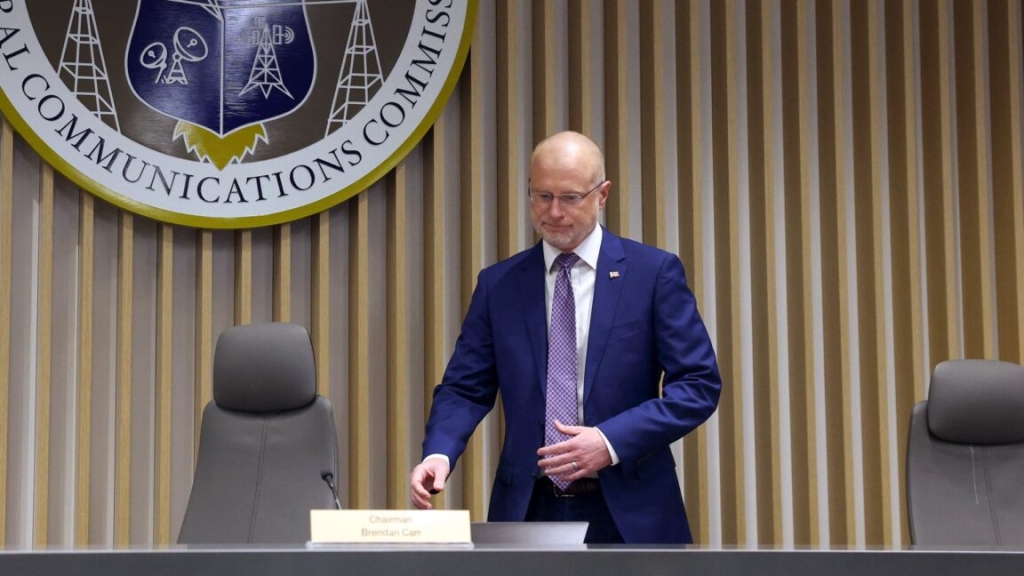
Trump and his FCC chair demand more positive news coverage of Iran war
BREAKING: Trump’s Fiery Attack on Media Over Saudi Arabia Airbase Incident Sparks Controversy
In a dramatic and explosive social media outburst, former President Donald Trump has launched a scathing attack on major news outlets, accusing them of deliberately spreading “Fake News” about an alleged Iranian missile strike on a U.S. Air Force base in Saudi Arabia. The controversy erupted after Trump took to his Truth Social platform to dispute reports claiming that five U.S. Air Force refueling planes were “struck down” and rendered “of no further use” at Prince Sultan Air Base.
The Incident: What Really Happened?
According to multiple sources, including The Wall Street Journal and Reuters, five U.S. Air Force KC-135 Stratotanker refueling planes were damaged during an Iranian missile strike on the Saudi airbase in recent days. The strike, which occurred amid escalating tensions in the Middle East, reportedly caused varying degrees of damage to the aircraft, but none were destroyed. U.S. Central Command declined to comment on the specifics of the incident, but officials confirmed that the planes were being repaired and would return to service.
Trump’s Explosive Response
In a post on Truth Social, Trump vehemently disputed the media’s portrayal of the incident, claiming that the reports were “intentionally misleading” and designed to undermine public confidence in U.S. military capabilities. He wrote:
“Yet again, an intentionally misleading headline by the Fake News Media about the five tanker planes that were supposedly struck down at an Airport in Saudi Arabia, and of no further use. In actuality, the Base was hit a few days ago, but the planes were not ‘struck’ or ‘destroyed.’ Four of the five had virtually no damage, and are already back in service. One had slightly more damage, but will be in the air shortly. None were destroyed, or close to that, as the Fake News said in headlines.”
Trump specifically called out The New York Times and The Wall Street Journal, though his criticism appeared to focus primarily on a Wall Street Journal article that reported the incident. The former president’s post has reignited debates about media bias, the accuracy of reporting on military operations, and the role of social media in shaping public perception.
Media Response and Fact-Checking
Despite Trump’s claims, a closer examination of the Wall Street Journal article reveals that the reporting was far more nuanced than the former president suggested. The article, which was updated to include Trump’s comments, clearly stated that the planes were “struck and damaged” but “not fully destroyed” and were being repaired. Similarly, a Reuters article on the incident used the phrases “struck and damaged” and “not fully destroyed,” aligning with the Journal’s reporting.
Critics argue that Trump’s attack on the media is an attempt to deflect attention from the broader implications of the Iranian strike, which has raised concerns about the vulnerability of U.S. military assets in the region. Others suggest that his comments are part of a broader strategy to undermine trust in the press and control the narrative surrounding national security issues.
The Legal and Ethical Implications
Legal experts have weighed in on whether Trump’s complaint meets the legal standard for proving a hoax or news distortion. Many argue that even if Trump’s version of events is accurate, his criticism does not necessarily prove that the Wall Street Journal or other outlets got anything wrong. The distinction between “struck” and “destroyed” is a matter of semantics, and the media’s use of the term “struck” does not imply that the planes were rendered inoperable.
Ethically, the incident raises questions about the responsibility of public figures to engage in constructive dialogue with the press rather than resorting to inflammatory rhetoric. It also highlights the challenges of reporting on sensitive military operations, where the line between transparency and operational security is often blurred.
Public Reaction and Social Media Buzz
The controversy has sparked a firestorm on social media, with supporters and critics of Trump weighing in on the debate. Hashtags like #FakeNews, #TruthSocial, and #SaudiStrike have trended on Twitter, with users sharing memes, videos, and opinion pieces on the incident. Some have praised Trump for holding the media accountable, while others have accused him of spreading misinformation and undermining public trust in journalism.
The Bigger Picture: U.S.-Iran Tensions and Regional Stability
Beyond the media controversy, the Iranian missile strike on the Saudi airbase underscores the ongoing volatility in the Middle East. The incident comes amid heightened tensions between the U.S. and Iran, with both sides engaging in a series of provocative actions that threaten to escalate into a broader conflict. The damage to U.S. aircraft, while not catastrophic, serves as a reminder of the risks faced by American forces in the region and the need for robust defensive measures.
Conclusion: A Battle of Narratives
As the dust settles on this latest controversy, one thing is clear: the battle over the narrative surrounding the Saudi airbase incident is far from over. Whether Trump’s criticism of the media is justified or not, the incident has reignited debates about the role of the press in a democracy, the accuracy of reporting on national security issues, and the impact of social media on public discourse.
For now, the planes are being repaired, and the U.S. military is assessing the broader implications of the strike. But the fallout from Trump’s Truth Social post is likely to continue, as both sides of the political divide grapple with the implications of this latest clash between the former president and the media.
Tags: Trump, Fake News, Saudi Arabia, Iran, Wall Street Journal, Truth Social, Media Bias, National Security, Middle East Tensions, KC-135 Stratotanker, Prince Sultan Air Base, U.S. Central Command, Reuters, Social Media Controversy
Viral Phrases:
- “Yet again, an intentionally misleading headline by the Fake News Media”
- “None were destroyed, or close to that, as the Fake News said in headlines”
- “Four of the five had virtually no damage, and are already back in service”
- “The planes were struck and damaged but not fully destroyed”
- “Trump’s fiery attack on media over Saudi Arabia airbase incident”
- “The battle over the narrative surrounding the Saudi airbase incident”
- “Social media firestorm: #FakeNews, #TruthSocial, #SaudiStrike”
- “U.S.-Iran tensions: A volatile Middle East”
- “Media bias or accountability? The Trump vs. Press saga continues”
- “The planes are being repaired, but the fallout continues”
,

Leave a Reply
Want to join the discussion?Feel free to contribute!