
Turbostat With Linux 7.0 Can Report New L2 Cache Statistics
Linux 7.0 Turbocharges Turbostat with L2 Cache Insights for Intel CPUs
In a move that will delight performance enthusiasts and system administrators alike, the Linux 7.0 kernel has supercharged the beloved Turbostat utility with brand-new L2 cache statistics for recent Intel processors. This enhancement, quietly merged into the kernel source tree, brings unprecedented visibility into how modern Intel CPUs handle cache operations—a critical factor in system performance optimization.
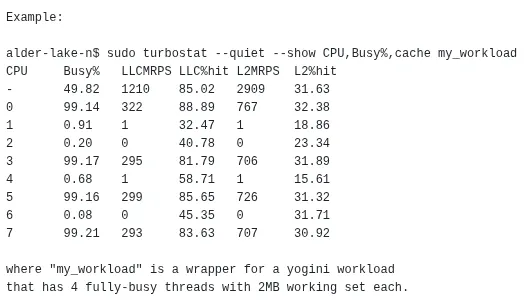
Turbostat, a command-line utility that has long been a staple for monitoring processor frequency and idle states, now reports two powerful new metrics: L2MRPS (L2 Cache M-References Per Second) and L2%hit (L2 cache hit rate percentage). These additions transform Turbostat from a simple frequency monitor into a sophisticated cache analysis tool.
What’s New in Linux 7.0’s Turbostat?
The newly merged code introduces L2 cache statistics that provide deep insights into cache behavior. L2MRPS measures the number of million cache references per second, giving administrators a clear picture of how aggressively the CPU is accessing its L2 cache. Meanwhile, L2%hit reveals the cache hit rate percentage, indicating how often the CPU finds the data it needs already stored in the L2 cache rather than having to fetch it from slower memory.
This functionality leverages new L2 performance counters that Intel has introduced in their latest processor architectures. However, there’s an important caveat: these metrics are only available on recent Intel CPU generations. Specifically, you’ll need one of the following:
- Intel Xeon Sapphire Rapids processors or newer
- Intel Atom Gracemont cores or newer
- Intel Alder Lake hybrid CPUs or newer
For systems running compatible hardware, the new metrics appear alongside Turbostat’s traditional output, providing a more comprehensive view of processor behavior. The data is particularly valuable for performance tuning, as cache efficiency often has a dramatic impact on overall system responsiveness.
Why Cache Statistics Matter
Cache performance is one of the most critical factors in modern computing. When a CPU can find the data it needs in its cache, operations complete in mere nanoseconds. When it must fetch data from main memory, the same operation might take hundreds of nanoseconds—a massive difference in computing terms.
The L2 cache sits between the ultra-fast but small L1 cache and the larger but slower L3 cache (and main memory). It’s a sweet spot where many frequently accessed data structures reside. By monitoring L2 cache references and hit rates, system administrators can identify performance bottlenecks, optimize application behavior, and make informed decisions about hardware upgrades.
For example, a consistently low L2%hit rate might indicate that an application’s working set is too large for the available cache, suggesting potential optimization opportunities. Conversely, a high L2MRPS with a good hit rate suggests efficient cache utilization.
Technical Implementation
The implementation relies on Intel’s architectural performance monitoring units (PMUs), which provide hardware counters for tracking various CPU events. The new Turbostat functionality taps into counters specifically designed to track L2 cache references and hits, translating raw counter values into human-readable metrics.
The merge commit, available in the Linux kernel repository, details the technical implementation for those interested in the low-level mechanics. The code elegantly integrates with Turbostat’s existing framework, maintaining the utility’s minimalist design while adding substantial new capabilities.
Availability and Future Prospects
With Linux 7.0 now in development, these features will soon be available to users who compile their own kernels or obtain packages from distributions that quickly adopt the new release. Given the importance of performance monitoring tools, it’s likely that major distributions will backport these improvements to their stable kernel branches as well.
Looking ahead, this enhancement opens the door for even more sophisticated performance monitoring capabilities. As Intel continues to evolve its processor architectures, we can expect additional performance counters and metrics to become available, further empowering system administrators and performance engineers.
Conclusion
The addition of L2 cache statistics to Turbostat represents a significant enhancement to one of Linux’s most valuable performance monitoring tools. By providing visibility into cache behavior, Linux 7.0 gives users the information they need to optimize system performance at a granular level. For anyone serious about system performance—whether you’re running a high-frequency trading platform, a scientific computing cluster, or simply want to squeeze every ounce of performance from your hardware—these new metrics are a welcome addition to the Linux performance monitoring toolkit.
L2 cache stats
Intel CPU monitoring
Linux 7.0 features
Turbostat enhancement
Processor performance
Cache hit rate
M-References per second
System optimization
Kernel development
Performance engineering
Hardware monitoring
Intel Sapphire Rapids
Alder Lake performance
Gracemont architecture
Linux kernel 7.0
Cache efficiency metrics
System administration tools
Performance bottleneck analysis
CPU architecture insights
Open source monitoring
Linux performance tuning
Hardware counter access
Enterprise computing
Technical deep dive
Cutting-edge CPU features
Performance monitoring evolution
System optimization breakthrough
Cache performance revolution
Next-generation Linux tools
Intel processor advancements
Data center optimization
High-performance computing
System administrator toolkit
Revolutionary monitoring capabilities
Game-changing performance insights
Unprecedented CPU visibility
Performance engineering gold mine
Must-have for Linux pros
Technical marvel
Performance monitoring renaissance
Cache analysis breakthrough
Linux 7.0 game changer
Must-know for sysadmins
Performance tuning revolution
Hidden CPU secrets revealed
System optimization mastery
Technical wizardry unleashed
Performance monitoring evolution accelerated
,

Leave a Reply
Want to join the discussion?Feel free to contribute!