
Twentieth Anniversary Macintosh launches: Today in Apple history
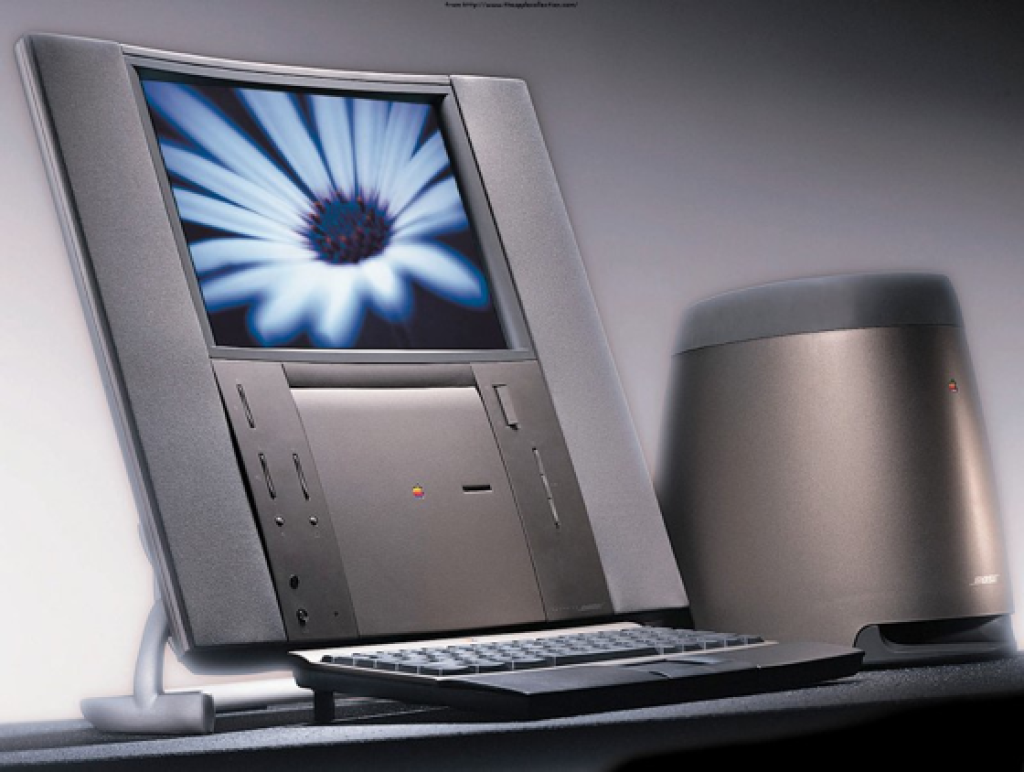
Apple’s Twentieth Anniversary Macintosh: A Bold Vision That Bombed Spectacularly
The Futuristic Mac That Came in a Limo
On March 20, 1997, Apple unveiled one of its most ambitious—and ultimately disastrous—products: the Twentieth Anniversary Macintosh (TAM). This wasn’t just another computer; it was Apple’s vision of the future, wrapped in a sleek, futuristic design that would make even today’s iMacs look dated.
A Celebration That Wasn’t Really a Celebration
Here’s the first twist: despite its name, the Twentieth Anniversary Macintosh didn’t actually mark 20 years since the original Macintosh launched in 1984. Instead, it commemorated two decades since Apple’s incorporation in 1977. Talk about confusing branding!
At a time when Apple was struggling financially and desperately needed a hit, the company could have played it safe. They could have released a nostalgic machine that paid homage to the original Macintosh 128K, appealing to their devoted base of Mac enthusiasts. Instead, Apple did something characteristically bold: they built a computer that looked like it had traveled back from 2030.
Ahead of Its Time in Every Way
The Twentieth Anniversary Macintosh was revolutionary in ways that wouldn’t become mainstream for years. It featured the first flatscreen display ever seen on a Mac, a radical departure from the bulky CRT monitors that dominated the era. This wasn’t just a computer; it was a multimedia powerhouse.
Apple packed this machine with features that were mind-blowing for 1997: an integrated TV/FM radio system, S-video input capabilities, and a custom sound system designed by Bose. This was Apple’s vision of the all-in-one entertainment center, a concept that wouldn’t fully materialize until decades later.
But perhaps the most striking design element was the CD drive—a vertical square that dominated the front of the machine. Unlike the sleek, nearly invisible slots of modern Macs, this was a bold, almost aggressive statement piece.
The Design Revolution Begins
The Twentieth Anniversary Macintosh marked a pivotal shift in Apple’s approach to product development. For the first time, the design team—rather than the engineering department—led the project from conception to completion. This was revolutionary in the mid-1990s, when Apple’s culture was famously dysfunctional.
Head designer Robert Brunner, frustrated with the company’s internal politics, quit shortly before the TAM’s launch. This cleared the path for a young Jonathan “Jony” Ive to rise through the ranks. The TAM was one of Ive’s early projects, and it would prove to be a harbinger of Apple’s future design philosophy.
This design-first approach would eventually become Apple’s standard operating procedure, leading to the iconic products that would define the 21st century. But in 1997, it was a risky experiment that could have easily backfired.
A Company in Transition
The TAM launched during one of the most tumultuous periods in Apple’s history. Former CEO Gil Amelio had just stepped down, and Steve Jobs was rejoining the company as part of Apple’s acquisition of NeXT. For a brief, shining moment, it really was like 1977 again—Jobs and Woz were back, playing bigger roles than they had in years.
Apple even gave the first two TAM units to Jobs and Wozniak. Woz was particularly enthusiastic, calling it “the perfect computer for a college student” because it combined “computer, TV, radio, CD player and more… all in one sleek machine.”
The Price That Killed It
Here’s where the dream turned into a nightmare. When Apple launched the Twentieth Anniversary Macintosh, they priced it at a staggering $9,000—equivalent to over $18,200 in today’s dollars. This wasn’t just expensive; it was completely out of reach for the average consumer, let alone college students.
The marketing team had won the internal battle over whether to position this as a mass-market computer or a special edition luxury item. They chose luxury, and the market responded accordingly: Apple sold only a few thousand units.
It was a classic case of Apple’s ambition outstripping market reality. The company had built something genuinely revolutionary, but they’d priced it in a way that ensured it would never reach the audience it deserved.
Luxury Delivery Like No Other
If you were one of the lucky (and wealthy) few who actually purchased a Twentieth Anniversary Macintosh, Apple made sure your experience was unforgettable. Forget schlepping to the Apple Store and waiting in line. Apple delivered these machines directly to your home in a limousine.
A man in a tuxedo would arrive at your doorstep, set up your new $9,000 computer, and ensure everything was working perfectly. It was Apple’s most extravagant unboxing experience ever, a level of luxury that wouldn’t be seen again until the launch of products like the Apple Watch Edition.
The Inevitable Price Cut and Demise
Apple eventually realized their pricing strategy was catastrophic. They slashed the price to a still-steep $2,000 and continued selling the machine until March 1998, when they finally discontinued it. The Twentieth Anniversary Macintosh had failed completely in the marketplace, becoming one of Apple’s most spectacular commercial flops.
Yet even in failure, the TAM achieved something remarkable. It won design awards and became a cult collector’s item. Today, well-preserved units can fetch thousands of dollars from enthusiasts and collectors.
Pop Culture Impact
The Twentieth Anniversary Macintosh found an unexpected second life in popular culture. It appeared as the computer in Jerry’s apartment during the final season of Seinfeld—fitting for a show about nothing, this was a computer about everything. It also made an appearance in the terrible 1997 Batman & Robin movie, where Alfred Pennyworth used one.
The Legacy of a Failure
The Twentieth Anniversary Macintosh stands as a fascinating bridge between Apple’s troubled 1990s and the revolutionary company it would become under Steve Jobs’ second tenure. It was experimental, ambitious, design-focused, and ultimately too expensive for its own good—qualities that would define many of Apple’s future products.
But unlike the Power Mac G4 Cube (another beautiful failure), the TAM represented Apple’s first real attempt to think beyond the traditional computer. It was a vision of convergence before convergence was cool, a glimpse of the all-in-one devices that would eventually dominate our lives.
Today, the Twentieth Anniversary Macintosh is more than just a collector’s item. It’s a time capsule, a reminder of a moment when Apple was willing to dream big even when the company was struggling. It represents the courage to fail spectacularly while reaching for something extraordinary—a quality that would eventually lead Apple to create the iPod, iPhone, and iPad.
The TAM may have bombed, but it planted seeds that would blossom into Apple’s future success. Sometimes the most important innovations aren’t the ones that sell millions of units, but the ones that change how we think about technology.
And that’s perhaps the ultimate irony of the Twentieth Anniversary Macintosh: a failure that helped pave the way for Apple’s greatest successes.
Tags: Apple, Macintosh, Twentieth Anniversary Mac, TAM, Jony Ive, Steve Jobs, Steve Wozniak, design, innovation, failure, collector’s item, luxury tech, multimedia computer, flatscreen Mac, Bose, Seinfeld, Batman & Robin, 1997, Apple history, cult of Mac, vintage Apple, technology history, design awards, limousine delivery, tuxedo setup, $9000 computer, Apple design group, Robert Brunner, Power Mac G4 Cube, iMac, convergence device, pop culture, collector’s piece
Viral Phrases: “The computer that came in a limo,” “Apple’s most expensive mistake,” “The Mac that time forgot,” “When Apple dreamed too big,” “The $9000 question,” “Delivered by tuxedo, returned by truck,” “The computer Jerry Seinfeld never talked about,” “Alfred Pennyworth’s secret weapon,” “The Mac that cost more than your car,” “Apple’s luxury experiment that crashed,” “The future that arrived too early,” “The computer that proved Apple could fail,” “The design that inspired a generation,” “The machine that cost more than rent,” “The Mac that became a museum piece,” “When Apple priced itself out of existence,” “The computer that changed nothing,” “The gadget that defined a moment,” “The product that proved design matters more than sales,” “The Mac that became legendary for all the wrong reasons.”
,


Leave a Reply
Want to join the discussion?Feel free to contribute!