
U.S. SEC chief Atkins said bond with sister agency CFTC to include joint meetings, exams
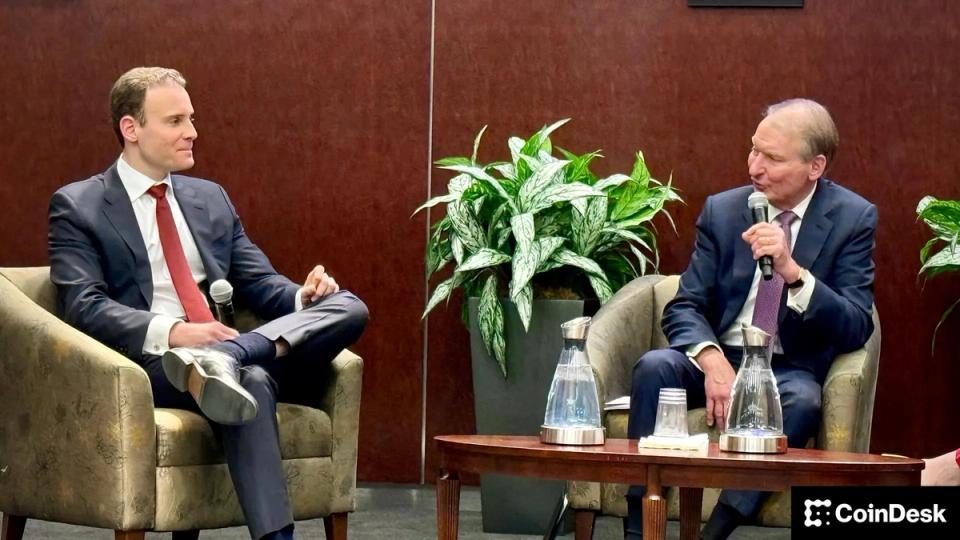
SEC and CFTC Forge Historic Alliance to Streamline U.S. Crypto Regulation
In a groundbreaking move that could reshape the future of digital asset regulation in the United States, the Securities and Exchange Commission (SEC) and the Commodity Futures Trading Commission (CFTC) have announced plans to formalize a comprehensive memorandum of understanding aimed at harmonizing their oversight of the cryptocurrency industry.
Speaking at the FIA Global Cleared Markets Conference in Florida, SEC Chairman Paul Atkins unveiled what he called “a new golden age of regulatory coherence” that promises to eliminate the confusion and bureaucratic hurdles that have long plagued crypto firms operating across multiple regulatory frameworks.
“We are reorienting our approach toward a new golden age of regulatory coherence,” Atkins declared in prepared remarks. “More than aligning our rules, a harmonized framework also demands coordinating our responses to the firms that operate within it, including those that have questions of interpretation or request exemptive relief.”
The announcement represents a dramatic shift from the agencies’ historically contentious relationship, which has been characterized by turf wars and competing interpretations of which digital assets fall under their respective jurisdictions. The SEC traditionally oversees securities and their trading platforms, while the CFTC regulates commodities and derivatives markets. This division has created significant uncertainty for crypto companies, many of which offer products that could arguably fall under both agencies’ purview.
To address this challenge, Atkins revealed several concrete steps toward improved coordination. His staff will begin organizing joint meetings with CFTC employees to discuss product applications, while a new “harmonization” website will be launched to allow firms to request coordinated discussions with both agencies simultaneously.
“Firms should not be shuffled back and forth between regulators when a product touches elements of both regulatory frameworks,” Atkins emphasized. “Nor should clarity depend on which agency happens to speak first.”
The initiative extends beyond mere procedural coordination. The agencies plan to synchronize their enforcement decisions and regulatory examinations, potentially saving crypto firms from undergoing repetitive, redundant reviews. This coordinated approach to supervisory examinations will become particularly crucial as digital asset companies increasingly fall under federal oversight.
“Coordinated exam planning for dually regulated entities should become standard practice,” Atkins stated. “Shared supervisory findings, subject to assurances of confidentiality, should be the norm rather than the exception.”
Perhaps most intriguingly, Atkins hinted at the development of a regulatory “super-app” concept that would allow users to conduct business seamlessly across both agencies’ jurisdictions. Drawing parallels to successful technology platforms that integrate multiple services into unified interfaces, he suggested that such integration could occur invisibly behind the scenes, eliminating the need for users to navigate separate regulatory systems for related tasks.
“In the technology world, a super-app integrates multiple services into a single seamless interface,” Atkins explained. “The user does not toggle between separate systems to complete related tasks. Instead, integration occurs invisibly behind the scenes.”
The timing of this announcement is particularly significant, coming as it does in the wake of President Donald Trump’s appointments of crypto-friendly leadership to both agencies. Since taking office, both the SEC and CFTC have embraced more accommodating approaches to digital asset regulation, aligning with the administration’s pro-crypto stance and working to clarify how digital assets will be defined as either securities or commodities.
This coordinated approach represents a stark departure from the previous administration’s enforcement-heavy strategy, which saw the SEC filing numerous lawsuits against crypto companies and creating an atmosphere of regulatory uncertainty that many industry observers blamed for driving innovation and investment overseas.
The formalization of this cooperation could have far-reaching implications for the U.S. crypto industry. By providing clearer regulatory pathways and reducing the administrative burden on firms operating in this space, the initiative could help establish the United States as a more attractive destination for crypto innovation and investment. This is particularly crucial given the intense global competition for dominance in the digital asset sector, with countries like Singapore, Switzerland, and the United Arab Emirates actively courting crypto businesses with favorable regulatory environments.
Industry experts have largely welcomed the news, viewing it as a positive step toward providing the regulatory clarity that has long been missing from the U.S. crypto landscape. However, some caution that the devil will be in the details, and that the success of this initiative will depend heavily on how effectively the agencies can translate their stated intentions into practical, workable policies.
As the cryptocurrency industry continues to evolve and mature, the ability of U.S. regulators to provide clear, consistent, and coordinated oversight will be crucial in determining whether the country can maintain its position as a global financial hub in the digital age. The SEC and CFTC’s commitment to harmonization represents a promising first step in this direction, potentially paving the way for a more innovative, competitive, and well-regulated U.S. crypto industry.
The coming months will be critical as the agencies work to flesh out the details of their cooperation and begin implementing the changes necessary to make this vision a reality. Crypto firms, investors, and observers alike will be watching closely to see how this new era of regulatory coherence unfolds and what it means for the future of digital assets in the United States.
crypto regulation, SEC CFTC cooperation, digital asset oversight, regulatory harmonization, Paul Atkins, cryptocurrency framework, super-app regulation, blockchain compliance, dual regulatory framework, crypto industry clarity, enforcement coordination, supervisory examinations, securities commodities definition, Trump crypto policy, U.S. crypto innovation, regulatory coherence, digital asset classification, joint agency meetings, crypto product applications, regulatory certainty, market oversight integration, crypto-friendly regulation, administrative burden reduction, global crypto competition, financial innovation, decentralized finance regulation, prediction markets oversight, crypto exchange compliance, regulatory memorandum of understanding, technology regulation evolution
,


Leave a Reply
Want to join the discussion?Feel free to contribute!