
Uber relaunches Motional robotaxis in Las Vegas
Uber and Motional Relaunch Robotaxi Service in Las Vegas: A Phoenix Rising from the Ashes of Autonomous Driving
In a stunning comeback that’s sending shockwaves through the autonomous vehicle industry, Uber and Motional have officially relaunched their commercial robotaxi service in Las Vegas on March 13, 2026. This marks a pivotal moment in the evolution of self-driving technology, as the Hyundai-backed Motional emerges from a devastating 2024 restructuring that nearly spelled its doom.
The Comeback Story: From Near-Collapse to Triumph
Just two years ago, Motional stood on the precipice of extinction. The company, founded in 2020 as a $4 billion joint venture between Hyundai Motor Group and automotive technology giant Aptiv, was gutted by a brutal restructuring that saw approximately 40% of its workforce—around 550 employees—sent packing across Las Vegas, Pittsburgh, California, and Massachusetts.
The crisis erupted in early 2024 when Aptiv, facing mounting costs and an uncertain path to profitability in the robotaxi space, abruptly pulled its funding. The decision sent Motional’s valuation plummeting and forced the company to halt all commercial operations, pausing its ambitious plans to launch a second-generation driverless service.
But Motional refused to die. Hyundai, unwilling to see its autonomous driving dreams crumble, stepped in with a near-$1 billion lifeline: $475 million invested directly into Motional and $448 million to buy out 11% of Aptiv’s common equity stake. This restructuring left Hyundai with approximately 85% ownership while Aptiv retained 15%.
The price of survival was steep. Motional’s commercial rides and deliveries came to a screeching halt. The company’s entire focus shifted to rebuilding its autonomous technology from the ground up, including a strategic pivot toward a more neural network-driven approach to autonomy.
The Phoenix Rises: Las Vegas Robotaxi Service Returns
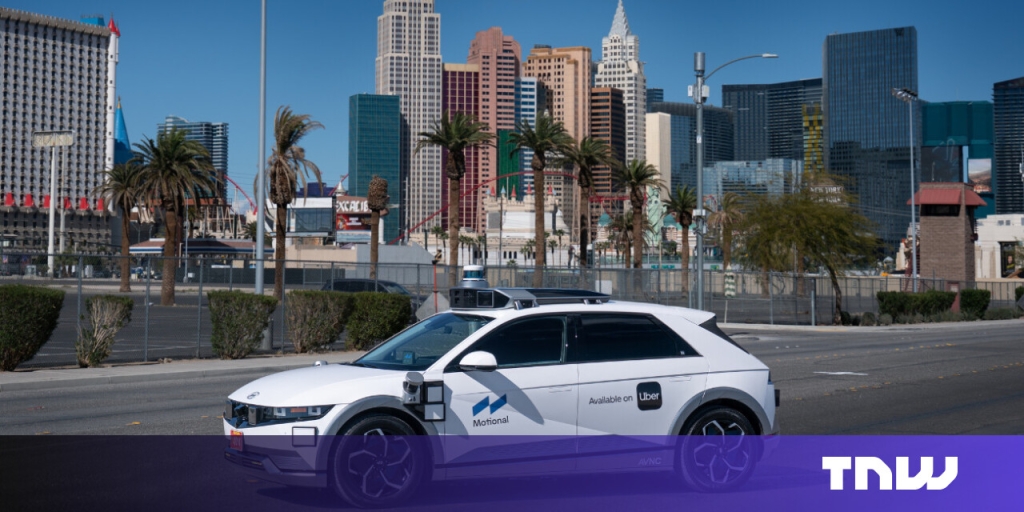
Today, Motional stands reborn, launching its commercial robotaxi service with all-electric IONIQ 5 vehicles now available to riders across key Las Vegas locations. The service covers designated rideshare zones along the iconic Las Vegas Boulevard, including Resorts World Las Vegas, Encore at the Wynn, Westgate Las Vegas Resort & Casino, Downtown Las Vegas, and the Town Square shopping district near the airport.
Initially, these robotaxis will operate with a human vehicle operator monitoring the road from the driver’s seat—a safety measure that Motional promises to remove by the end of 2026. This timeline aligns with the target set during the company’s 2024 restructuring, demonstrating remarkable strategic consistency despite the turmoil.
The IONIQ 5 robotaxi represents a significant technological achievement. Co-developed by Motional and Hyundai Motor Group, it’s custom-built for ride-hail operations and is one of the first SAE Level 4-capable autonomous vehicles to receive certification under US Federal Motor Vehicle Safety Standards (FMVSS). This certification represents a crucial regulatory milestone, as SAE Level 4 means the vehicle can handle all driving functions within a defined operational design domain without human intervention.
How It Works: The Rider Experience
For Las Vegas visitors and residents, the experience is seamless. Riders requesting UberX, Uber Electric, Uber Comfort, or Uber Comfort Electric may be matched with a Motional IONIQ 5 at no additional cost. When matched, a notification appears in the Uber app, giving riders the option to accept the autonomous vehicle or switch to a conventional ride.
Users can maximize their chances of getting an autonomous vehicle by opting in via the Ride Preferences section in their Uber app settings. Once a robotaxi arrives, the entire process—from unlocking the vehicle to starting the trip—happens through the Uber app. Inside, audio cues prompt riders to close doors and fasten seatbelts. If support is needed at any point, a human assistance team is reachable through the app.
A Busy Week for Uber’s Autonomous Ambitions
The Las Vegas relaunch isn’t occurring in isolation. In the same week, Uber announced a deal with Zoox, Amazon’s autonomous vehicle subsidiary, to deploy Zoox’s purpose-built robotaxis on the Uber platform. This service will initially launch in Las Vegas in summer 2026, followed by Los Angeles in mid-2027.
Additionally, Uber and Wayve announced a collaboration with Nissan on a robotaxi pilot in Tokyo, targeted for late 2026. This would mark Uber’s first autonomous vehicle partnership in Japan, demonstrating the company’s aggressive global expansion strategy.
Uber now works with more than 25 autonomous vehicle partners across its Mobility, Delivery, and Freight divisions. The company announced earlier in 2026 that it plans to invest more than $100 million in charging infrastructure for autonomous vehicles. Its autonomous solutions division, launched in February 2026 under Sarfraz Maredia’s oversight, focuses on helping AV technology companies commercialize their deployments faster by providing demand generation, rider experience, customer support, and fleet management services.
The Road Back: Motional’s Journey to Recovery
Motional’s path to this relaunch was paved with both setbacks and strategic pivots. Before the 2024 crisis, the company had been running pilot rides in Las Vegas via Uber and Lyft and deliveries in Los Angeles via Uber Eats, all with human safety operators present. These programs accumulated more than 130,000 autonomous rides, demonstrating both the technology’s maturity and the market’s appetite for driverless transportation.
The 2024 restructuring forced Motional to completely reimagine its approach. The company paused plans to launch its second-generation driverless service and instead focused exclusively on improving its underlying autonomous technology. This included a significant shift toward a more neural network-driven approach to autonomy, which many experts believe represents the future of self-driving technology.
In August 2025, Motional returned to fundraising with a $550 million Series B round led by Aptiv and joined by Hyundai and Nuance Investments. This capital infusion boosted the company’s valuation to $6.5 billion, providing the financial foundation for today’s relaunch.
What This Means for the Future of Transportation
The relaunch of Motional’s robotaxi service in Las Vegas represents more than just a company’s recovery—it signals a maturing autonomous vehicle industry that’s moving from experimental pilots to commercial reality. The presence of a safety operator initially, with plans for full driverless operation by year’s end, reflects a pragmatic approach to scaling this technology.
For Las Vegas, this means expanded transportation options for residents and visitors alike. The service promises to increase reliability and expand access to more ride options, particularly during peak tourist seasons when traditional ride-hail services often face surge pricing and availability issues.
For the broader autonomous vehicle industry, Motional’s comeback story serves as a case study in resilience and adaptation. The company’s ability to rebuild its technology, secure new funding, and relaunch commercial operations within two years of a near-death experience demonstrates both the potential and the challenges of this transformative technology.
Industry Impact and Market Implications
The relaunch comes at a crucial moment for the autonomous vehicle industry. After years of hype and disappointing commercial deployments, companies are finally beginning to deliver on the promise of driverless transportation. Uber’s aggressive expansion strategy, including partnerships with multiple AV companies across different markets, suggests the company sees autonomous vehicles as a key competitive advantage in the future of transportation.
The technological achievement of producing an FMVSS-certified Level 4 vehicle cannot be overstated. This certification means Motional’s IONIQ 5 meets the same safety standards as conventional vehicles, potentially accelerating regulatory approval for wider deployment across the United States.
Looking Ahead: The End of 2026 and Beyond
As Motional works toward removing the safety operator by the end of 2026, the industry will be watching closely. This transition represents one of the most significant milestones in autonomous vehicle development—the moment when a commercial service operates without human backup in complex urban environments.
The expansion plans, though not yet detailed, suggest Motional and Uber see this as just the beginning. The technology, rebuilt and retrained since 2024, now faces its first sustained real-world commercial deployment with paying riders—a true test of its capabilities and reliability.
Tags and Viral Phrases:
- Autonomous vehicle comeback story
- Robotaxi revolution hits Las Vegas
- Motional rises from the ashes
- Uber’s autonomous ambitions unleashed
- Level 4 self-driving cars certified
- The future of transportation arrives
- Autonomous vehicles go mainstream
- Hyundai’s billion-dollar bet pays off
- Robotaxis without safety drivers coming soon
- Autonomous mobility transforms urban travel
- The end of human drivers in sight
- Self-driving cars get federal certification
- Motional’s phoenix moment in tech
- Uber’s robotaxi empire expands
- Autonomous vehicles finally deliver on promise
- The robotaxi wars heat up
- Autonomous driving technology matures
- Self-driving cars enter commercial reality
- The autonomous vehicle industry grows up
- Robotaxis transform the Las Vegas strip
,


Leave a Reply
Want to join the discussion?Feel free to contribute!