
UCLA Chemists Have Created “Impossible” 3D Bonds That Shouldn’t Exist
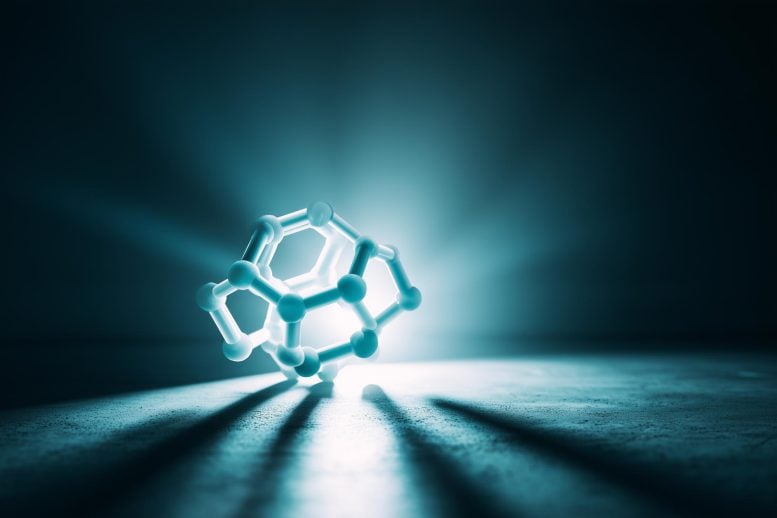
UCLA Chemists Shatter Long-Standing Chemical Rules, Creating “Impossible” 3D Molecular Bonds
In a breakthrough that challenges the very foundations of organic chemistry, scientists at the University of California, Los Angeles (UCLA) have defied long-held scientific principles by creating molecular bonds once thought to be structurally impossible. The discovery not only rewrites textbooks but also opens the door to entirely new classes of molecules with unprecedented properties.
Organic chemistry has long relied on a set of fundamental rules—most notably the valence shell electron pair repulsion (VSEPR) theory and classic bonding models—that dictate how atoms arrange themselves in three-dimensional space. These rules have guided chemists for over a century, serving as a roadmap for predicting molecular geometry and stability. But now, UCLA researchers have proven that some of these “rules” are more like guidelines—and that breaking them can lead to astonishing new possibilities.
Led by Professor Neil Garg and his team at UCLA’s Department of Chemistry and Biochemistry, the study focused on creating strained molecular architectures that, according to traditional theory, should not exist due to geometric and electronic constraints. By leveraging advanced synthetic techniques and computational modeling, the team successfully synthesized a series of cyclic compounds featuring unusual bond angles and unexpected 3D configurations.
“These molecules were considered ‘impossible’ because they violate some of the most basic assumptions about how atoms bond and how molecules maintain stability,” said Garg. “But by carefully controlling the reaction environment and using innovative catalysts, we were able to coax these structures into existence.”
The implications of this discovery are profound. Molecules with unconventional geometries often exhibit unique physical and chemical properties—such as enhanced reactivity, novel optical behaviors, or improved stability under extreme conditions. These traits could be harnessed for applications ranging from advanced materials and nanotechnology to pharmaceuticals and renewable energy technologies.
One of the most exciting aspects of the research is its potential to inspire a new era of molecular design. If chemists can intentionally break the rules to create stable, functional molecules, the possibilities for innovation expand exponentially. This could lead to the development of more efficient catalysts, stronger polymers, or even entirely new classes of drugs with improved efficacy and reduced side effects.
The team’s findings were published in the prestigious journal Science, where they detail the synthetic pathways and theoretical models that made these “impossible” bonds possible. The research also highlights the importance of challenging scientific dogma and embracing creative approaches in the pursuit of discovery.
“This work reminds us that science is not static,” said co-author Francesca Ippoliti. “Even the most established principles can be re-examined, and sometimes, by questioning them, we uncover entirely new realms of possibility.”
As the scientific community digests this groundbreaking work, one thing is clear: the boundaries of chemistry are far more flexible than previously imagined. With this discovery, UCLA has not only expanded the periodic table of possibilities but also ignited a new wave of curiosity and innovation in the field.
Tags / Viral Phrases:
- “Impossible” molecules now possible
- Chemistry rules shattered
- UCLA breaks the laws of molecular bonding
- New era of molecular design
- Scientists create bonds that shouldn’t exist
- Revolutionary chemistry breakthrough
- Defying 100 years of chemical theory
- Molecules that rewrite the textbooks
- Groundbreaking discovery in organic chemistry
- Bending the rules of science
- Chemists challenge the impossible
- New molecules with unprecedented properties
- Innovation through breaking boundaries
- Science defies expectations
- The future of molecular engineering
,

Leave a Reply
Want to join the discussion?Feel free to contribute!