
Uh Oh… Nvidia’s $100 Billion Deal With OpenAI Has Fallen Apart
OpenAI’s $100 Billion Nvidia Deal Falls Apart as AI Chip Tensions Boil Over
In a dramatic turn of events that’s sending shockwaves through the tech world, OpenAI’s blockbuster $100 billion deal with Nvidia has reportedly collapsed, exposing deep tensions in the AI hardware ecosystem. The news marks a stunning reversal for what was supposed to be the largest AI infrastructure deal in history, and signals potential cracks in the foundation of the AI industry’s hardware supply chain.
The Deal That Never Was
Back in September, the AI world was buzzing with news of OpenAI’s intention to purchase a staggering $100 billion worth of Nvidia’s cutting-edge AI chips. The deal, which would have provided OpenAI with ten gigawatts of compute power—equivalent to powering a small country—was heralded as the ultimate validation of Nvidia’s dominance in the AI chip market.
But according to sources speaking to Reuters this week, OpenAI has been quietly dissatisfied with Nvidia’s latest chip offerings, particularly when it comes to AI inference capabilities. For those unfamiliar with the term, inference is the process where trained AI models actually generate responses—the moment when ChatGPT writes your essay or DALL-E creates your image. This capability has become increasingly crucial as AI companies shift focus from just training massive models to actually deploying them at scale.
AMD Enters the Fray
While negotiations with Nvidia dragged on, OpenAI didn’t sit idle. The company has been actively diversifying its chip partnerships, most notably signing a major strategic agreement with AMD. This move suggests OpenAI is playing the long game, ensuring it’s not entirely dependent on a single supplier—a lesson many tech companies have learned the hard way.
The timing is particularly interesting given that just months ago, concerns were already circulating about AI companies essentially passing money around in circular dealmaking. The Bloomberg report from October highlighted how these massive infrastructure investments might be more about optics and market positioning than actual technological necessity.
The $20 Billion Pivot
In what appears to be a face-saving maneuver, reports emerged Tuesday that Nvidia is now nearing a deal to invest $20 billion in OpenAI instead—a mere fraction of the original $100 billion figure. This dramatic reduction speaks volumes about the shifting dynamics between these tech titans.
Nvidia’s stock has taken a beating in recent weeks, dropping almost nine percent over the last five days and over seven percent in the past month. The market clearly views this development as a significant blow to Nvidia’s market dominance and future growth prospects.
The Bigger Picture: AI’s Infrastructure Bubble?
This collapse comes at a particularly sensitive time for the AI industry. Investors are increasingly questioning the astronomical spending plans of AI companies, with trillions of dollars committed to scaling up infrastructure that won’t generate profits for years—if ever.
The situation highlights a fundamental tension in the AI industry: companies are racing to build the most powerful AI systems possible, but the economics of doing so remain highly questionable. As one industry observer noted, we’re essentially watching companies commit to infrastructure spending on a scale that would make traditional industries blush, all while the path to profitability remains murky at best.
Denials and Diplomacy
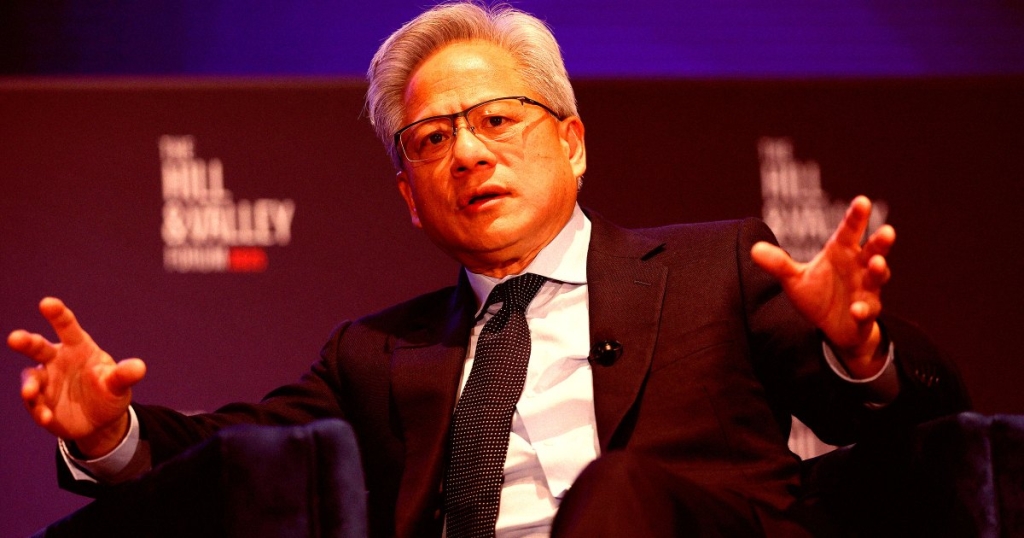
Both Nvidia CEO Jensen Huang and OpenAI’s Sam Altman have rushed to downplay any suggestion of strain in their relationship. Huang told reporters that the original $100 billion figure “was never a commitment,” while Altman took to social media to declare his company’s continued love for Nvidia’s products.
“We love working with NVIDIA and they make the best AI chips in the world,” Altman tweeted. “We hope to be a gigantic customer for a very long time. I don’t get where all this insanity is coming from.”
Huang has been equally diplomatic, promising that Nvidia will “definitely participate” in OpenAI’s next funding round and calling it “such a good investment.”
The Reality Check
Industry analysts point out that the original deal was always more of a “letter of intent” than a binding agreement. The ten-gigawatt figure, requiring the equivalent of ten nuclear reactors, always seemed more like market positioning than a concrete plan.
As Ars Technica observed, it’s entirely possible the original $100 billion figure was simply pulled out of thin air—perhaps during one of those high-stakes meetings where executives feel pressure to make headline-grabbing announcements.
What This Means for the AI Industry
The collapse of this deal represents more than just a failed business transaction. It’s a potential turning point in the AI industry’s evolution, suggesting that:
- Even the most dominant players (Nvidia) aren’t immune to changing market dynamics
- AI companies are becoming more sophisticated and demanding about their hardware requirements
- The infrastructure spending spree may be hitting practical limits
- Competition in the AI chip market is heating up, with AMD gaining ground
Looking Forward
As OpenAI continues to close its latest funding round, all eyes will be on what kind of deal—if any—it ultimately strikes with Nvidia. The original $100 billion dream may be dead, but the need for cutting-edge AI chips remains very much alive.
What’s clear is that the relationship between AI software companies and hardware manufacturers is entering a new phase—one where the balance of power may be shifting, and where the massive infrastructure investments of the past few years will face increasing scrutiny.
The AI industry has been built on the promise of exponential growth and unlimited potential. But as this deal’s collapse demonstrates, even in the world of artificial intelligence, reality has a way of asserting itself.
Tags: #AI #Nvidia #OpenAI #TechNews #ArtificialIntelligence #ChipWars #TechDrama #SiliconValley #Investment #TechBubble #AMD #SamAltman #JensenHuang #ChatGPT #AINews
Viral Sentences:
- “The $100 billion AI dream just crashed and burned”
- “OpenAI just told Nvidia their chips aren’t good enough”
- “AI’s biggest deal just fell apart over chip performance issues”
- “Nvidia’s stock is tanking as OpenAI looks elsewhere”
- “The AI infrastructure bubble might be bursting”
- “Sam Altman plays hardball with Nvidia”
- “Ten nuclear reactors worth of compute power? Never mind”
- “AI companies are getting picky about their chips”
- “The balance of power in AI hardware is shifting”
- “Even $100 billion deals aren’t set in stone in tech”
,


Leave a Reply
Want to join the discussion?Feel free to contribute!