
UL and IMR to design Ireland’s first 3D-printed liquid rocket engine
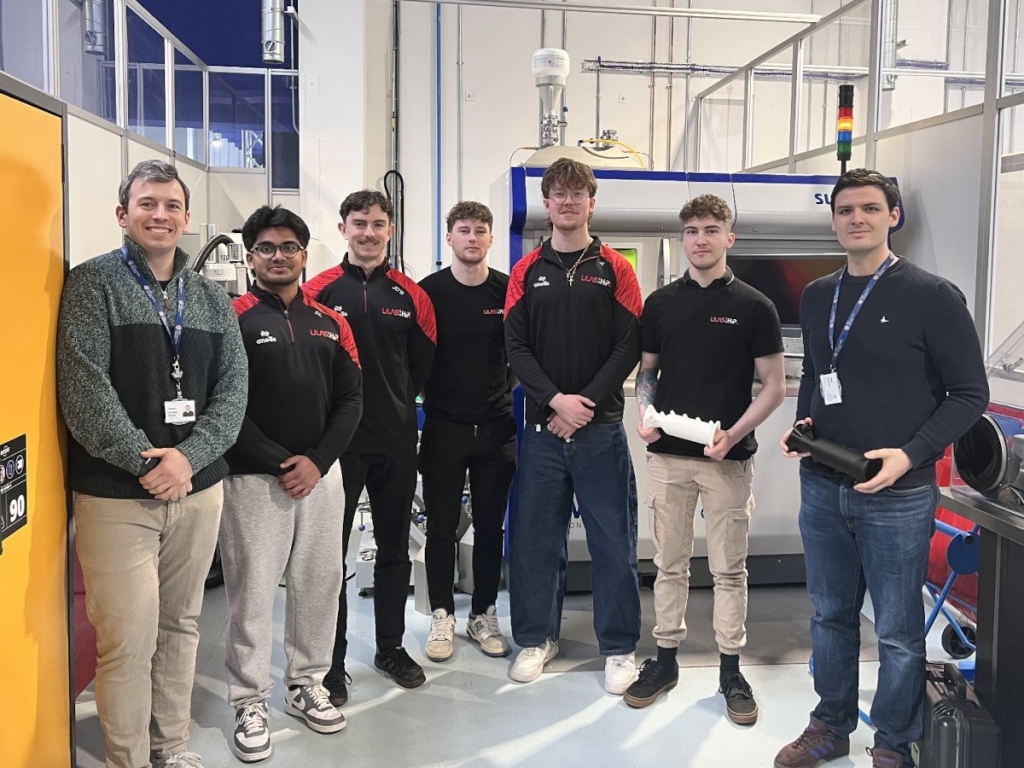
Ireland’s First 3D-Printed Liquid Rocket Engine Set to Launch Student Innovation into the Stratosphere
In a groundbreaking leap for Irish aerospace engineering, the University of Limerick Aeronautical Society’s High-Powered Rocketry Team (ULAS HiPR) has officially partnered with the University of Limerick and Irish Manufacturing Research (IMR) to design and produce the first additive manufactured (3D-printed) liquid rocket engine in the Republic of Ireland. Named the Lúin of Celtchar, this high-performance propulsion system represents a bold fusion of ancient Irish heritage and cutting-edge space technology.
The Lúin of Celtchar is no ordinary rocket engine. It’s a 2 kilonewton, water-cooled, IPA/nitrous oxide bi-propellant system that has been entirely conceptualized and engineered by ULAS HiPR’s multidisciplinary student team. The engine will be manufactured at IMR’s Advanced Manufacturing Lab in Mullingar using state-of-the-art metal additive manufacturing techniques before being returned to UL for precision machining and final assembly.
This isn’t just a classroom experiment—it’s a world-class propulsion innovation being designed, built, and tested entirely on Irish soil. The project marks a pivotal moment in Ireland’s emerging space capabilities, positioning the country as a serious contender in the global aerospace arena.
A Team That’s Reaching for the Stars
Founded in 2022, ULAS HiPR has grown into a powerhouse of student-led innovation, boasting over 100 members from diverse engineering disciplines—including aeronautical, mechanical, software, and design engineering. United by a shared passion for rocketry, the team has already made waves on the international stage, representing Ireland at prestigious competitions such as Mach-24 and Euroc, the European Rocketry Challenge.
Now, with the announcement of their partnership and the official acceptance into the UK-based Race2Space 2026 International Propulsion competition, ULAS HiPR is poised to take Irish student rocketry to unprecedented heights. According to the team, this is “a major milestone in advancing Irish student-led space propulsion capabilities.”
Industry Collaboration: The Engine Behind the Innovation
The success of the Lúin of Celtchar project is a testament to the power of collaboration between academia and industry. IMR, a leader in advanced manufacturing, is playing a crucial role in bringing the students’ vision to life. Using metal additive manufacturing, IMR is producing components that push the boundaries of what’s possible in rocket propulsion.
Mark Hartnett, a design for manufacturing senior technologist at IMR, emphasized the significance of the partnership: “At IMR, supporting ambitious student teams like ULAS HiPR reflects our commitment to strengthening Ireland’s advanced manufacturing ecosystem and enabling the next generation of aerospace innovators. These are vital platforms for advancing cutting-edge technologies and building Ireland’s future engineering capability, and this ULAS HiPR propulsion project demonstrates how emerging technologies can move rapidly from concept to high-performance hardware.”
A Defining Moment for Irish Space Ambitions
Jay Looney, co-head of ULAS HiPR, described the team’s acceptance into Race2Space as “a defining moment not only for ULAS HiPR, but for Ireland’s student space community.” He added, “The selection of the first additively manufactured liquid rocket engine in the Republic of Ireland into the competition validates the technical ambition of our student team, and the strength of collaboration between Irish university students with industry. It demonstrates that world-class propulsion innovation can now be designed, manufactured and tested entirely here in Ireland.”
This achievement is more than just a technical milestone—it’s a symbol of Ireland’s growing presence in the global space economy. With the Lúin of Celtchar, ULAS HiPR is proving that Irish engineers are ready to compete on the world stage.
Ireland’s Space Ecosystem: A New Frontier
The timing of this announcement couldn’t be more fitting. In late February, Silicon Republic attended the official launch of Ireland’s first European Space Agency Phi-Lab, headquartered at IMR in Mullingar and run in collaboration with the AMBER Centre at Trinity College Dublin. As one of 10 European Phi-Labs, it serves as Ireland’s national platform for space technology development, anchoring the country’s ambitions within Europe and the world’s rapidly expanding space economy.
This ecosystem of innovation—spanning universities, research centers, and industry partners—is creating a fertile ground for breakthroughs like the Lúin of Celtchar. It’s a clear sign that Ireland is no longer content to be a spectator in the space race; it’s ready to take its place among the leaders.
The Road Ahead: Race2Space 2026 and Beyond
With their acceptance into Race2Space 2026, ULAS HiPR is now gearing up for one of the most prestigious propulsion competitions in the world. The challenge will test not only the performance of their engine but also their ability to innovate under pressure. If successful, the Lúin of Celtchar could become a flagship project for Irish aerospace engineering, inspiring a new generation of engineers and scientists.
But the team’s ambitions don’t stop there. By demonstrating that world-class propulsion systems can be designed and built in Ireland, ULAS HiPR is laying the groundwork for a thriving space industry in the country. From satellite launches to deep-space exploration, the possibilities are as limitless as the cosmos itself.
Conclusion: A Giant Leap for Irish Innovation
The Lúin of Celtchar is more than just a rocket engine—it’s a symbol of what’s possible when passion, talent, and collaboration come together. By pushing the boundaries of additive manufacturing and propulsion technology, ULAS HiPR is not only advancing Irish engineering but also contributing to the global space community.
As the team prepares for Race2Space 2026, the eyes of the world will be on Ireland. Will the Lúin of Celtchar soar to new heights? One thing is certain: with the talent and determination of ULAS HiPR, the sky is no longer the limit—it’s just the beginning.
Tags: ULAS HiPR, University of Limerick, Irish Manufacturing Research, 3D-printed rocket engine, Lúin of Celtchar, Race2Space 2026, aerospace engineering, additive manufacturing, space propulsion, Irish space ambitions, student innovation, Euroc, European Rocketry Challenge, IPA/nitrous oxide bi-propellant, metal additive manufacturing, IMR, AMBER Centre, European Space Agency Phi-Lab, advanced manufacturing, rocket engine, propulsion competition, aerospace innovation, space technology, Irish engineering, global space economy
Viral Sentences:
- Ireland’s first 3D-printed liquid rocket engine is ready to launch!
- Meet the student team building world-class propulsion systems in Ireland.
- The Lúin of Celtchar: where ancient heritage meets cutting-edge space tech.
- ULAS HiPR is proving that Irish engineers can compete on the world stage.
- This is more than a rocket engine—it’s a symbol of Irish innovation.
- Ireland’s space ambitions are taking off, one 3D-printed engine at a time.
- The future of aerospace is being built by students in Limerick.
- Race2Space 2026: Ireland’s student rocketeers are ready to soar.
- From concept to high-performance hardware: the power of collaboration.
- The sky is no longer the limit—it’s just the beginning for Irish space tech.
,


Leave a Reply
Want to join the discussion?Feel free to contribute!