
Under Trump, EPA’s enforcement of environmental laws collapses, report finds
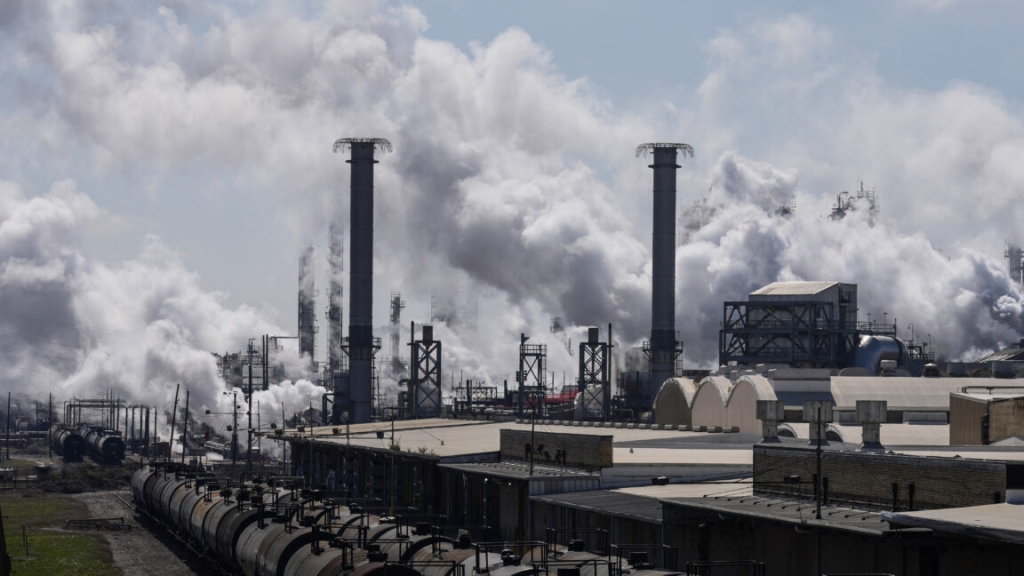
EPA Enforcement Plummets Under Trump, Sparking Fears of Unchecked Pollution
In a dramatic shift that environmental watchdogs are calling “alarming” and “unprecedented,” federal data reveals that the Environmental Protection Agency’s enforcement actions against polluters have collapsed to historic lows during the Trump administration’s first year in office. The numbers paint a stark picture of a regulatory agency pulling back from its core mission at a time when climate change and environmental degradation are accelerating.
According to an analysis by the Environmental Integrity Project, the EPA issued just $41 million in penalties for environmental violations through September 2017—a staggering $8 million less than during the same period in 2016 when adjusted for inflation. This represents a 16% drop in enforcement funding that experts say sends a dangerous signal to corporations: the era of strict environmental oversight may be over.
“This isn’t just a minor adjustment in priorities,” said Eric Schaeffer, executive director of the Environmental Integrity Project and former director of civil enforcement at the EPA. “We’re witnessing a fundamental dismantling of the agency’s enforcement capability. When polluters see the EPA backing off, they get the message loud and clear—they can cut corners and save money by ignoring environmental laws.”
The decline in enforcement manifests across multiple metrics. Civil judicial lawsuits filed by the EPA against polluters dropped by nearly 70% compared to the previous year. Administrative orders requiring companies to clean up contamination or install pollution controls fell by almost 60%. Even criminal prosecutions, typically reserved for the most egregious violations, have become exceedingly rare.
Environmental law experts warn that this enforcement vacuum creates a cascading effect throughout the economy. When major corporations observe reduced oversight, they’re incentivized to relax their own compliance programs. Smaller companies, seeing industry giants escape consequences, may abandon environmental safeguards entirely. The result is a race to the bottom where environmental protection becomes a competitive disadvantage.
“The math is simple and brutal,” explained Schaeffer. “If a company can save $10 million by violating clean air standards but only faces a $500,000 penalty if caught, the rational business decision becomes to pollute. With enforcement at historic lows, that risk calculation has fundamentally changed.”
The human cost of this regulatory retreat is already becoming apparent in communities across America. In West Virginia’s coal country, residents report increased dust and runoff from mining operations that previously faced regular inspections. Along the Gulf Coast, petrochemical plants have accelerated expansion projects without the environmental reviews that once slowed development. In California’s Central Valley, agricultural operations are reporting fewer citations for pesticide violations and water contamination.
“These aren’t abstract policy changes,” said Dr. Elena Marks, an environmental health researcher at Rice University. “We’re talking about increased asthma rates in children living near refineries, contaminated drinking water in rural communities, and accelerated climate change from unchecked industrial emissions. The people who suffer most are those already vulnerable—low-income communities and communities of color that disproportionately bear the burden of pollution.”
The enforcement decline appears particularly severe in regions with significant industrial activity. The EPA’s Region 5, covering the industrial Midwest, saw civil judicial cases drop from 12 in 2016 to just 2 in 2017. Region 6, encompassing Texas and Louisiana’s petrochemical corridor, experienced a similar collapse in enforcement actions.
Legal experts suggest this dramatic shift could face constitutional challenges. The EPA’s enforcement mandate comes directly from federal statutes like the Clean Air Act and Clean Water Act, which Congress passed with specific enforcement mechanisms. If the agency essentially ceases enforcing these laws, it could be argued that the executive branch is failing to faithfully execute the laws as required by the Constitution.
“We’re in uncharted territory here,” said Richard Lazarus, a professor of environmental law at Harvard Law School. “While administrations certainly have discretion in how they enforce laws, there’s a difference between prioritizing certain violations and essentially abandoning enforcement altogether. The scale of this retreat is extraordinary.”
The timing of this enforcement collapse is particularly concerning given the accelerating pace of climate change. 2017 saw record-breaking hurricanes, devastating wildfires, and extreme weather events that scientists increasingly link to global warming. Yet as the need for environmental regulation becomes more urgent, the mechanisms for enforcing existing protections are being dismantled.
Industry representatives, however, welcome the shift. “For too long, the EPA has operated as a punitive agency more interested in fines than in working with businesses to achieve environmental progress,” said Karen Harbert, president of the American Gas Association. “This administration understands that reasonable regulation, not constant litigation, is what drives innovation and environmental improvement.”
Environmental advocates counter that this view ignores decades of evidence showing that enforcement is essential for protecting public health. “Voluntary compliance doesn’t work,” said Gina McCarthy, former EPA administrator under President Obama. “Companies will always prioritize profits over the environment unless there are real consequences for violations. This isn’t about being anti-business—it’s about ensuring a level playing field where everyone follows the same rules.”
The full impact of this enforcement retreat may not be known for years. Many environmental violations have cumulative effects that only become apparent over time. Contaminated groundwater plumes can take decades to reach drinking water supplies. Air pollution exposure can cause health problems that manifest years later. Climate change impacts compound over time, making early action critical.
As the EPA’s enforcement apparatus continues to weaken, environmental groups are scrambling to fill the gap. Citizen suits under environmental statutes have increased, with nonprofit organizations stepping in to monitor compliance and file lawsuits against polluters. However, these groups lack the resources and authority of federal regulators.
“We’re essentially asking volunteers to do the work of a federal agency with a $8 billion budget,” said Schaeffer. “It’s like trying to patrol the border with a neighborhood watch program. It might catch some obvious violations, but it can’t replace systematic, professional enforcement.”
The coming months will be crucial in determining whether this enforcement collapse represents a temporary policy shift or a permanent restructuring of environmental protection in America. With key EPA positions still unfilled and the agency’s budget under threat, many fear the worst.
“What we’re seeing isn’t just a change in administration,” warned Dr. Marks. “It’s a fundamental redefinition of the government’s role in protecting public health and the environment. And once that protection is lost, it’s incredibly difficult to rebuild.”
Tags:
EPA enforcement collapse, Trump administration environmental policy, polluter penalties decline, environmental regulation rollback, clean air act enforcement, clean water act violations, industrial pollution unchecked, EPA budget cuts, environmental protection dismantling, climate change regulation, citizen suits environmental law, industrial compliance costs, public health environmental risks, administrative orders EPA, civil judicial lawsuits environment, criminal prosecutions polluters, environmental integrity project report, EPA Region 5 enforcement, EPA Region 6 enforcement, voluntary environmental compliance, federal environmental statutes, constitutional challenges EPA, cumulative environmental impacts, groundwater contamination, air quality violations, climate change acceleration, industrial expansion environmental review, pesticide violations agriculture, low-income communities pollution, communities of color environmental justice, EPA enforcement statistics, environmental monitoring nonprofits, federal agency oversight, environmental protection level playing field, industrial emissions regulation, extreme weather climate change, environmental law professor analysis, American Gas Association statement, former EPA administrator perspective, environmental health researcher warnings, neighborhood watch environmental protection, $8 billion EPA budget, unfilled EPA positions, permanent environmental policy changes, public health protection government role, rebuilding environmental safeguards
Viral Sentences:
The EPA is essentially telling polluters: “Go ahead, we won’t stop you”
$8 million less in penalties means $8 million more in corporate profits
Your drinking water might be contaminated right now and nobody’s checking
Asthma rates are rising while environmental enforcement is falling
The math is simple: pollute now, pay later (if ever)
Your kids are breathing dirtier air because of political decisions
This isn’t deregulation—it’s de-protection
When the EPA stops enforcing laws, communities become sacrifice zones
The EPA’s enforcement arm has been effectively disarmed
Climate change is accelerating while environmental cops are being fired
Your right to clean air and water depends on aggressive enforcement
The most vulnerable communities will suffer the most from lax enforcement
This is a race to the bottom where pollution becomes profitable
The EPA is becoming a paper tiger—all roar, no bite
Environmental protection is becoming a competitive disadvantage
The government is abdicating its responsibility to protect public health
This isn’t just a policy change—it’s a fundamental betrayal
Your tax dollars fund an EPA that’s not doing its job
The fox is guarding the henhouse at America’s environmental watchdog
This enforcement collapse could take decades to reverse
When polluters see the EPA backing off, they get the message loud and clear
The EPA’s enforcement capability has been fundamentally dismantled
Companies are now incentivized to break environmental laws
This is environmental protection by the honor system—and we know how that works
The EPA is essentially operating on autopilot with no one at the controls
This isn’t about being anti-business—it’s about not poisoning our communities
The people who suffer most are those who can least afford it
This enforcement vacuum creates a cascading effect throughout the economy
We’re witnessing the systematic dismantling of environmental safeguards
The EPA is becoming a voluntary compliance agency in a mandatory world
This is the environmental equivalent of defunding the police
The EPA’s enforcement statistics read like a horror story
This isn’t deregulation—it’s de-protection of American communities
The EPA is essentially telling corporations: “Do whatever you want”
This enforcement collapse represents a fundamental redefinition of government’s role
We’re essentially asking volunteers to do the work of a federal agency
This is environmental protection by the honor system—and we know how that works
The EPA is becoming a paper tiger—all roar, no bite
This isn’t just a policy change—it’s a fundamental betrayal
Your tax dollars fund an EPA that’s not doing its job
The fox is guarding the henhouse at America’s environmental watchdog
This enforcement collapse could take decades to reverse
,

Leave a Reply
Want to join the discussion?Feel free to contribute!