
Unitree granted two humanoid robot design patents, ships over 5,500 units in 2025 · TechNode
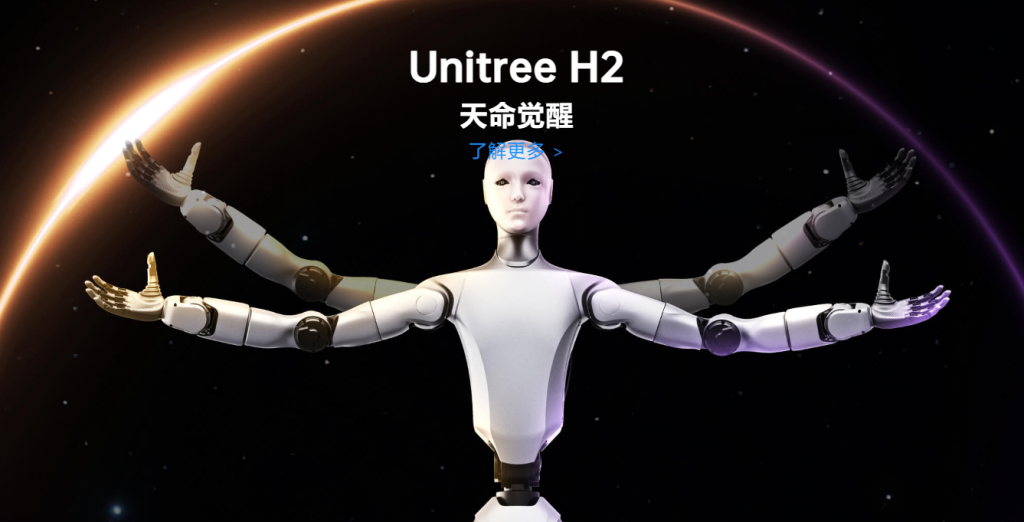
Unitree Robotics Secures Patents for Next-Gen Humanoid Robots, Ships Over 5,500 Units in 2025
In a significant leap forward for the robotics industry, Chinese firm Unitree Robotics has been granted two design patents for its cutting-edge humanoid robots, signaling a bold step toward scalable, modular automation. The patents, approved by China’s National Intellectual Property Administration on January 6 and January 20, showcase Unitree’s commitment to innovation in both design and functionality.
The newly patented humanoid robots are built with a focus on simplified structures and modular architecture, a design philosophy that allows for seamless future upgrades and functional expansions. This approach not only enhances the robots’ adaptability but also positions them as versatile solutions for a wide array of applications, from heavy-duty industrial tasks to delicate commercial services, household assistance, and even high-risk environments like space exploration.
Unitree’s vision for these robots is as ambitious as it is practical. By prioritizing modularity, the company aims to create a platform that can evolve with technological advancements, ensuring longevity and relevance in an ever-changing market. This strategy could potentially disrupt industries that rely on automation, offering a flexible alternative to traditional, rigid robotic systems.
Record-Breaking Production and Shipments in 2025
The patents come on the heels of impressive production and shipment figures for Unitree. According to information from the company’s distributors and suppliers, Unitree shipped more than 5,500 humanoid robots in 2025, with mass production exceeding 6,000 units during the year. These numbers are a testament to the growing demand for humanoid robots and Unitree’s ability to scale its operations to meet market needs.
It’s worth noting that these figures refer exclusively to fully humanoid robots, excluding other robotic products in Unitree’s portfolio. This focus on humanoid robots underscores the company’s strategic emphasis on this segment, which is increasingly seen as the future of robotics.
A Modular Approach to the Future
Unitree’s modular design philosophy is not just a technical innovation; it’s a strategic move that could redefine the robotics landscape. By creating robots that can be easily upgraded and customized, Unitree is addressing one of the biggest challenges in the industry: the rapid pace of technological change. Traditional robots often become obsolete quickly, but Unitree’s approach ensures that its robots can evolve alongside advancements in AI, sensors, and other key technologies.
This modular architecture also opens up new possibilities for collaboration and integration. For instance, businesses could tailor the robots to their specific needs, adding or removing components as required. This flexibility could make Unitree’s robots particularly appealing to industries with diverse and evolving requirements, such as logistics, healthcare, and manufacturing.
Applications Across Industries
The potential applications for Unitree’s humanoid robots are vast and varied. In industrial settings, they could take on repetitive, physically demanding tasks, freeing up human workers for more complex and creative roles. In commercial environments, their precision and adaptability could make them ideal for customer service, retail, and hospitality. For households, they could assist with chores, elder care, and even companionship.
Perhaps most intriguingly, Unitree’s robots are designed to operate in high-risk environments, such as space exploration. The modular design could allow for easy customization to withstand extreme conditions, making them valuable assets for missions where human presence is limited or dangerous.
A Growing Competitive Landscape
Unitree’s achievements come at a time of intense competition in the robotics industry. Companies like Boston Dynamics, Tesla, and SoftBank Robotics are also making significant strides in humanoid robotics, each with its own unique approach. However, Unitree’s focus on modularity and scalability could give it a competitive edge, particularly in markets that value flexibility and long-term viability.
The company’s ability to ship over 5,500 units in a single year also highlights its operational efficiency and market readiness. As the demand for humanoid robots continues to grow, Unitree’s production capabilities could position it as a leader in the field.
Looking Ahead
With its recent patents and record-breaking production figures, Unitree Robotics is poised to play a pivotal role in the future of automation. The company’s emphasis on modular design and scalability not only addresses current market needs but also anticipates future trends in robotics and AI.
As Unitree continues to innovate and expand, it will be fascinating to see how its humanoid robots are adopted across industries and how they shape the broader landscape of automation. One thing is clear: Unitree is not just building robots; it’s building the foundation for a more adaptable, efficient, and intelligent future.
tags #UnitreeRobotics #HumanoidRobots #RoboticsInnovation #ModularDesign #AI #Automation #FutureTech #TechNews #ChineseTech #IndustrialRobots #SpaceExploration #RoboticsPatents #TechTrends #ViralTech #CuttingEdgeTech
viral sentences:
- Unitree’s modular robots could redefine the future of automation.
- Over 5,500 humanoid robots shipped in 2025—Unitree is scaling fast.
- Simplified structures, endless possibilities: Unitree’s design patents are a game-changer.
- From factories to space, Unitree’s robots are ready for anything.
- The robotics race heats up as Unitree secures patents and breaks production records.
- Modular architecture: the key to future-proofing robotics.
- Unitree’s humanoid robots are not just machines—they’re adaptable platforms for innovation.
- China’s National Intellectual Property Administration approves Unitree’s groundbreaking designs.
- The future of robotics is modular, and Unitree is leading the charge.
- Unitree’s 2025 production numbers prove the world is ready for humanoid robots.
,

Leave a Reply
Want to join the discussion?Feel free to contribute!