
US Air Force Sends B-21 Bomber Production Into Overdrive
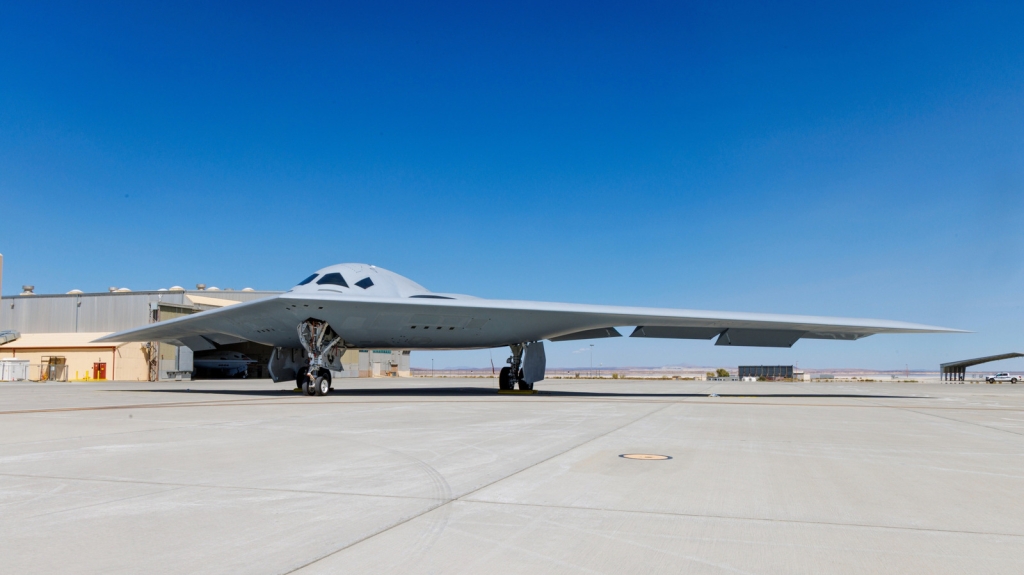
US Air Force Sends B-21 Raider Production Into Overdrive
For nearly 30 years, the Northrop Grumman B-2 Spirit has stood as the United States Air Force’s premier stealth bomber—a technological marvel that has shaped the very nature of modern aerial warfare. Alongside the legendary Lockheed Martin F-117 Nighthawk, the B-2 has represented the pinnacle of stealth technology, forming a critical component of America’s nuclear triad. However, even the most advanced military hardware has a finite lifespan, and the B-2s are now approaching the twilight of their operational careers. As these aging giants prepare for eventual retirement, the Air Force faces a pressing question: how can it maintain its strategic edge without a next-generation stealth bomber ready to take their place?
The answer, it seems, has been in development for years. The U.S. Air Force has already begun receiving its next-generation stealth bomber, the Northrop Grumman B-21 Raider, with at least two test aircraft delivered to date. Named after the daring Doolittle Raid of World War II, the B-21 represents a quantum leap in stealth technology and operational capability. While it bears a visual resemblance to its predecessor, the B-21 incorporates numerous advancements that set it apart from the B-2, including a more efficient engine configuration and reduced overall dimensions.
The B-21 is designed to be more than just a replacement for the B-2—it’s envisioned as a platform that will define American airpower for decades to come. Its enhanced stealth characteristics, extended range, and advanced avionics make it capable of penetrating the most sophisticated enemy air defenses. Moreover, the B-21 is being developed with the flexibility to accommodate both conventional and nuclear payloads, ensuring its relevance across all potential conflict scenarios.
Recognizing the strategic importance of rapidly fielding this new capability, the Department of the Air Force has taken decisive action. In February 2026, a new agreement was signed with Northrop Grumman that effectively puts B-21 production into overdrive. Under this revised arrangement, the manufacturer will increase the annual production rate of the B-21 by approximately 25%. This acceleration is not merely a production target—it’s a strategic imperative designed to ensure that the Air Force can deploy these advanced bombers to the fleet faster than originally planned.
The implications of this production increase are profound. First and foremost, it means that more B-21s will be available for combat operations in a shorter timeframe, significantly enhancing the Air Force’s strike-anywhere capabilities. This accelerated timeline also serves as a hedge against potential future conflicts, ensuring that the United States maintains its technological and numerical advantage in strategic bomber forces. Additionally, by compressing the delivery schedule, the Air Force aims to keep the program within budget constraints, avoiding the cost overruns that have plagued other major defense acquisition programs.
To facilitate this accelerated production, the U.S. Air Force has committed an additional $4.5 billion, funds that were already authorized and appropriated under the FY2025 Reconciliation Act—colloquially known as the “One Big Beautiful Bill.” This financial commitment underscores the strategic priority placed on the B-21 program and reflects the Air Force’s determination to field this capability as quickly as possible.
It’s worth noting that, unlike several other high-profile military projects that have suffered from delays and cost overruns—such as the USS Enterprise aircraft carrier, which has faced significant launch delays—the B-21 program has largely adhered to its original schedule. This track record of reliability and predictability makes the decision to accelerate production even more significant, as it demonstrates confidence in both the program’s management and Northrop Grumman’s manufacturing capabilities.
The B-21 Raider represents more than just a new aircraft; it embodies the Air Force’s vision for the future of strategic bombing. As the B-2 Spirit eventually retires, the B-21 will carry forward the legacy of American airpower dominance while incorporating the lessons learned from three decades of stealth operations. With production now entering overdrive, the United States is positioning itself to maintain its strategic advantage well into the future, ensuring that the next generation of stealth bombers will be ready when they’re needed most.
Tags: B-21 Raider, stealth bomber, Northrop Grumman, US Air Force, military technology, nuclear triad, defense production, strategic bombing, advanced avionics, military modernization
Viral Sentences:
- The B-21 Raider is America’s next-generation stealth bomber taking production into overdrive.
- US Air Force accelerates B-21 bomber production by 25% to maintain strategic advantage.
- Next-gen stealth bomber B-21 set to replace aging B-2 Spirit fleet.
- $4.5 billion boost accelerates America’s most advanced bomber into production.
- B-21 Raider production surge ensures US maintains air superiority for decades.
- Stealth technology reaches new heights with B-21’s enhanced capabilities.
- US military’s future takes flight with accelerated B-21 bomber program.
- From B-2 to B-21: America’s stealth evolution enters next phase.
- B-21 production overdrive signals US commitment to strategic bombing dominance.
- Next-generation bomber program stays on schedule while others face delays.
,


Leave a Reply
Want to join the discussion?Feel free to contribute!