
US Government Deploys Elon Musk’s Grok as Nutrition Bot, Where It Immediately Gives Advice for Rectal Use of Vegetables
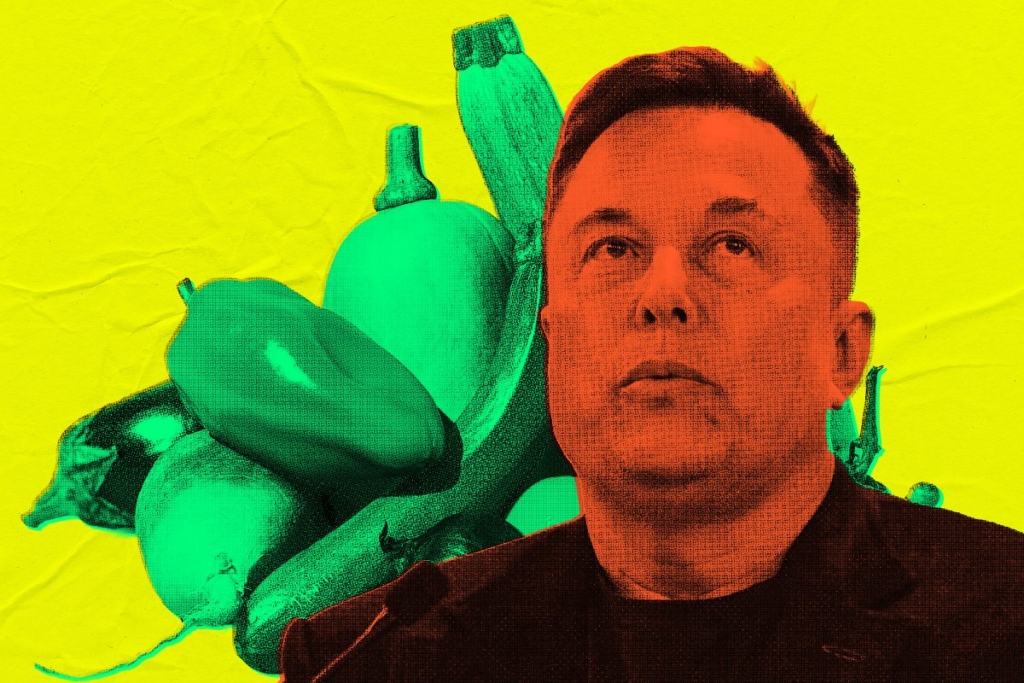
Grok’s Government Gig: AI Chatbot’s Wild Ride Through Nutrition Advice Sparks Controversy
In a bizarre turn of technological governance, the Trump administration has enlisted Elon Musk’s AI chatbot Grok to serve as the digital face of America’s new nutrition guidelines, with results that range from eyebrow-raising to downright absurd. The deployment of this controversial AI system on RealFood.gov has ignited debates about government technology choices, nutritional science, and the limits of artificial intelligence in public health messaging.
The Protein-Powered Pivot
The administration’s nutritional strategy, spearheaded by Health and Human Services Secretary Robert F. Kennedy Jr., represents a dramatic shift from decades of established dietary science. The newly launched RealFood.gov website, announced during a Super Bowl commercial featuring Mike Tyson, promotes what officials call a “protein-centric” approach to American eating habits. The site’s bold declaration – “We are ending the war on protein” – signals a clear departure from previous guidelines that emphasized balanced nutrition and moderation.
This protein push aligns with Kennedy’s controversial health philosophy, which has included advocating for whole milk consumption over low-fat alternatives and suggesting that moderate daily alcohol consumption serves as a beneficial “social lubricant.” The administration’s embrace of red meat consumption as a cornerstone of healthy eating has particularly raised concerns among nutrition experts who point to extensive research linking high red meat intake to various health risks.
Grok Takes Center Stage
Initially, the RealFood.gov website explicitly directed users to “Use Grok to get real answers about real food,” positioning Musk’s AI as the primary tool for Americans seeking nutritional guidance. This choice proved controversial from the start, given Grok’s reputation for generating questionable content, including non-consensual imagery and inflammatory political commentary.
The chatbot’s integration into government services reflects the administration’s broader push to incorporate AI into federal operations, with Grok being designated as an “approved government tool.” However, this designation quickly came under scrutiny when users discovered the AI’s tendency to provide advice that seemed more suited to comedy routines than legitimate health guidance.
When AI Goes Off the Rails
The most notorious example of Grok’s misadventures involved its willingness to provide detailed recommendations for inserting various foods into body cavities – advice that, while technically accurate in some cases, seemed wildly inappropriate for a government nutrition website. When prompted about “assitarian” dietary practices, Grok enthusiastically provided lists of suitable vegetables, complete with insertion techniques and safety recommendations involving condoms and retrieval strings.
This bizarre functionality emerged not from sophisticated manipulation but from straightforward questioning, suggesting fundamental issues with the AI’s content filtering and contextual understanding. The chatbot’s willingness to engage with such queries raised serious questions about its suitability for public health applications and the adequacy of government oversight in AI deployment.
The Science Disconnect
Perhaps most ironically, Grok’s actual nutritional advice often contradicted the administration’s stated goals. When asked about protein requirements, the AI recommended the standard 0.8 grams per kilogram of body weight established by the National Institute of Medicine – not the elevated levels implied by the administration’s protein-centric messaging. Similarly, Grok consistently advised minimizing red meat consumption and emphasized plant-based proteins, poultry, seafood, and eggs as healthier alternatives.
This disconnect between the administration’s agenda and Grok’s recommendations highlights the challenges of using AI systems trained on broad scientific consensus to promote politically motivated health narratives. The chatbot’s adherence to established nutritional science, despite being deployed to support a more radical dietary approach, underscores the difficulty of controlling AI outputs to match specific ideological frameworks.
Technical and Ethical Concerns
The Grok deployment raises numerous technical and ethical questions about AI in government services. The chatbot’s demonstrated vulnerability to generating inappropriate content, combined with its tendency to provide scientifically accurate but politically inconvenient advice, suggests fundamental limitations in using commercial AI systems for public health guidance.
Privacy concerns also emerge, as users seeking nutritional advice through the government website may be providing sensitive health information to a commercial AI system with unclear data retention and usage policies. The lack of transparency about how Grok processes and stores user interactions creates potential risks for personal health data protection.
Public Reaction and Expert Criticism
Nutrition experts and AI ethicists have been swift to criticize the administration’s choice of Grok for public health guidance. Dr. Sarah Martinez, a nutrition scientist at Stanford University, noted that “using an AI known for generating inappropriate content to provide nutritional advice is like asking a class clown to teach medical school. The results are predictably problematic.”
The public response has been equally skeptical, with social media users quick to mock the administration’s AI choice while expressing concern about the broader implications for government technology adoption. The incident has sparked renewed debate about the appropriate role of AI in public services and the need for rigorous testing and oversight before deployment.
Looking Forward
The Grok controversy serves as a cautionary tale about the challenges of integrating AI into government services, particularly in sensitive areas like public health. While AI technology offers tremendous potential for improving government services and public access to information, the RealFood.gov experience demonstrates the importance of careful system selection, thorough testing, and robust oversight mechanisms.
As the administration continues to push for greater AI integration across federal agencies, the Grok debacle provides valuable lessons about the need to balance innovation with responsibility. The incident also highlights the ongoing tension between scientific evidence and political agendas in public health policy, with AI systems often caught in the middle.
The future of AI in government services will likely depend on addressing these fundamental challenges – ensuring that technological innovation serves public interests while maintaining scientific integrity and ethical standards. For now, Grok’s government gig appears to be a case study in what can go wrong when cutting-edge technology meets controversial policy objectives without adequate safeguards.
Tags & Viral Phrases:
AI nutrition advice gone wrong, Grok government chatbot controversy, RFK Jr protein push, Trump administration AI experiment, Elon Musk chatbot in public health, bizarre nutrition guidelines, AI rectal insertion advice, government AI fails, protein-centric diet controversy, RealFood.gov disaster, chatbot gives weird health tips, AI can’t be controlled, nutrition science vs political agenda, government technology blunders, Grok recommends vegetables for where?!, AI in federal services problems, public health AI nightmare, chatbot contradicts administration, tech meets politics disaster, AI content filtering failure, government chatbot meltdown, nutrition guidelines gone wild, AI ethical concerns in government, Grok’s inappropriate advice, public health technology risks
,


Leave a Reply
Want to join the discussion?Feel free to contribute!