
US House takes first step toward creating “commercial” deep space program
House Committee Approves NASA Reauthorization Act, Paving the Way for Commercial Lunar Missions
In a significant development for the future of American space exploration, a US House committee with oversight of NASA has unanimously passed a “reauthorization” act for the space agency. This pivotal legislation, which must still receive approval from the full House before moving to the Senate for consideration later this month, sets the stage for a new era of lunar exploration and commercial space partnerships.
Congress passes such reauthorization bills every couple of years, providing NASA with a clear directive from legislators about the agency’s strategic direction. While distinct from appropriations bills that allocate actual funding, these reauthorization acts play a crucial role in establishing space policy and guiding NASA’s long-term objectives.
The recently passed legislation, while not containing any major surprises, includes several noteworthy amendments that could significantly impact NASA’s approach to lunar exploration. Among these, Amendment No. 01, proposed by Rep. Brian Babin (R-Texas), the chair of the Committee on Science, Space, and Technology, and ranking member Rep. Zoe Lofgren (D-Calif.), along with three other legislators, stands out as particularly transformative.
This amendment grants NASA expanded acquisition powers, allowing the agency to “procure from United States commercial providers operational services to carry cargo and crew safely, reliably, and affordably to and from deep space destinations, including the Moon and Mars.” While the language may appear general at first glance, its implications are far-reaching and potentially revolutionary for NASA’s Artemis program and beyond.
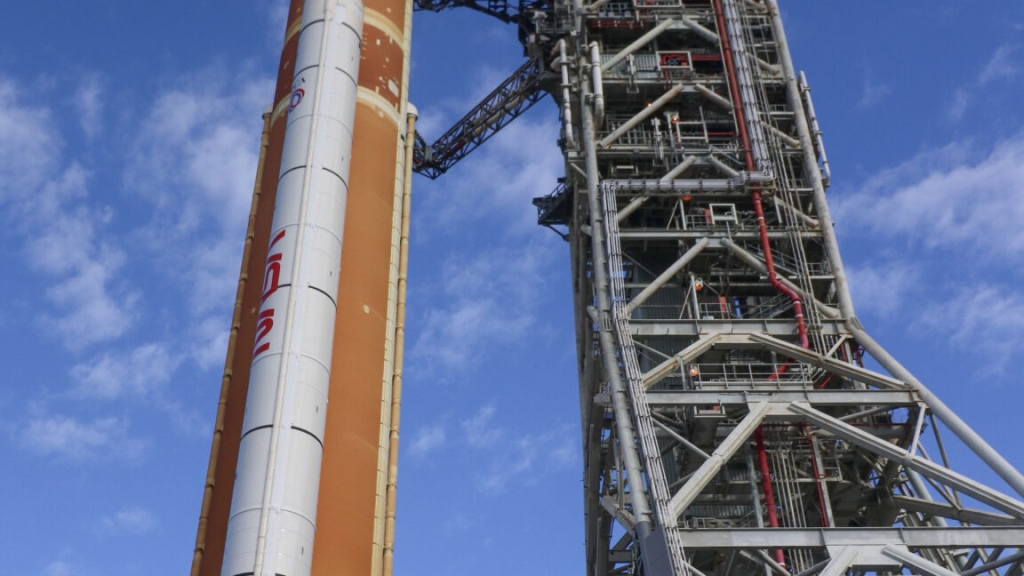
Currently, NASA’s Artemis missions have a well-defined architecture. The initial missions, through Artemis V, are mandated to use the Space Launch System (SLS) rocket, Orion spacecraft, and a lander built by either SpaceX or Blue Origin for lunar landings. However, this amendment opens up new possibilities for future missions, potentially ushering in a new era of commercial space exploration.
The language of the amendment is broad enough to encompass various innovative approaches to lunar missions. For instance, it could allow SpaceX to propose an end-to-end Starship lunar mission, or enable Blue Origin to launch Orion on its New Glenn rocket. The inclusion of “transportation” rather than specifically “launch” services also leaves room for in-space companies like Impulse Space to develop creative solutions for lunar cargo and crew missions.
This shift towards commercial partnerships represents a significant change in NASA’s approach to space exploration. By opening the door for commercial companies to bid on lunar missions, Congress is effectively telling the US space industry that NASA is ready to embrace innovative, cost-effective solutions for deep space exploration.
The implications of this amendment are profound. It could lead to increased competition in the space industry, potentially driving down costs and accelerating technological advancements. Moreover, it may foster a more diverse ecosystem of space companies, each bringing unique capabilities and perspectives to the table.
This move towards commercialization aligns with NASA’s broader strategy of partnering with private industry to achieve its ambitious goals. The success of commercial cargo and crew programs to the International Space Station has demonstrated the potential of such partnerships, and this amendment could extend that success to lunar missions.
However, this shift also presents challenges. NASA will need to carefully balance its traditional approach with these new commercial opportunities, ensuring that safety and mission success remain paramount. Additionally, the agency will need to develop new processes for evaluating and integrating commercial proposals into its mission architecture.
The passage of this reauthorization act and its amendments comes at a critical time for NASA and the broader space industry. With the Artemis program aiming to return humans to the Moon and eventually send them to Mars, the need for innovative, cost-effective solutions has never been greater.
As the full House considers this legislation and the Senate prepares for its review, the space industry and space enthusiasts alike will be watching closely. The potential for a new era of commercial lunar exploration is exciting, promising to accelerate humanity’s journey back to the Moon and beyond.
This development also underscores the growing importance of space policy in national discourse. As space becomes increasingly integral to national security, economic growth, and scientific advancement, the decisions made by Congress and NASA will have far-reaching implications for the future of space exploration and utilization.
In conclusion, while the NASA reauthorization act may seem like routine legislation, its potential impact on the future of space exploration cannot be overstated. By opening the door to commercial lunar missions, Congress has set the stage for a new chapter in American space exploration – one that could see a diverse array of companies and technologies working together to push the boundaries of human achievement in space.
As we look to the future, one thing is clear: the landscape of space exploration is changing rapidly, and this legislation represents a significant step towards a more inclusive, innovative, and commercially-driven approach to exploring the cosmos. The coming months and years will be crucial as NASA, Congress, and the commercial space industry work together to turn this vision into reality, potentially ushering in a new golden age of space exploration.
Tags: NASA, Artemis program, lunar exploration, commercial space, space policy, House committee, space industry, deep space missions, SpaceX, Blue Origin, Space Launch System, Orion spacecraft, New Glenn rocket, Starship, Impulse Space, space technology, space innovation, space partnerships, space economy, space commercialization, space legislation, space reauthorization, space exploration, Moon missions, Mars missions, space competition, space safety, space mission architecture, space industry ecosystem, space cargo, space crew, in-space companies, space cost reduction, space technological advancement, space national security, space economic growth, space scientific advancement, space national discourse, space utilization, space achievement, space vision, space golden age, space future.
Viral phrases: “New era of lunar exploration”, “Revolutionary amendment for NASA”, “Commercial space partnerships take center stage”, “Congress opens door to commercial lunar missions”, “NASA embraces innovative space solutions”, “Potential game-changer for Artemis program”, “Space industry ecosystem set to diversify”, “Commercial companies could bid on lunar missions”, “End-to-end Starship lunar mission possibility”, “Orion spacecraft launch on New Glenn rocket”, “In-space companies get creative with lunar missions”, “NASA’s shift towards commercialization”, “Balancing tradition and innovation in space exploration”, “Commercial partnerships extend to lunar missions”, “Space policy gains national importance”, “New chapter in American space exploration”, “Inclusive and commercially-driven approach to space”, “Turning vision into reality for space exploration”, “New golden age of space exploration”, “Space industry and space enthusiasts watch closely”, “Space becomes integral to national security and economic growth”, “Decisions with far-reaching implications for space exploration”, “Routine legislation with extraordinary impact”, “Diverse array of companies push boundaries in space”, “Accelerating humanity’s journey to the Moon and beyond”.
,


Leave a Reply
Want to join the discussion?Feel free to contribute!