
US Military Investigating Whether AI Was Involved in Bombing Elementary School in Iran
US Military Admits Tomahawk Missile Strike on Iranian School Was Human Error — But AI Role Remains Under Investigation
In a chilling revelation that has sent shockwaves through the international community, U.S. military officials have confirmed that a Tomahawk missile strike that obliterated an Iranian elementary school was the result of “human error” — but questions about artificial intelligence’s potential involvement continue to swirl.
The attack, which killed at least 175 people including numerous young schoolgirls, has become one of the most controversial incidents in the ongoing U.S.-Israel offensive against Iran that began late last month.
The Devastating Strike That Shook the World
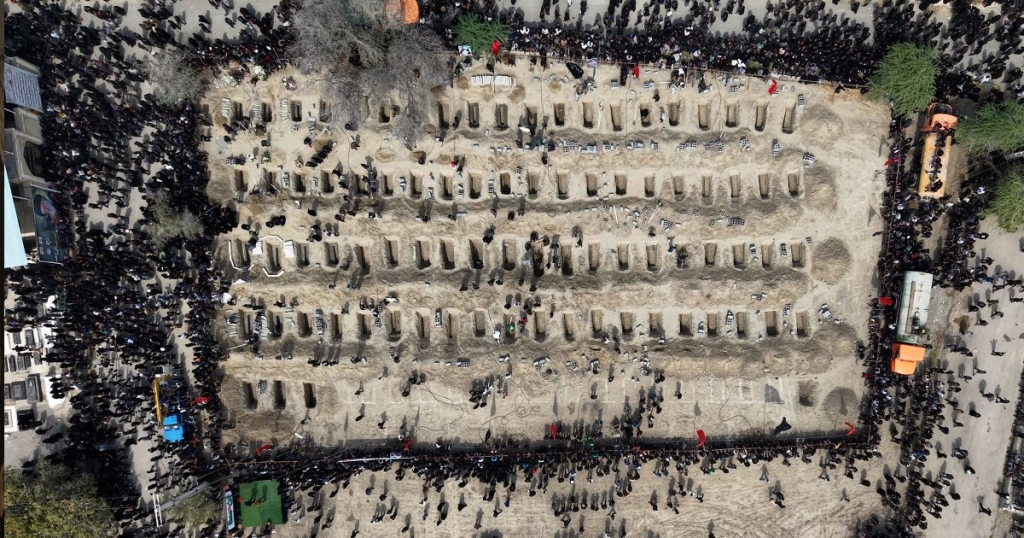
Commercial satellite imagery captured in the aftermath revealed the horrifying extent of the destruction. What was once a bustling elementary school now lies in ruins, reduced to rubble and twisted metal. Drone footage that circulated widely on social media showed excavators digging dozens of graves in the days following the attack, a grim testament to the scale of the tragedy.
The timing of the strike raised immediate suspicions, coming amid what U.S. officials described as an offensive targeting an Iranian military complex in the vicinity. The proximity of the school to the alleged military target would prove central to the unfolding investigation.
Trump’s Initial Denial and Shifting Narratives
In the immediate aftermath, both U.S. and Israeli officials attempted to distance themselves from responsibility for the carnage. President Donald Trump, facing mounting international criticism, made the extraordinary claim that Iran had murdered its own children in cold blood — a statement that was quickly debunked by multiple independent investigations.
The initial confusion and denial highlighted the sensitivity of the incident and the potential political fallout from such a catastrophic mistake. The images of young girls being carried from the rubble resonated globally, drawing comparisons to other tragic moments in modern warfare where civilian casualties, particularly of children, have sparked international outrage.
The AI Connection: Claude and Military Targeting
What makes this tragedy particularly relevant to the technology sector is the revelation that the U.S. military had been employing Anthropic’s Claude AI system for target selection during the Iranian offensive. This use of commercial AI technology for military targeting operations represents a significant escalation in the militarization of artificial intelligence.
Claude, Anthropic’s flagship AI model, had been integrated with the National Geospatial-Intelligence Agency’s Maven Smart System, a platform designed to identify points of interest for military intelligence officers. The combination of advanced AI pattern recognition with military targeting systems created a powerful but potentially dangerous tool for modern warfare.
The Pentagon’s Refusal to Confirm AI Involvement
When initially questioned by Futurism about whether AI played any role in the school’s selection as a target, the Pentagon refused to confirm or deny the involvement of artificial intelligence in the targeting decision. This non-answer only fueled speculation and concern about the extent to which autonomous systems might be influencing life-or-death military decisions.
The refusal to provide clarity came despite the Trump administration’s recent designation of Anthropic’s AI chatbot as a “supply chain risk,” a move that had sent shockwaves through the AI industry. This designation seemed to suggest concerns about the security implications of using commercial AI systems for military purposes, yet the military continued its reliance on the technology during active operations.
The Investigation: Human Error or AI Failure?
As reported by the New York Times, U.S. officials have now confirmed that the strike was indeed carried out by American forces, and initial findings suggest that officers at U.S. Central Command “created the target coordinates for the strike using outdated data provided by the Defense Intelligence Agency.”
However, the investigation is now examining whether “any artificial intelligence models, data crunching programs or other technical intelligence gathering means were to blame for the mistaken targeting of the school.” This dual-track investigation reflects the complex interplay between human decision-making and AI-assisted analysis in modern military operations.
The Satellite Imagery Evidence
The New York Times‘ analysis of historical satellite imagery dating back to 2013 provides crucial context for understanding how such a tragic mistake could occur. The imagery shows that the school was deliberately fenced off from the nearby military base between 2013 and 2016, suggesting that military planners may have been working with severely outdated information.
This temporal disconnect — where targeting data might be years or even decades old — raises serious questions about the verification processes in place for AI-assisted targeting systems. If AI models are trained on or analyzing outdated imagery, they may draw conclusions that no longer reflect current realities on the ground.
The Human Error Defense
Despite the ongoing investigation into AI’s potential role, officials have maintained that the ultimate responsibility lies with human operators. “Regardless of the outcome of the investigation,” sources told the New York Times, “it was ultimately ‘human error’ to bomb the school, regardless of how the target was selected in the first place.”
This framing attempts to preserve human accountability in an era where AI systems are increasingly making or influencing critical decisions. However, it also raises philosophical questions about responsibility when human operators rely heavily on AI recommendations, potentially abdicating their own critical judgment.
The Broader Implications for AI in Warfare
This incident represents a watershed moment in the discussion about AI’s role in modern conflict. The use of commercial AI systems like Claude for military targeting blurs the lines between civilian and military applications of technology, raising questions about the responsibilities of AI companies and the adequacy of current regulations governing dual-use technologies.
The tragedy also highlights the potential for AI systems to amplify human errors rather than eliminate them. If targeting data is outdated or incorrect, AI systems may process and present this flawed information with a false sense of confidence, leading human operators to trust recommendations that are fundamentally flawed.
International Response and Diplomatic Fallout
The international community has reacted with horror to the incident, with multiple countries calling for independent investigations and some threatening diplomatic consequences if similar incidents occur. The targeting of a school — a site universally recognized as protected under international humanitarian law — represents a particularly egregious violation that has damaged U.S. credibility on the global stage.
Human rights organizations have called for greater transparency regarding the use of AI in military operations, arguing that the combination of autonomous systems and lethal force requires new frameworks for accountability and oversight.
The Future of AI in Military Operations
As the investigation continues, the incident has sparked a broader debate about the appropriate role of AI in military targeting and decision-making. Some experts argue for a complete ban on AI-assisted targeting of civilian areas, while others advocate for enhanced human oversight and verification procedures.
The tragedy in Iran may ultimately lead to new international agreements governing the use of AI in warfare, similar to existing treaties on chemical weapons or cluster munitions. The question of whether AI can be trusted with life-or-death decisions in conflict zones remains one of the most pressing ethical challenges of our time.
Tags:
AIWarfare #MilitaryAI #IranStrike #USMilitary #AnthropicClaude #TargetSelection #HumanError #CivilianCasualties #TomahawkMissile #GeospatialIntelligence #MavenSmartSystem #ArtificialIntelligence #WarEthics #MilitaryTechnology #InternationalLaw #TrumpAdministration #PentagonInvestigation #AIAccountability #DualUseTechnology #FutureOfWarfare
Viral Phrases:
- “AI-assisted bombing of an elementary school”
- “When human error meets artificial intelligence”
- “The tragedy that changed how we view military AI”
- “Outdated data, modern weapons, catastrophic consequences”
- “Claude, the AI that couldn’t tell a school from a military base”
- “The Pentagon’s AI targeting dilemma”
- “Human operators, AI recommendations, deadly outcomes”
- “When technology fails the most basic test of humanity”
- “The school that became a military target”
- “AI in warfare: Progress or peril?”
- “The investigation that could reshape military AI use”
- “From satellite imagery to missile strike: The fatal chain of errors”
- “Anthropic’s AI caught in the crossfire of international conflict”
- “The new face of modern warfare: algorithms and Tomahawk missiles”
- “When ‘human error’ involves artificial intelligence”
- “The Iranian school tragedy: A wake-up call for AI ethics”
- “Targeting systems that can’t distinguish civilian from military”
- “The moral hazard of AI-assisted targeting”
- “How outdated data became a death sentence”
- “The Pentagon’s refusal to answer the AI question”
- “Supply chain risk or targeting tool? The paradox of military AI”
- “The graves that tell the story of technological failure”
- “When AI systems amplify rather than eliminate human mistakes”
- “The international community demands answers”
- “A watershed moment for AI ethics in warfare”
,


Leave a Reply
Want to join the discussion?Feel free to contribute!