
US tech firms pledge at White House to bear costs of energy for datacenters | US news
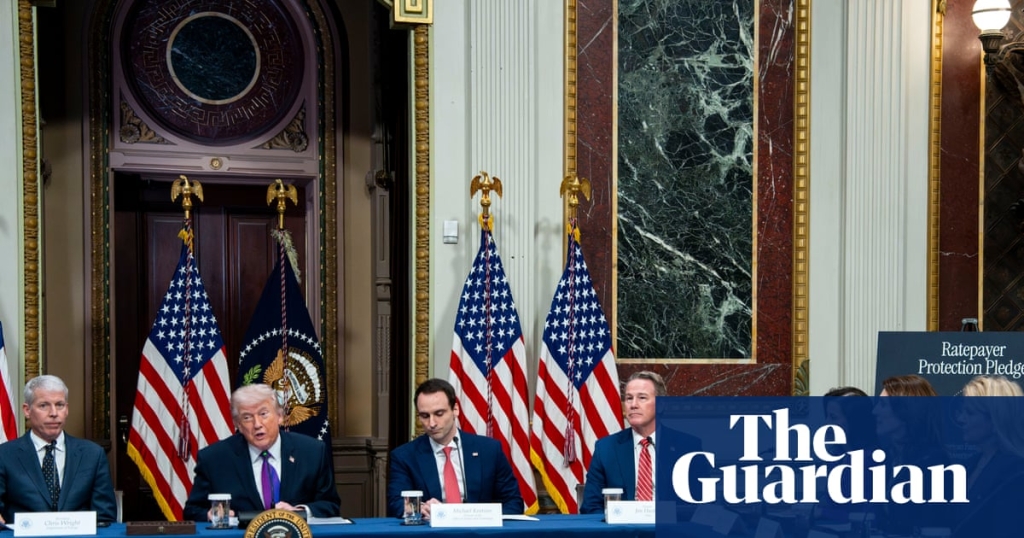
Tech Titans Commit to Powering Their Own Datacenters as US Grid Faces Mounting Pressure
In a landmark move that could reshape the future of America’s energy landscape, the world’s biggest tech giants have joined forces with the White House to take responsibility for powering their massive datacenters. Google, Microsoft, Meta, Amazon, Oracle, xAI, and OpenAI have all signed a groundbreaking “Ratepayer Protection Pledge” that commits them to bearing the full cost of new electricity generation to fuel their AI ambitions.
The pledge comes at a critical moment when datacenters—those sprawling facilities that house the computing power behind everything from ChatGPT to Google searches—are consuming electricity at unprecedented rates. These facilities require enormous amounts of energy not just to run thousands of server racks processing data, but also to keep them cool enough to function properly.
A Win for American Families or Political Theater?
Speaking at the White House signing ceremony, President Trump framed the agreement as a victory for ordinary Americans. “This means that the tech companies and the datacenters will be able to get the electricity they need, all without driving up electricity costs for consumers,” he declared. “This is a historic win for countless American families and we’ll also make our electricity grid stronger and more resilient than ever before.”
The timing is no coincidence. With midterm elections approaching in November, energy affordability has become a hot-button issue for voters already grappling with inflation. Communities across the country have been increasingly vocal about their opposition to new datacenter projects, citing concerns about rising electricity rates and strain on local infrastructure.
What the Pledge Actually Entails
The agreement goes beyond simple promises. Technology companies have committed to several concrete actions:
First, they’ll bring or buy new electricity supplies for their datacenters, either by building new power plants or expanding the capacity of existing ones. Second, they’ve agreed to pay for upgrades to power delivery systems to ensure their facilities don’t bottleneck local infrastructure. Third, they’ll enter special electricity rate agreements with utilities that protect regular consumers from cost increases.
“This means that the tech companies and the datacenters will be able to get the electricity they need, all without driving up electricity costs for consumers,” the president emphasized at the event.
From Rejection to Welcome Mat
The pledge represents a dramatic reversal in how communities view datacenter development. Just months ago, several states saw major projects cancelled or postponed due to local opposition. Now, the White House is betting that this financial commitment will transform those attitudes.
“There will be no new datacenter development that’s going to happen without the local communities reading and understanding what this pledge is,” said a Trump administration official who spoke anonymously about the initiative.
The official’s comments suggest a new reality: datacenters that were once rejected by communities may now be welcomed with open arms, as towns and cities recognize the economic benefits without bearing the energy cost burden.
The AI Gold Rush and Its Energy Demands
This agreement comes as tech companies are investing billions in new AI computing capacity that draws vast amounts of electricity. The AI revolution—powered by models like ChatGPT, Google’s Gemini, and Meta’s Llama—requires enormous computational resources that translate directly into energy consumption.
These companies are racing to build datacenters capable of handling increasingly complex AI workloads, from natural language processing to computer vision to generative content creation. Each advancement in AI capability typically requires exponentially more computing power, creating a compounding energy demand that traditional power grids weren’t designed to handle.
Trump’s Push for Dedicated Power Capacity
The president has been particularly vocal about his desire for tech firms to build or secure dedicated power capacity rather than relying solely on regional grids. This approach aligns with his broader energy policy, which emphasizes increasing natural gas and other fossil fuel-fired power generation.
However, this strategy has drawn criticism from clean energy advocates who argue that renewable sources like solar and wind could be brought online more quickly to meet the surging demand. “The real problem is the inability to get generation online fast enough to meet the datacenter demand,” said Jon Gordon, senior director at Advanced Energy United, a clean energy trade group that includes some datacenters.
“Hyperscalers paying for the generation doesn’t get it online any faster,” Gordon added, highlighting a fundamental challenge: even with financial commitments, building new power infrastructure takes years, while datacenter demand is growing by the month.
Political and Economic Stakes
The initiative represents a delicate balancing act between maintaining America’s technological competitiveness and addressing economic concerns about energy costs. As the US seeks to remain at the forefront of AI development, ensuring sufficient power for datacenters is crucial. Yet doing so without burdening consumers with higher utility bills has proven politically challenging.
This tension reflects a broader debate about the future of energy in America. Should the country prioritize rapid AI development even if it means expanding fossil fuel infrastructure? Or should it take a more measured approach that emphasizes renewable energy, even if that potentially slows technological advancement?
Will It Work?
Critics and advocates alike are watching closely to see whether this pledge produces concrete results or remains largely symbolic. Lawmakers and consumer groups have called for stronger protections to prevent utility bill increases tied to datacenter build-outs, and they’ll be scrutinizing whether this agreement delivers on its promises.
The success of the initiative may ultimately depend on whether tech companies follow through on their commitments and whether the promised protections for consumers materialize. With billions in AI investments at stake and millions of American households concerned about energy costs, the pressure to deliver results is enormous.
As datacenters continue to proliferate across the American landscape, this pledge represents an attempt to reconcile the seemingly conflicting goals of technological progress and energy affordability. Whether it succeeds could determine not just the future of AI development in the US, but also the political fortunes of those who champion it.
Tags: tech giants, datacenters, energy policy, AI development, power grid, Trump administration, Google, Microsoft, Meta, Amazon, Oracle, xAI, OpenAI, electricity costs, renewable energy, fossil fuels, midterm elections, technological competitiveness
Viral Phrases:
- “historic win for countless American families”
- “no new datacenter development without community understanding”
- “Ratepayer Protection Pledge”
- “AI gold rush”
- “tech titans take responsibility”
- “powering the future without powering up bills”
- “from rejection to welcome mat”
- “balancing technological competitiveness with economic concerns”
- “the real problem is the inability to get generation online fast enough”
- “hyperscalers paying for the generation doesn’t get it online any faster”
- “will it work or remain symbolic?”
- “billions in AI investments at stake”
- “reconciling technological progress and energy affordability”
- “transformative moment for America’s energy landscape”
- “communities that once opposed now may welcome”
- “dedicated power capacity vs. regional grids”
- “energy affordability hot-button issue”
- “clean energy advocates vs. fossil fuel expansion”
- “pressure to deliver results is enormous”
,


Leave a Reply
Want to join the discussion?Feel free to contribute!