
Utah governor escalates fight over prediction market regulation with CFTC chair
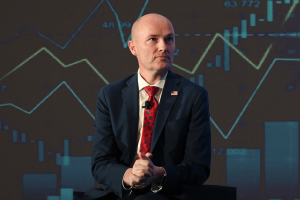
Utah Governor Spencer Cox Escalates Fight with CFTC Over Prediction Markets in Bold Legal Showdown
Salt Lake City has emerged as the unexpected battleground in a rapidly intensifying national debate over the future of prediction markets, with Utah Governor Spencer Cox launching an unprecedented direct challenge to federal authority. The confrontation, which erupted on February 17, 2026, marks a significant escalation in the ongoing struggle between state sovereignty and federal regulatory power in the digital age.
The conflict centers on Governor Cox’s explosive public rebuke of Commodity Futures Trading Commission Chair Mike Selig, accusing the federal regulator of grossly overstepping constitutional boundaries by attempting to classify sports outcome contracts as financial derivatives. This clash represents more than just bureaucratic disagreement—it’s become a flashpoint for broader questions about states’ rights, gambling regulation, and the evolving nature of financial technology.
The Spark: Cox’s Fiery Twitter Tirade
The governor’s response came swiftly and without diplomatic restraint. In a pointed social media post that immediately went viral, Cox directly confronted Selig’s position with characteristic bluntness: “Mike, I appreciate you attempting this with a straight face, but I don’t remember the CFTC having authority over the ‘derivative market’ of LeBron James rebounds.”
But Cox didn’t stop at rhetorical jabs. He escalated his criticism dramatically, declaring: “These prediction markets you are breathlessly defending are gambling—pure and simple. They are destroying the lives of families and countless Americans, especially young men. They have no place in Utah.”
The governor’s rhetoric painted a stark picture of prediction markets as predatory gambling operations disguised as financial instruments, targeting vulnerable populations and undermining family stability. His language deliberately evoked moral panic about the societal costs of expanded gambling access, positioning Utah as a bulwark against what he characterized as federal overreach.
Constitutional Showdown: Utah’s Legal Threat
Perhaps most significantly, Cox concluded his statement with a direct legal threat that sent shockwaves through both political and regulatory circles. “Let me be clear, I will use every resource within my disposal as governor of the sovereign state of Utah, and under the Constitution of the United States to beat you in court.”
This wasn’t mere political posturing—Cox signaled his readiness to mount a full constitutional challenge to the CFTC’s authority, potentially setting up a landmark Supreme Court battle over the limits of federal regulatory power in the digital age. The governor’s framing of Utah as a “sovereign state” deliberately invoked states’ rights arguments that have historically resonated with conservative legal scholars and courts.
Christie Joins the Fray: Bipartisan Opposition Emerges
Adding significant weight to the opposition, former New Jersey Governor Chris Christie entered the debate with his own forceful statement supporting Cox’s position. Christie’s intervention is particularly noteworthy given his historical support for regulated sports betting during his tenure as New Jersey’s governor.
Christie framed the issue as a fundamental question of federalism: “Violating the rights of states who have been regulating sports betting and the rights of the states who oppose sports betting is not the purview of another alphabet soup federal agency. That’s what you’re doing.”
His statement explicitly positioned the CFTC’s actions as federal overreach into traditional state regulatory territory, arguing that sports betting and related activities have historically fallen under state jurisdiction. Christie’s involvement suggests this may become a broader Republican Party issue, potentially complicating the CFTC’s regulatory ambitions.
The Core Dispute: Derivatives or Gambling?
At the heart of this conflict lies a fundamental definitional question with enormous financial and regulatory implications: Are prediction markets sophisticated financial instruments requiring federal oversight, or are they essentially gambling products that states should regulate?
The CFTC and companies operating prediction markets argue that these contracts function as derivatives—financial instruments whose value derives from underlying events, similar to commodity futures. Under this interpretation, the CFTC has clear authority to regulate these markets to ensure fair trading practices, prevent manipulation, and protect investors.
However, opponents like Cox and Christie contend that many prediction markets, particularly those focused on sports outcomes, are essentially sports betting in digital disguise. They argue these products should be subject to state gambling laws, which vary widely across the country and typically include consumer protections, age restrictions, and licensing requirements.
The State-Level Backlash
Utah is far from alone in challenging the CFTC’s position. Several states, including Nevada—historically one of the most gambling-friendly states in the nation—have taken legal action arguing that prediction markets operate as sports wagering and should fall under state jurisdiction.
These states contend that a federal regulatory framework could undermine their carefully constructed gambling regulatory systems, which include consumer protections, responsible gaming measures, and significant tax revenue streams. They worry that CFTC oversight could create a parallel gambling system operating outside state control.
The tension is particularly acute because many states have only recently legalized sports betting after years of prohibition, often through complex legislative compromises. The prospect of federal intervention threatens to disrupt these delicate political balances.
The CFTC’s Defense: National Market Protection
From the CFTC’s perspective, the pushback represents a coordinated campaign to undermine legitimate financial markets. Chair Selig has characterized the opposition as an attempt to ban prediction markets entirely, framing the debate as one about preserving innovative financial products.
The CFTC’s position rests on the argument that prediction markets serve important economic functions beyond gambling. These markets can aggregate information about future events, provide hedging opportunities, and create price discovery mechanisms for various outcomes. Federal oversight, they argue, ensures these markets operate fairly and transparently.
Moreover, the CFTC warns that a patchwork of state regulations could create significant compliance challenges for companies operating across state lines, potentially fragmenting what could be a cohesive national market. This regulatory uncertainty could stifle innovation and investment in what many see as a promising new financial technology.
The Broader Implications
This confrontation extends far beyond the specific issue of prediction markets. It touches on fundamental questions about the evolution of financial technology, the balance of power between state and federal governments, and how traditional regulatory frameworks adapt to digital innovation.
The outcome could have ripple effects across multiple sectors. If states successfully challenge the CFTC’s authority, it could embolden similar challenges to federal regulation in other areas of emerging technology. Conversely, if the CFTC prevails, it could strengthen federal authority over digital financial products and potentially accelerate the development of prediction markets and similar innovations.
The debate also highlights the ongoing tension between innovation and regulation. Prediction markets represent a novel application of blockchain and smart contract technology to create decentralized forecasting mechanisms. However, their resemblance to gambling has made them politically contentious, particularly in conservative states like Utah.
The Political Calculus
Governor Cox’s aggressive stance reflects both political positioning and genuine policy concerns. Utah’s conservative political culture has traditionally opposed expanded gambling, and Cox appears to be aligning himself with these values while simultaneously asserting state sovereignty against federal overreach—a popular position among many Republican voters.
The timing is also significant. As prediction markets gain mainstream attention and investment, political leaders are grappling with how to regulate these products before they become deeply entrenched. Cox’s early and forceful intervention positions Utah as a leader in the resistance movement, potentially influencing other states considering similar actions.
Looking Ahead: Legal and Regulatory Battleground
The stage is now set for what could become a protracted legal and regulatory battle. Utah’s threat to sue the CFTC could lead to a constitutional challenge that reaches the Supreme Court, potentially reshaping the federal-state balance in financial regulation.
Meanwhile, the prediction market industry faces significant uncertainty. Companies operating in this space must navigate conflicting regulatory signals while potentially preparing for extended litigation. The outcome could determine whether prediction markets flourish as innovative financial tools or remain constrained by gambling regulations.
As this drama unfolds, all eyes will be on Salt Lake City, where a governor’s bold challenge to federal authority may ultimately reshape how America regulates the digital future of finance.
Tags:
Utah Governor Spencer Cox, CFTC Chair Mike Selig, prediction markets regulation, sports betting, federal vs state authority, gambling regulation, financial derivatives, constitutional law, states’ rights, digital finance, blockchain technology, smart contracts, regulatory oversight, Supreme Court challenge, political controversy
Viral Phrases:
“Gambling—pure and simple”
“Destroying the lives of families”
“Beat you in court”
“Alphabet soup federal agency”
“Breathlessly defending”
“Sovereign state of Utah”
“LeBron James rebounds”
“Rights of all 50 states”
“Campaign to ban American Prediction Markets”
“Traditional state regulatory territory”
“Landmark Supreme Court battle”
“Digital future of finance”
“Political and regulatory circles”
“Conservative legal scholars”
“Delicate political balances”
“Promising new financial technology”
“Reshape how America regulates”
“Governor’s bold challenge”
,


Leave a Reply
Want to join the discussion?Feel free to contribute!