
Volkswagen should be a bigger EV player — and maybe it can be
Volkswagen’s Electric Dream: From Vision to Reality – And What Comes Next
In the rapidly evolving world of electric vehicles, one name seems conspicuously absent from the conversation about affordable EVs: Volkswagen. Once heralded as the automaker that would bring electric mobility to “the millions, not millionaires,” Volkswagen’s ambitious ID family of electric vehicles has fallen far short of its promise in the United States market.
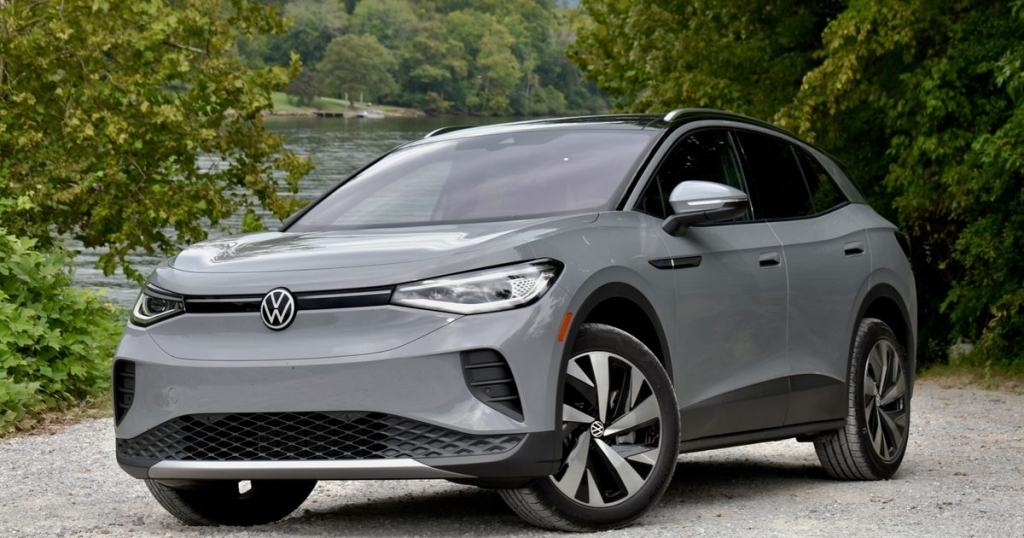
Seven years after launching the ID family with grand visions of electric revolution, Volkswagen finds itself in a precarious position. While luxury brands like Audi and Porsche have flourished under the VW Group umbrella, and even a new brand called Scout has been created to challenge Rivian, Volkswagen’s namesake brand has stagnated. The aging ID.4 crossover remains the sole electric offering in the U.S., leaving many to wonder: what happened to Volkswagen’s electric dream?
The ID Vision: A Clean Slate After Dieselgate
The origins of Volkswagen’s electric ambitions trace back to the aftermath of the “Dieselgate” emissions scandal that rocked the automotive world. Faced with the need to rehabilitate its tarnished image and meet increasingly stringent emissions regulations, Volkswagen made a bold bet on electric vehicles as its path forward.
What emerged from this crucible was the MEB (Modularer E-Antriebs-Baukasten or Modular Electric Drive Matrix) platform – a flexible architecture designed to support multiple electric vehicle models built at scale. The genius of MEB lay in its potential to deliver the economies of scale necessary to make electric vehicles both affordable and profitable.
To demonstrate its commitment, Volkswagen unveiled its first MEB-based model – a European-market hatchback with a distinctive design reminiscent of a 1990s computer mouse. This vehicle was christened the ID.3, a name deliberately chosen to signify its status as an epoch-making vehicle, following in the footsteps of the original Beetle and the Golf. The ID.3 represented Volkswagen’s vision of ushering in a new era of electric mobility.
At the time, Volkswagen boldly claimed it would have 50 electric models generating 15 million cumulative global sales by 2028. For the U.S. market, recognizing American consumers’ aversion to hatchbacks (largely due to negative associations with early diesel versions of the Golf), Volkswagen opted for a crossover SUV approach. Thus, the ID.4 was born – designed to compete against popular models like the Toyota RAV4.
More significantly, Volkswagen planned to manufacture the ID.4 in large numbers at its Tennessee factory, work closely with dealers to ensure proper sales and service, and price the vehicles competitively, starting at around $35,000. This strategy represented a comprehensive approach to electric vehicle adoption that went beyond simply building a car.
The ID.4 Reality: Promise Meets Market Forces
Initially, Volkswagen delivered on many of its promises. The ID.4 launched in 2021 as a competent, if somewhat bland, entry into the electric crossover segment. Aside from early software issues, the vehicle was inoffensive – much like the gasoline crossovers it aimed to replace. With a starting price of $41,190 and 260 miles of range in rear-wheel drive configuration, the ID.4 seemed poised to make electric vehicles accessible to a broader audience.
Volkswagen quickly expanded the lineup with an all-wheel drive version and ramped up production at its Tennessee facility. Sales peaked at 37,789 units in 2023, suggesting that the strategy was working. However, a door-latch issue forced a recall and production halt, curtailing sales in 2024. Production resumed just in time for the cancellation of federal EV incentives and the economic turbulence of 2025.
Despite these challenges, Volkswagen managed to sell 23,373 ID.4s over the course of 2025. However, another production slowdown meant the ID.4 ran out of momentum toward the end of the year, with just 248 vehicles delivered in Q4. These numbers likely mask a more troubling trend: the ID.4 is now an old model by industry standards and no longer competitive with newer offerings like the Hyundai Ioniq 5 and Kia EV6, whose 800-volt electrical architectures leave the VW in the dust when it comes to charging speeds.
While the longest-range versions can now achieve about 290 miles per charge, the price has crept up to approximately $45,000. For context, you can spec a 318-mile Ioniq 5 for about $7,500 less. This pricing gap, combined with technological shortcomings, has eroded the ID.4’s value proposition.
Distractions and Missteps
How did Volkswagen find itself in this position? Mission creep played a significant role. While Volkswagen did introduce a cheaper version of the ID.4 for the 2023 model year, it still cost just under $39,000 – still a few thousand dollars off from the original target – and offered only 209 miles of range. More problematically, Volkswagen largely ignored the ID.4 after that initial refresh and focused on two models that proved to be distractions rather than solutions.
The first was the ID.7 sedan, which, despite its sleek looks, was always going to be a tough sell in the U.S. market. Sedan sales have hit a low point in America, whether gasoline or electric. Volkswagen talked a big game, staging a U.S. reveal and even inviting American media to drive the ID.7, but ultimately pulled the plug before sales could begin.
Meanwhile, Volkswagen had been teasing a modern version of the classic Microbus based on the MEB architecture, starting with a concept car that appeared at the 2017 Detroit Auto Show. The production ID.Buzz didn’t reach the U.S. until the 2025 model year, and only in an overpriced form that drew few takers. As of this writing, the Buzz has been put on hold for the 2026 model year. The fact that the ID.Buzz was spearheaded by Volkswagen’s European commercial-vehicle division likely contributed to its flop as a U.S.-market passenger vehicle.
These distractions diverted resources and attention from the core mission of making affordable electric vehicles accessible to the masses.
Can Volkswagen Turn Things Around?
It’s tempting to view Volkswagen’s sputtering EV efforts as just another manifestation of the automaker’s difficulty in understanding the U.S. market – the same ignorance (or perhaps arrogance) that led to Dieselgate and has generally kept Volkswagen a smaller player in this market for a company of its size. Only this time, Volkswagen might actually have a plan to turn things around.
Automotive News Europe reported this week that, as part of an upcoming refresh, the ID.4 will become the ID.Tiguan. This name change signifies a move away from the ID EV models as a new era for Volkswagen, but also brings the ID.4 closer to its original mission of competing with the most-popular gasoline crossovers. The Tiguan is Volkswagen’s bestselling model in the U.S., and borrowing its name gives customers a familiar frame of reference, just as the Chevrolet Equinox EV does for General Motors shoppers.
Hopefully, this rebranding is backed by substantive changes that make the ID.4/Tiguan feel more like a normal car and less like a mashup of tech trends. A refreshed ID.4 could still be relevant in a U.S. market where small electric crossovers remain popular, and where Volkswagen already has a local manufacturing base that many other brands wish they had.
It’ll still be a far cry from the lofty goals that kicked off the ID project (Volkswagen said in 2024 that it had sold 1.3 million ID-family EVs globally), but an affordable, practical EV is still as important today as it was then. The question remains whether Volkswagen can execute on this renewed vision or whether it will once again get distracted by shiny objects that don’t serve its core mission.
The electric vehicle revolution waits for no one, and Volkswagen’s window of opportunity to establish itself as a leader in affordable electric mobility is narrowing. Whether the ID.Tiguan represents a genuine course correction or merely another rebranding exercise remains to be seen. What’s clear is that Volkswagen’s journey from Dieselgate to electric dreams has been far more complicated than anyone anticipated, and the road ahead is still uncertain.
Tags & Viral Phrases:
- Volkswagen ID.4 struggles in US market
- Affordable EVs that never materialized
- Dieselgate aftermath and electric ambitions
- MEB platform potential wasted
- ID.4 vs Hyundai Ioniq 5 comparison
- Volkswagen’s electric vehicle missteps
- Why Volkswagen failed with ID.4
- Electric crossover market competition
- Volkswagen’s identity crisis in America
- Can Volkswagen save its EV program?
- ID.4 name change to Tiguan
- Volkswagen’s electric dreams vs reality
- The rise and fall of VW’s ID family
- Affordable electric vehicles that disappointed
- Volkswagen’s $7,500 price disadvantage
- 800-volt architecture advantage
- Volkswagen’s Tennessee factory underutilized
- Electric vehicle market share battles
- Volkswagen’s strategic distractions
- ID.Buzz commercial failure
- Sedan sales decline in America
- Volkswagen’s U.S. market misunderstanding
- Electric vehicle charging speed wars
- Volkswagen’s comeback strategy revealed
,


Leave a Reply
Want to join the discussion?Feel free to contribute!