
Wall Street Has AI Psychosis
AI Doomsday Prophecy Sends Wall Street into Freefall as Alap Shah’s “2028 Global Intelligence Crisis” Sparks Market Panic
Before last week, the name Alap Shah didn’t mean much to anyone outside his immediate circle. The 45-year-old financial analyst and tech entrepreneur had spent the past two decades working in relative obscurity, quietly building his career in the shadows of Silicon Valley’s brightest stars. Then last weekend, everything changed when he coauthored a blog with research firm Citrini titled “The 2028 Global Intelligence Crisis.”
What followed was nothing short of extraordinary. The report, described as a “thought exercise” about artificial intelligence’s potential impacts, predicted that by June 2028, AI would push unemployment past 10 percent and trigger a catastrophic market collapse. Writing with the confidence of a modern-day Nostradamus—seemingly auditioning for a starring role in the next Michael Lewis bestseller—Shah and his coauthors painted a grim picture of economic collapse through a reverse flywheel effect: AI agents replace workers, consumer spending plummets, and corporations respond with wave after wave of layoffs.
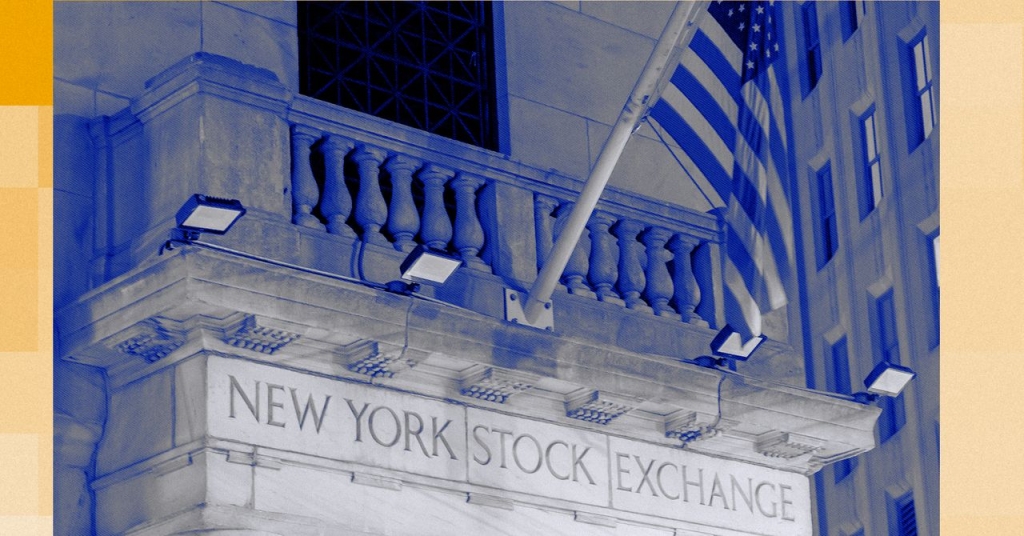
The market’s reaction was immediate and severe. When the closing bells rang on the New York Stock Exchange, the Dow had tumbled 800 points, and Alap Shah’s name was suddenly on everyone’s lips. But the achievement was less impressive than it appeared at first glance.
Wall Street, like the rest of us, exists in a constant state of anxiety about artificial intelligence’s future impact. The financial markets don’t necessarily reflect economic reality, but they do serve as a barometer for collective unease. We’re living in what science fiction writer William Gibson might call the “unevenly distributed future”—AI is already here, but its effects are scattered across different sectors at different speeds. For those already immersed in the agent-packed, AI code-writing universe, the experience is simultaneously thrilling and deeply unsettling.
The truth is that no one—absolutely no one—knows exactly how AI will reshape the economy. The impacts will undoubtedly be significant, but their nature and timing remain maddeningly unclear. Right now, stocks are soaring, suggesting that investors want to keep the economic party going. But then along comes another doomsday manifesto, or a research paper suggesting that a traditional business sector might be threatened by AI, and suddenly money managers are reminded that the biggest question of our time remains completely unresolved.
Consider what happened earlier this month: a tiny company with a valuation under $6 million that had previously sold karaoke machines suddenly pivoted to AI-powered shipping logistics. The company released a report claiming it had discovered significant efficiencies in loading semi-trucks. That single announcement was enough to erase billions of dollars from the share prices of several major logistics companies—none of which had any karaoke experience whatsoever.
After the Citrini report did its damage on Wall Street, it came under intense scrutiny and criticism. Commentators tripped over themselves to point out its flaws and flimsy reasoning. For starters, critics noted that AI has had virtually no discernible impact on the broader economy so far. Others invoked the long history of economic resilience following technological upheavals, arguing that previous waves of automation had ultimately created more jobs than they destroyed.
A particularly scathing response came from Citadel Securities, the respected trading firm. Their analysis read: “For AI to produce a sustained negative demand shock, the economy must see a material acceleration in adoption, experience near-total labor substitution, no fiscal response, negligible investment absorption, and unconstrained scaling of compute.” In other words, Shah’s scenario would require virtually every economic protection mechanism to fail simultaneously—an extraordinarily unlikely chain of events.
The most withering critiques focused on the report’s central contention that much of the economy consists of non-productive “rent-seeking” by middlemen and market makers who exploit consumer laziness. According to Shah’s vision, when everyone has dozens of AI agents working on their behalf, consumers will be able to effortlessly find the best goods at the best prices. Apps will become obsolete—you’ll simply type what you want into an LLM, and an army of agents will handle everything for you. The “poster child” for this phenomenon, Shah argues, is DoorDash. Instead of being limited to restaurants on the app, consumers will send out AI agents to find their ideal meal options, contracting directly with restaurants and delivery people—no apps needed. Zero friction! The DoorDashes of the world are avocado toast!
But this vision raises more questions than it answers. What happens to the millions of workers currently employed by these platforms? How do we retrain them for an AI-dominated economy? What about the regulatory frameworks needed to govern autonomous economic agents? And perhaps most importantly: is this transformation really as inevitable as Shah suggests, or is it just another tech industry fantasy?
The truth probably lies somewhere in between. AI will undoubtedly transform the economy in profound ways, but the timeline and nature of that transformation remain highly uncertain. What’s clear is that we’re entering uncharted territory, and the market’s volatile reactions to every new AI prediction—whether optimistic or apocalyptic—reflect our collective anxiety about an unknowable future.
As we move forward, the challenge won’t be choosing between blind optimism and doomsday predictions, but rather developing the wisdom and adaptability to navigate whatever changes AI brings. The economy of 2028 may look very different from today, but it’s unlikely to resemble either the utopian or dystopian visions currently dominating our headlines.
Alap Shah, 2028 Global Intelligence Crisis, AI unemployment, Wall Street panic, Dow Jones crash, artificial intelligence economy, tech doomsday predictions, AI job displacement, economic transformation, Citadel Securities response, DoorDash disruption, AI agents economy, Nostradamic tech predictions, William Gibson future, AI market volatility, economic anxiety, technological unemployment, AI-powered logistics, market selloff, AI economic impact, rent-seeking elimination, zero-friction economy, AI code writing, economic resilience, technological upheaval, AI investment absorption, labor substitution, fiscal response, compute scaling, AI manifesto, economic flywheel, white collar jobs, Anthropic CEO Dario Amodei, AI shipping logistics, karaoke machine pivot, economic uncertainty, AI future distribution, agent-packed universe, economic protections, autonomous economic agents, AI regulatory frameworks, economic transformation timeline, tech industry fantasy, economic wisdom, adaptability challenges, AI headlines, economic navigation, 2028 economic predictions, AI economic wisdom, economic anxiety barometer, market collective unease, economic unknowable future, AI economic navigation, economic transformation wisdom, AI economic adaptability, economic future challenges
,


Leave a Reply
Want to join the discussion?Feel free to contribute!