
Washington state has embraced data centers – but now it’s looking to set terms of engagement
Tech Titans Race to Build Massive Data Centers—But Who Will Pay the Price?
Across rural America, a quiet revolution is unfolding. Once-sleepy towns are transforming into bustling hubs of digital infrastructure as tech giants race to erect massive data centers to power the AI boom. But as the bulldozers roll in and construction cranes dot the horizon, a critical question emerges: who will bear the burden of this technological gold rush?
From Farmland to Fiber Optics: The Quincy Miracle
In the heart of Eastern Washington’s agricultural country, Lisa Karstetter watched her hometown of Quincy transform from wheat fields to server farms. “They would call them ‘server farms,'” Karstetter recalled, “And I’m like, yeah, that’s not a farm.”
In 2006, Microsoft broke ground on what would become a cornerstone of Quincy’s economic revival. Today, this rural community stands as a testament to the transformative power of data centers—but also as a warning about what happens when technological progress outpaces regulation.
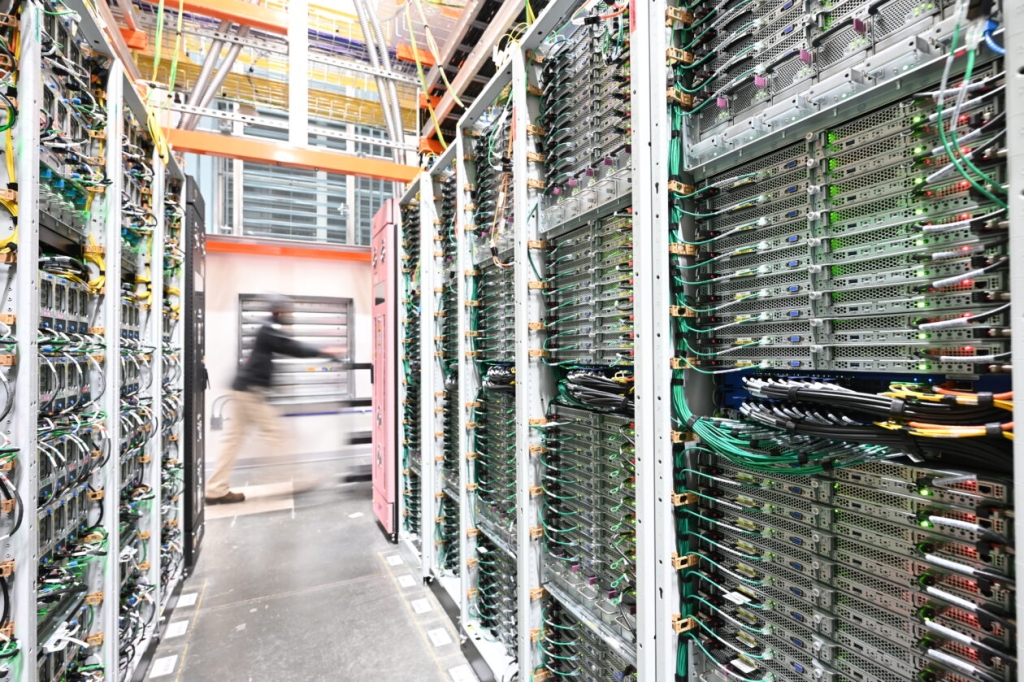
The numbers tell a compelling story. Washington state is now home to approximately 126 data centers spanning nearly 7 million square feet—that’s about 122 football fields of computing power. Microsoft dominates the landscape with 30 facilities, while Amazon and Meta have planted their flags across the Pacific Northwest.
The AI Gold Rush: Billions Pouring Into Digital Infrastructure
The artificial intelligence revolution has super-charged demand for these digital warehouses. Microsoft spent a staggering $37.5 billion on capital expenditures in just the last three months of 2025—a 66% increase year-over-year. Amazon isn’t far behind, pledging $200 billion this year alone, predominantly for its Amazon Web Services cloud business.
But this gold rush comes with a hidden cost. Data centers are energy-hungry beasts, consuming vast amounts of electricity and water to keep their servers cool. As the International Energy Agency warns, data centers are expected to drive roughly half of the energy growth demand in the U.S. by 2030.
Washington State Draws a Line in the Sand
Fed up with being caught off guard by the tech industry’s rapid expansion, Washington lawmakers are fighting back. House Bill 2515 represents a fundamental shift in how the state approaches data center development. After decades of rolling out the red carpet with tax exemptions and open arms, legislators are now demanding transparency and accountability.
The proposed legislation is straightforward but revolutionary. Data centers consuming 20 megawatts or more would be required to:
- Submit annual sustainability reports detailing energy, water, and refrigerant use
- Provide projections for future resource demands
- Enter into contracts with utilities to ensure their costs aren’t passed on to other ratepayers
- Lose access to free carbon emission credits under the state’s Climate Commitment Act starting in 2028
The Battle Lines Are Drawn
The debate over HB 2515 has exposed deep divisions within Washington. Six Democrats voted against the bill, while no Republicans supported it. The Seattle Metropolitan Chamber of Commerce and the Washington State Building & Construction Trades Council have come out swinging, arguing that the legislation penalizes critical infrastructure rather than addressing the real challenge: building clean energy faster.
But supporters argue that the bill simply codifies best practices that responsible companies like Microsoft are already implementing. “It really is codifying some of what we’re hearing those companies saying,” noted James Hove from Climate Solutions.
Microsoft President Brad Smith has attempted to get ahead of the criticism, launching a community-focused initiative that pledges to bear the company’s own electrical costs and replenish more water than it consumes. “I just think it’s incumbent upon us to make the presence of a local data center positive for the community,” Smith said.
The Human Cost: Ratepayers vs. Tech Titans
At the heart of this debate lies a fundamental question of fairness. As data centers multiply, will ordinary citizens see their utility bills skyrocket to subsidize the tech industry’s growth? Will water-scarce regions be forced to choose between agriculture and AI?
Rep. Beth Doglio, D-Olympia, captures the anxiety felt by many constituents: “With such a rapid increase in demands on the grid, I’m super concerned about the impact that might have on rate payers and also grid reliability. Beyond that, there’s a lot of concern for my constituents around water use.”
The stakes couldn’t be higher. If Washington gets this wrong, it risks becoming a cautionary tale of technological progress run amok. But if it gets it right, the state could set a national precedent for how to balance innovation with sustainability and social responsibility.
A Community Transformed: The Quincy Story
For Patrick Haley, city administrator for Quincy, the new legislation feels like an unnecessary burden on a community that’s already figured out how to make data centers work. “It’s the Quincy miracle,” he testified, pointing to the surge in property taxes that funded new public infrastructure including a high school and police station.
Karstetter, who left her job with the town’s chamber of commerce to work for Yahoo and eventually Microsoft, sees both sides of the equation. “It’s really transformed our community,” she said. “And I think a lot of communities will be able to benefit from that.”
But the question remains: can other communities replicate Quincy’s success without the same level of planning and community engagement? And more importantly, can they do so without sacrificing their environmental resources or burdening their citizens with hidden costs?
The Future of Digital Infrastructure
As House Bill 2515 moves to the Senate, Washington finds itself at a crossroads. The state that once welcomed data centers with open arms is now demanding accountability. This shift reflects a growing recognition that the digital revolution, like all revolutions, comes with winners and losers.
The tech industry argues that data centers are “essential infrastructure for American competitiveness, commerce, and national security.” They’re not wrong. But neither are the communities fighting to ensure that this essential infrastructure doesn’t come at the expense of their quality of life, their environment, or their financial stability.
Washington’s experiment with data center regulation could determine whether the AI boom becomes a shared prosperity engine or another example of technological disruption that leaves communities picking up the pieces. The eyes of the nation—and indeed the world—are watching to see which path the Evergreen State will choose.
Tags & Viral Phrases:
- Data center revolt
- AI gold rush
- Server farms vs. real farms
- Ratepayer protection
- Quincy miracle
- Tech titans vs. local communities
- The hidden cost of AI
- Billion-dollar data centers
- Washington draws a line
- Community-focused tech
- Digital infrastructure accountability
- The future of clean energy
- Tech regulation revolution
- Balancing innovation and sustainability
- The great data center debate
- Who pays for the AI boom?
- From farmland to fiber optics
- The new gold rush
- Tech’s hidden environmental cost
- Community transformation or exploitation?
,

Leave a Reply
Want to join the discussion?Feel free to contribute!