
Waymo is testing driverless robotaxis in Nashville
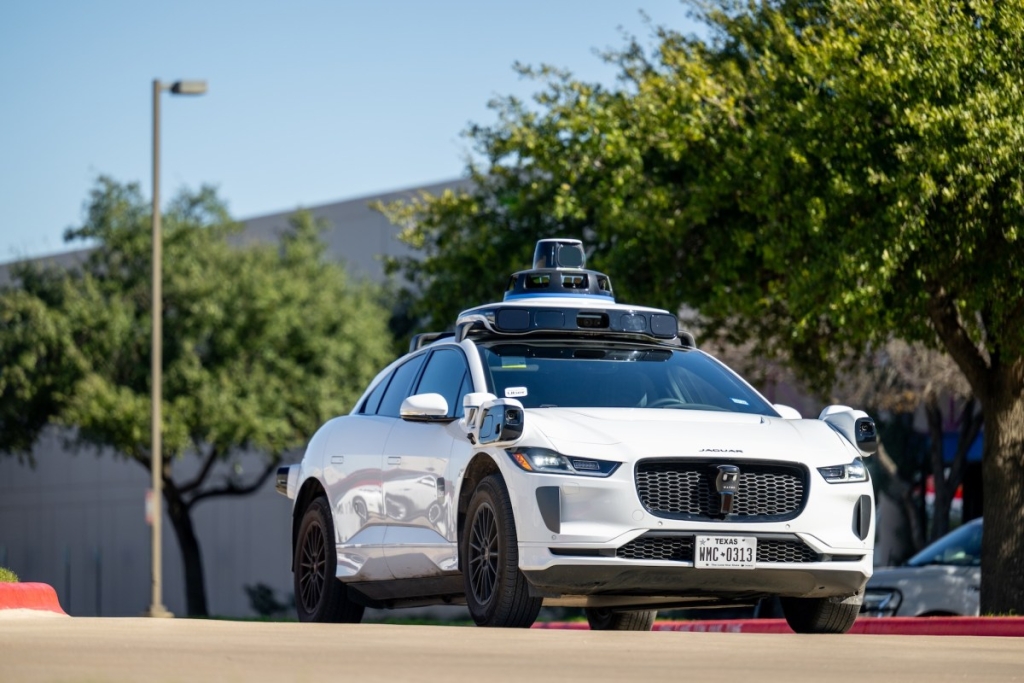
Waymo Removes Safety Drivers from Nashville Robotaxi Tests as Launch Looms
In a significant milestone for autonomous vehicle deployment, Waymo has officially removed human safety drivers from its test fleet operating in Nashville, Tennessee, signaling the company’s imminent transition from testing to full commercial operation in the city.
The Alphabet-owned autonomous vehicle pioneer has been conducting extensive testing in Nashville for several months, building toward what is now an anticipated launch of its robotaxi service later this year. This development represents one of the most advanced stages in Waymo’s standardized market entry strategy, where the company progressively removes human oversight as its artificial intelligence systems demonstrate consistent reliability in real-world conditions.
Nashville will mark Waymo’s seventh major metropolitan area for commercial robotaxi operations, joining Atlanta, Austin, Los Angeles, Miami, the San Francisco Bay Area, and Phoenix, where the company already provides paid rides to the public. Additionally, Waymo maintains driverless test fleets in Dallas, Houston, San Antonio, and Orlando, though these markets have not yet reached commercial launch status.
The company’s approach to new market penetration follows a methodical progression that has become characteristic of Waymo’s operational philosophy. Initially, small fleets of manually driven vehicles systematically map urban environments, creating the detailed spatial datasets necessary for autonomous navigation. These mapping operations capture everything from lane markings and traffic signal positions to curb heights and construction zones, building the foundational knowledge layer that enables self-driving systems to understand their operational context.
Following the mapping phase, autonomous vehicles enter testing with human safety operators positioned behind the steering wheel, ready to intervene if the system encounters scenarios beyond its current capabilities. This period serves dual purposes: it allows Waymo’s engineers to gather performance data in the specific conditions of each new city while providing a safety net during the critical learning phase.
The removal of safety drivers in Nashville indicates that Waymo’s systems have achieved sufficient reliability and that the company’s confidence in its technology has reached the threshold necessary for the next phase of deployment. This transition typically precedes the opening of services to select employee riders, who provide valuable feedback while operating within controlled parameters, before the eventual launch of public-facing commercial services.
Waymo’s Nashville operations will be conducted in partnership with Lyft, the ride-hailing giant that has increasingly positioned itself as a collaborator with autonomous vehicle companies rather than a competitor. This strategic alliance reflects the evolving transportation landscape, where traditional ride-hailing platforms recognize the inevitability of automation while autonomous vehicle developers acknowledge the value of established distribution networks and customer relationships.
Under the partnership structure, Nashville residents will initially access Waymo’s robotaxi services exclusively through Waymo’s proprietary application. This approach allows the company to maintain direct control over the customer experience during the critical early phase of market entry, ensuring that service quality, pricing structures, and operational procedures align with Waymo’s standards and strategic objectives.
As the service matures and expands its operational footprint within Nashville, Waymo plans to integrate its autonomous vehicles into the Lyft platform, making them available to Lyft’s existing user base. This integration strategy leverages Lyft’s substantial market presence and brand recognition while providing Waymo access to a large pool of potential customers who are already familiar with on-demand transportation services.
Lyft’s involvement extends beyond mere platform integration. The company has committed to managing comprehensive fleet services through its subsidiary Flexdrive, including vehicle readiness and maintenance protocols, charging infrastructure development, and depot operations management. This arrangement allows Waymo to focus on its core competency—autonomous driving technology—while relying on Lyft’s expertise in transportation logistics and fleet management.
The Nashville market presents unique characteristics that have likely influenced Waymo’s expansion strategy. As Tennessee’s capital and largest city, Nashville combines urban density with sprawling suburban areas, creating diverse driving scenarios that test autonomous systems across multiple operational domains. The city’s growing technology sector, vibrant music industry, and status as a regional economic hub provide a customer base that may be particularly receptive to innovative transportation solutions.
Furthermore, Nashville’s traffic patterns, which include significant tourist influxes, varying weather conditions, and complex downtown navigation, offer Waymo an opportunity to demonstrate its technology’s robustness across challenging scenarios. The successful deployment in such a dynamic environment could serve as a powerful proof point for expansion into other major metropolitan areas with similar characteristics.
Industry analysts note that Waymo’s methodical expansion strategy, while potentially slower than some competitors might prefer, has resulted in a remarkably consistent track record of successful deployments. Each new market benefits from the accumulated experience of previous launches, refined operational procedures, and technological improvements derived from millions of miles of real-world autonomous driving.
The removal of safety drivers represents more than a procedural change; it signifies a fundamental shift in the risk profile of autonomous operations. Without human intervention capability, the system must handle all scenarios independently, from routine navigation to unexpected events like emergency vehicle encounters, road construction, or erratic driver behavior. Waymo’s willingness to proceed without safety drivers in Nashville demonstrates the company’s confidence in its technology’s maturity and reliability.
This development also carries broader implications for the autonomous vehicle industry as a whole. Waymo’s systematic approach and consistent success in removing safety drivers across multiple markets suggest that the technology has reached a level of sophistication where human oversight becomes optional rather than necessary for safe operation. This progression could accelerate industry-wide adoption as other companies observe Waymo’s successful model and investors gain confidence in the commercial viability of autonomous transportation.
The timing of Nashville’s launch aligns with broader trends in urban mobility, where cities increasingly seek solutions to congestion, emissions, and accessibility challenges. Robotaxi services offer potential benefits including reduced parking demand, improved mobility for non-drivers, and the possibility of more efficient traffic flow through coordinated autonomous vehicle networks.
As Waymo prepares for its Nashville launch, the company faces the challenge of scaling operations while maintaining service quality and safety standards. The transition from testing to commercial service involves numerous operational considerations, including customer support infrastructure, incident response protocols, regulatory compliance, and public education about autonomous vehicle capabilities and limitations.
The success of Waymo’s Nashville deployment could influence autonomous vehicle policy discussions nationwide, providing policymakers and the public with tangible evidence of the technology’s readiness for widespread adoption. As the company continues its expansion trajectory, each successful market launch strengthens the case for autonomous vehicles as a viable component of future transportation systems.
Tags: Waymo, autonomous vehicles, robotaxi, Nashville, self-driving cars, Alphabet, Lyft, Flexdrive, transportation technology, urban mobility, driverless cars, artificial intelligence, mapping technology, fleet management, mobility services, tech innovation, transportation revolution, autonomous testing, safety drivers, commercial launch, future of transportation.
Viral Phrases: Robotaxis hit Nashville streets, No driver needed, Waymo goes driverless in Music City, The future of ridesharing is here, Autonomous vehicles remove safety nets, Nashville becomes Waymo’s latest conquest, Lyft partners with Waymo for driverless domination, Safety drivers out, robots in, Nashville’s transportation revolution begins, Waymo proves autonomy is ready for prime time, The end of human drivers in robotaxis, Nashville rides into the future, Waymo’s methodical march across America continues, Driverless cars come to Music City, Autonomous vehicles prove their mettle, The robotaxi takeover accelerates, Nashville embraces the driverless future, Waymo’s confidence grows as safety drivers disappear, The autonomous vehicle industry reaches a tipping point, Nashville becomes ground zero for transportation innovation.
,


Leave a Reply
Want to join the discussion?Feel free to contribute!