
We Finally Know How Bumblebee Queens Can Survive Underwater For Days : ScienceAlert
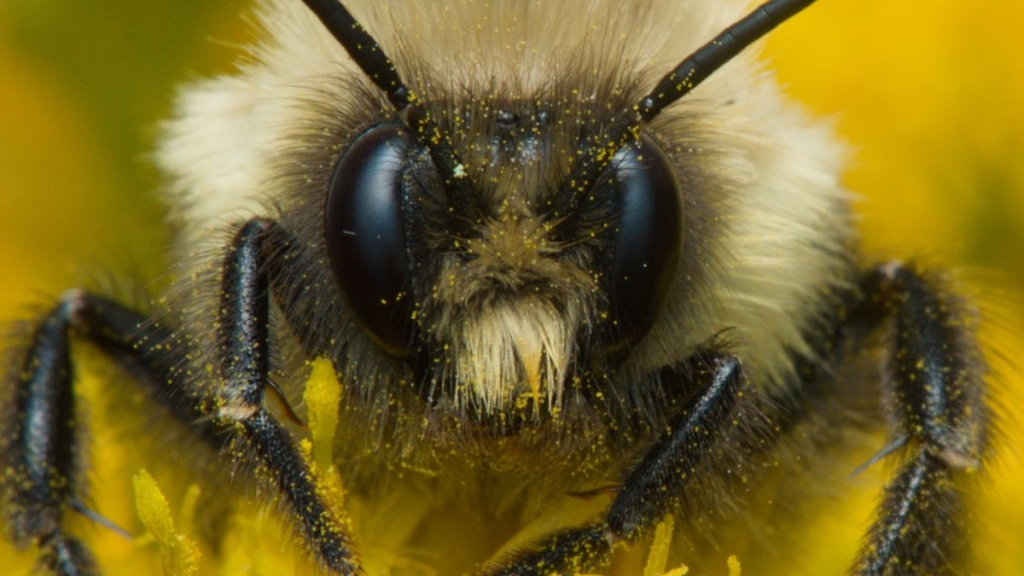
Underwater Survival Secrets of Bumblebee Queens: A Scientific Marvel Unveiled
In a groundbreaking revelation that has stunned the scientific community, researchers have uncovered the astonishing survival mechanisms that allow bumblebee queens to endure over a week submerged underwater—a discovery that challenges our understanding of insect physiology and offers new insights into resilience against environmental extremes.
The Underwater Miracle That Defied Expectations
When scientists first discovered in 2024 that bumblebee queens could survive complete submersion for up to seven days, the finding sent shockwaves through the entomology world. How could these terrestrial insects, perfectly adapted for life above ground, withstand conditions that would prove fatal to most other species?
Now, a comprehensive new study published in the Proceedings of the Royal Society B: Biological Sciences has finally cracked the code, revealing a sophisticated survival toolkit that combines three remarkable biological adaptations working in perfect harmony.
The Queen’s Emergency Survival Kit
Led by evolutionary physiologist Charles Darveau from the University of Ottawa, the research team discovered that Bombus impatiens queens employ a three-pronged strategy that allows them to essentially “pause” their lives when floodwaters rise.
1. Breathing Underwater: The Oxygen Extraction Miracle
The most astonishing revelation is that these bees can literally extract oxygen from the water surrounding them. During laboratory experiments where dozens of queens were submerged in cold water, researchers monitored gas exchange and found clear evidence of underwater respiration.
As the bees breathed in, oxygen levels in the surrounding water decreased while carbon dioxide levels increased—exactly what you’d expect from active respiration, but occurring underwater where such a process was previously thought impossible for terrestrial insects.
2. The Metabolic Shutdown: Extreme Energy Conservation
Even more remarkable is the queen’s ability to reduce her metabolic rate to near-standstill levels. Diapause, the winter hibernation state these queens enter, already slashes metabolism by over 95 percent. Submersion pushes this reduction even further.
Using carbon dioxide production as a metabolic proxy, researchers observed a dramatic drop: from approximately 15.42 microliters per hour per gram of body mass before submersion to just 2.35 microliters after eight days underwater—a reduction to roughly one-sixth of normal metabolic function.
The Science Behind the Survival
The third component of this survival strategy involves anaerobic metabolism, a process that allows cells to generate energy without oxygen. When submerged, the bees’ bodies switch to this oxygen-independent metabolic pathway, producing lactate as a byproduct.
This metabolic flexibility is crucial because it allows the queens to maintain minimal cellular function even when oxygen extraction from water becomes insufficient. It’s essentially a backup generator kicking in when the primary power source faces limitations.
Nature’s Engineering: The Physical Gill Hypothesis
While the exact mechanism remains to be confirmed, researchers believe the queens utilize what’s known as a “physical gill”—a thin layer of trapped air that facilitates gas exchange with the surrounding water. This adaptation, if confirmed, would represent a remarkable example of evolutionary engineering.
The physical gill would create a semi-permeable barrier between the bee’s spiracles (breathing openings) and the water, allowing oxygen to diffuse in while preventing water from entering the respiratory system—a delicate balance that could explain how these insects manage to breathe underwater without drowning.
Ecological Significance and Future Implications
This discovery carries profound implications for our understanding of insect resilience in the face of climate change. As extreme weather events become more frequent, the ability of species to withstand unexpected environmental challenges becomes increasingly critical for survival.
The research also raises fascinating questions about the limits of this adaptation. How long could a queen survive if submerged for two weeks instead of one? What water temperatures are optimal for this survival strategy? How do different species compare in their underwater resilience?
Why This Matters: Beyond the Buzz
Understanding these survival mechanisms isn’t just academic curiosity—it has practical applications for conservation efforts and could inform strategies for protecting pollinator populations as climate patterns become increasingly unpredictable.
Moreover, this research exemplifies how nature often holds solutions to challenges we haven’t yet encountered. The bumblebee queen’s ability to survive underwater suggests that other species may possess hidden adaptations waiting to be discovered.
The Road Ahead: Unanswered Questions
The research team acknowledges that several mysteries remain. The exact structure and function of the physical gill needs confirmation through advanced imaging techniques. The biochemical pathways enabling such extreme metabolic depression require further investigation. And comparative studies across different bumblebee species could reveal whether this adaptation is widespread or unique to B. impatiens.
Future studies manipulating water conditions, examining recovery processes, and conducting detailed anatomical analyses will be crucial for fully understanding these remarkable survival mechanisms.
A Testament to Evolutionary Ingenuity
What makes this discovery particularly fascinating is that it represents an adaptation to a relatively rare environmental challenge. Flooding events that completely submerge bee burrows aren’t daily occurrences, yet the survival benefits are significant enough that evolution has equipped these queens with this extraordinary capability.
It’s a powerful reminder that nature often prepares organisms for worst-case scenarios, investing in adaptations that may only be needed occasionally but can mean the difference between species survival and extinction.
The Bigger Picture: Resilience in a Changing World
As we face unprecedented environmental changes, discoveries like this offer hope that many species may be more resilient than we assume. The bumblebee queen’s underwater survival strategy demonstrates that evolution can produce surprisingly sophisticated solutions to extreme challenges.
This research not only expands our scientific knowledge but also inspires appreciation for the hidden complexities of even the most familiar creatures. The next time you see a bumblebee buzzing through your garden, remember that within that tiny body lies the capacity for extraordinary survival—a testament to the remarkable adaptability of life on Earth.
Tags: #BumblebeeSurvival #UnderwaterRespiration #InsectPhysiology #ClimateResilience #EvolutionaryAdaptation #PollinatorResearch #ScientificDiscovery #NatureInnovation #MetabolicDepression #EnvironmentalAdaptation #QueenBees #Diapause #AnaerobicMetabolism #PhysicalGill #ClimateChangeResearch #EntomologyBreakthrough #RoyalSocietyResearch #UniversityOfOttawa #CharlesDarveau #BombusImpatiens #ExtremeSurvival #HiddenAdaptations #BiologicalEngineering #NatureSolutions
Viral Phrases: “Nature’s emergency survival kit,” “breathing underwater like a fish,” “metabolic shutdown at near-standstill,” “evolution’s backup generator,” “the queen’s hidden superpower,” “defying death beneath the waves,” “biological engineering at its finest,” “climate change’s unexpected heroes,” “the pause button on life,” “survival against all odds,” “nature’s secret weapons,” “adaptation beyond imagination,” “the resilience we never knew existed,” “when evolution prepares for the worst,” “tiny bodies, extraordinary capabilities,” “the science of staying alive,” “unlocking nature’s survival codes,” “beating the odds one breath at a time,” “the underwater miracle of the bumblebee queen.”
,


Leave a Reply
Want to join the discussion?Feel free to contribute!