
What Is The IR Blaster On Smart TVs Actually For?
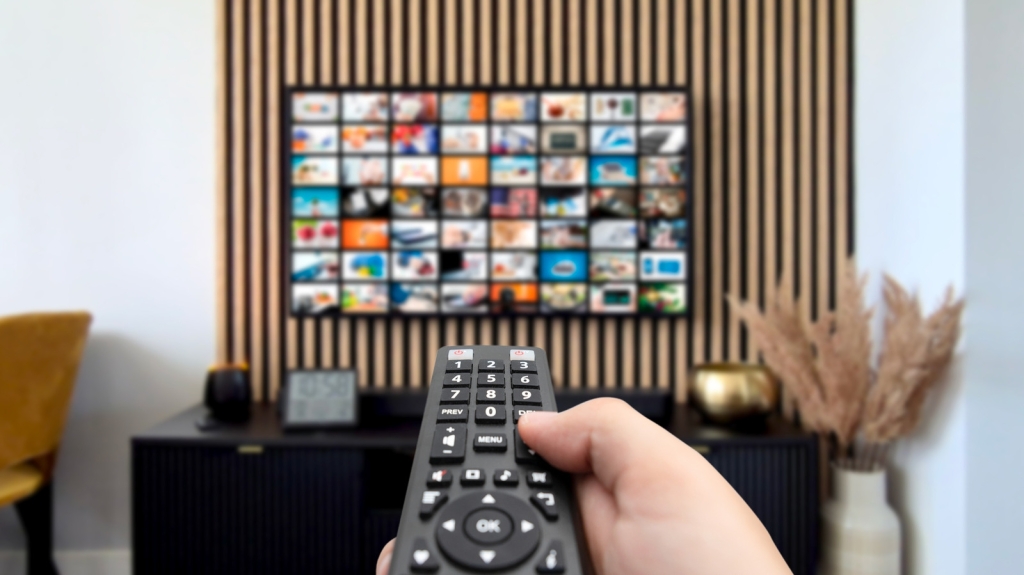
Decoding the IR Blaster: The Unsung Hero of Modern Smart TVs
In the ever-evolving landscape of home entertainment technology, certain features often fly under the radar despite their crucial functionality. The IR blaster—a component that might seem archaic in our Wi-Fi and Bluetooth-dominated world—continues to play a vital role in how we interact with our smart TVs and connected devices. But what exactly is this infrared technology doing in your cutting-edge television, and why has it stubbornly persisted through multiple technological revolutions?
Understanding the Invisible Technology
The “IR” in IR blaster stands for infrared—a type of electromagnetic radiation that exists just beyond the visible spectrum of light. Unlike harmful radiation types, infrared is completely safe and is the same technology that enables night vision goggles and thermal imaging. In the context of home electronics, infrared serves as a universal language that allows devices to communicate through invisible light pulses.
When you press a button on your remote control, you’re essentially sending a coded message via these infrared light pulses. Your TV’s IR sensor detects these pulses and translates them into commands—changing channels, adjusting volume, or powering on and off. This technology has remained remarkably consistent since its introduction in the 1980s, which speaks volumes about its reliability and effectiveness.
The Multi-Device Control Revolution
One of the most compelling reasons for IR blasters’ continued relevance lies in their ability to unify control over multiple devices. In the average modern home theater setup, you might have a smart TV, soundbar, gaming console, streaming device, cable box, and perhaps even smart blinds or lighting—each potentially requiring its own remote control.
Enter the universal remote with IR blasting capabilities. These sophisticated controllers can learn and replicate the infrared signals of multiple devices, allowing you to control your entire entertainment ecosystem from a single handset. This isn’t just about convenience; it’s about eliminating the frustration of juggling multiple remotes, each with its own battery requirements and button layouts.
Some high-end universal remotes even offer macro programming, where a single button press can execute a sequence of commands across multiple devices. Imagine pressing “Watch Movie” and having your TV turn on, switch to the correct input, power up your sound system, dim your smart lights, and lower your motorized blinds—all orchestrated through the humble IR blaster.
Smartphone Integration: Your Phone as a Universal Remote
The IR blaster has found new life in mobile technology, with several smartphone manufacturers incorporating infrared emitters directly into their devices. Phones like the OnePlus 15, certain Xiaomi and Huawei models, and some Samsung Galaxy devices have featured built-in IR blasters that transform your smartphone into a universal remote control.
This integration represents a brilliant convergence of technologies. Your smartphone, which you likely carry everywhere anyway, can control not just your TV but also air conditioners, ceiling fans, projectors, and virtually any device that responds to infrared commands. The convenience factor here is enormous—no more searching for misplaced remotes or dealing with dead batteries at crucial moments.
Mobile apps designed for these IR-capable phones often come with extensive device libraries, automatically configuring themselves for thousands of different TV models and other infrared-controlled devices. Some even offer voice control integration, allowing you to say “turn on the TV” and having your phone translate that into the appropriate infrared signal.
The Plug-and-Play Solution
For TVs and devices that don’t have built-in IR blasting capabilities, external IR blasters offer a simple solution. These small devices can be connected via USB or other ports and serve as intermediaries between your remote control and your various devices. They receive the infrared signal from your remote and then “blast” it out to other nearby devices that need to receive commands.
This setup is particularly useful for cable boxes, streaming devices, or gaming consoles that might be tucked away in cabinets or behind other equipment. The IR blaster can be positioned to have a clear line of sight to these devices while your remote control communicates with it from anywhere in the room.
Why Smart TVs Still Need IR Sensors
Given that modern smart TVs come equipped with Wi-Fi and Bluetooth capabilities, one might wonder why manufacturers continue to include IR sensors at all. The answer involves several practical considerations that go beyond mere tradition.
First, cost-effectiveness plays a significant role. IR sensors are incredibly inexpensive to manufacture and integrate into TV designs. Removing them would result in negligible cost savings while eliminating a widely-used feature. When you’re producing millions of televisions, even small component costs add up, but the IR sensor’s minimal expense makes it a no-brainer to keep.
Second, infrared technology offers certain advantages that wireless protocols can’t match. IR signals require very little power to transmit, which significantly extends battery life in remote controls. Some TV remotes even use IR to wake the television from standby mode, conserving the additional power that would be required to keep Bluetooth or Wi-Fi constantly active.
Third, infrared provides a universal fallback option. When your fancy Bluetooth remote’s batteries die or it needs to be re-paired, the IR sensor ensures you can still control basic functions with any standard remote. This redundancy is particularly valuable in households where multiple people might need to use the TV system.
Enhanced Functionality and Future-Proofing
The presence of IR sensors in smart TVs enables several features that might otherwise be impossible or complicated. For instance, when you’re initially setting up a new smart TV or pairing a new remote, the IR sensor often serves as the primary communication method before more advanced wireless connections are established.
Additionally, IR technology allows for phone-based TV control even before any formal pairing process occurs. Many smart TV manufacturer apps can send infrared signals directly from your phone to control basic TV functions, providing a convenient alternative when the physical remote is unavailable.
The technology also facilitates advanced home automation scenarios. Imagine your TV automatically turning on when you enter the room, or your entire entertainment system powering down when you leave. These intelligent behaviors often rely on IR sensors working in conjunction with other technologies to create seamless, automated experiences.
The Enduring Legacy of Infrared Technology
Despite being decades old, infrared communication continues to prove its worth in the modern smart home ecosystem. Its simplicity, reliability, low cost, and universal adoption have ensured its survival even as flashier wireless technologies have emerged. The IR blaster represents a perfect example of how mature technology, when done right, doesn’t need to be replaced—it just needs to be integrated intelligently with newer innovations.
As we look toward the future of home entertainment, it’s clear that IR blasters and sensors will likely remain part of the equation for years to come. They serve as the reliable backbone that supports more advanced features, ensuring that no matter how sophisticated our home theater systems become, we’ll always have a simple, effective way to control them.
Tags & Viral Phrases:
IR blaster explained, smart TV technology, universal remote control, home theater setup, infrared communication, smartphone IR blaster, OnePlus 15 features, TV remote control solutions, wireless vs infrared, home automation technology, TV sensor technology, entertainment system control, infrared vs Bluetooth, smart home devices, TV setup tips, universal device control, IR sensor benefits, modern TV features, home entertainment technology, infrared remote control
,


Leave a Reply
Want to join the discussion?Feel free to contribute!