
What It’s Like to Have a Brain Implant for 5 Years
Tech Breakthrough: Brain-Computer Interface Gives ALS Patient New Digital Freedom
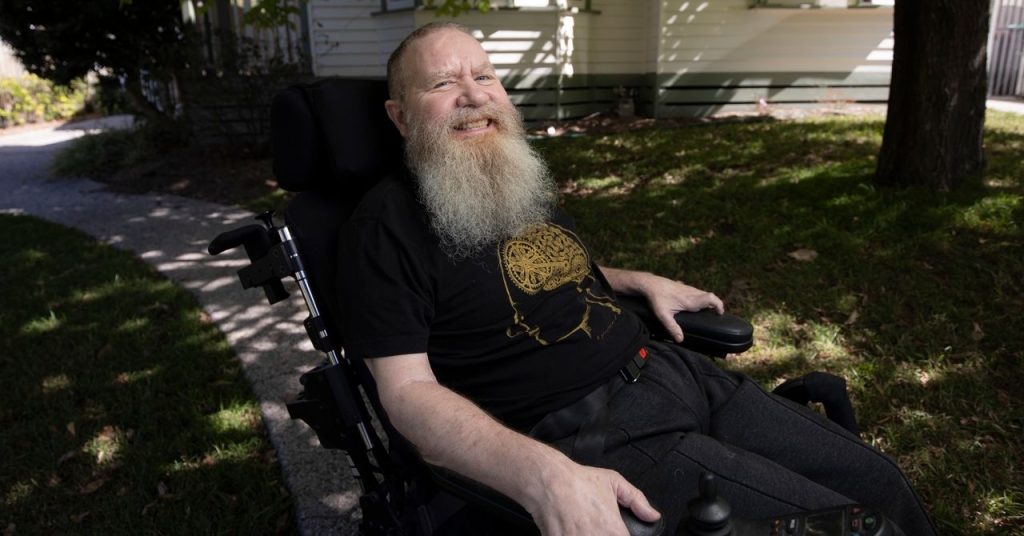
In a remarkable leap forward for assistive technology, Rodney Gorham, an Australian man living with advanced ALS (amyotrophic lateral sclerosis), is pushing the boundaries of what’s possible with brain-computer interface (BCI) technology. What began as simple single-click commands has evolved into sophisticated two-dimensional cursor control, allowing Gorham to navigate digital interfaces with nothing more than his thoughts.
According to Tom Oxley, CEO of Synchron, Gorham’s journey with the BCI has been one of progressive mastery. “Initially, Gorham used his brain-computer interface for single clicks,” Oxley explains. The progression was methodical: from single clicks to multi-clicks, then to sliding control—the digital equivalent of turning a volume knob. Now, Gorham can move a computer cursor across a screen, demonstrating full 2D control with horizontal and vertical movements within a two-dimensional plane.
This advancement represents far more than a technical achievement; it’s a gateway to independence for someone whose physical capabilities have been severely limited by ALS, a progressive neurodegenerative disease that affects nerve cells in the brain and spinal cord.
Direct Impact on Consumer Technology
Gorham’s contributions extend beyond experimental applications. His direct involvement helped shape Switch Control, a groundbreaking accessibility feature that Apple unveiled last year. This functionality allows brain-computer interface users to control iPhones, iPads, and even Apple’s Vision Pro headset using only their thoughts.
The collaboration between Synchron and Apple demonstrates how clinical technology is increasingly influencing mainstream consumer devices. For millions of people with mobility impairments, such features could represent life-changing accessibility improvements.
A Day in the Life: Brain Power in Action
A video demonstration shown at an Nvidia conference in San Jose last year revealed the impressive scope of Gorham’s capabilities. Using his implant, he seamlessly controlled multiple smart home devices: playing music through a smart speaker, turning on a fan, adjusting his home’s lighting, activating an automatic pet feeder, and even directing a robotic vacuum to clean his floors—all from his home in Melbourne, Australia.
These aren’t just party tricks or laboratory demonstrations. They represent practical applications that restore autonomy to someone who might otherwise require constant assistance for everyday tasks.
The Human Element: Field Engineers and Home Visits
Behind this technological marvel is a dedicated support system. Zafar Faraz, a field clinical engineer for Synchron, visits Gorham twice weekly at his home. These sessions serve multiple purposes: monitoring device performance, troubleshooting issues, and—crucially—understanding the full range of what Gorham can accomplish with the technology.
This hands-on approach has been instrumental in refining the system. “Rodney has been pushing the boundaries of what is possible,” Faraz notes, highlighting how user feedback drives technological evolution.
Pushing Boundaries Through Experimentation
The relationship between Gorham and the Synchron team has fostered remarkable experimentation. In one session, Faraz had Gorham operate two iPads simultaneously—playing a game on one while listening to music on the other, switching between them using only his thoughts. In another innovative test, Gorham played a computer game requiring him to grab virtual blocks on a shelf. This game was connected to an actual robotic arm at the University of Melbourne, approximately six miles from Gorham’s home, which moved real blocks in a laboratory setting based on his brain signals.
These experiments showcase the potential for brain-computer interfaces to bridge physical distances, allowing users to interact with remote environments and machinery through thought alone.
A Perfect Match: Technology Meets Experience
Gorham’s background as an IBM software salesman before his ALS diagnosis in 2016 makes him uniquely suited to contribute to BCI development. His wife Caroline observes that the work “fits Rodney’s set of life skills.” For three decades, Gorham worked in IT, communicating with customers to understand their software needs, then collaborating with developers to create solutions. “Now it’s sort of flipped around the other way,” Caroline explains.
The satisfaction Gorham derives from this work is evident. After sessions with Faraz, Caroline reports that her husband is “smiling ear to ear,” clearly energized by the opportunity to contribute meaningfully despite his physical limitations.
Technical Evolution: Learning from Real-World Use
The Synchron team has gleaned crucial insights from Gorham’s experience, leading to significant design changes. The current system requires a wire cable with a paddle that sits on the user’s chest, collecting brain signals that are transmitted via wire to an external unit for translation into commands.
However, real-world usage revealed this design’s limitations. “If you have a wearable component where there’s a delicate communication layer, we learned that that’s a problem,” Oxley admits. For paralyzed users, dependence on someone else to maintain and adjust wearable components proved impractical.
These lessons are informing Synchron’s second-generation system, which eliminates the problematic wire component. This evolution demonstrates how user experience drives technological refinement, particularly when serving populations with specific accessibility needs.
The Future of Brain-Computer Interfaces
Gorham’s story represents just one chapter in the rapidly advancing field of brain-computer interfaces. As companies like Synchron refine their technology and major tech players like Apple integrate BCI compatibility into consumer devices, the line between medical assistive technology and mainstream accessibility features continues to blur.
For individuals with severe mobility impairments, these developments offer unprecedented hope for digital independence. For the broader technology community, they represent a powerful reminder that the most impactful innovations often emerge from addressing the needs of those with the most challenging limitations.
As BCI technology continues to mature, stories like Gorham’s—where human determination meets technological possibility—will likely become increasingly common, reshaping our understanding of how we interact with the digital world.
BrainComputerInterface #ALS #AssistiveTechnology #Synchron #Accessibility #Innovation #MedicalTech #Neurotechnology #DigitalIndependence #TechForAll #FutureOfComputing #SmartHome #DisabilityTech #HumanComputerInteraction #TechBreakthrough #MedicalInnovation #DigitalAccessibility #Neurotech #AssistiveDevices #TechForGood #InclusiveDesign #ALSResearch #BrainImplant #ThoughtControl #SmartTechnology #AccessibilityFeatures #MedicalDevices #EmergingTech #TechNews #InnovationInAction
brain-computer interface, ALS patient, Rodney Gorham, Synchron technology, thought-controlled devices, Apple accessibility, Switch Control, medical breakthrough, assistive technology, neurotechnology, smart home control, paralyzed independence, field clinical engineer, BCI development, Melbourne tech, IBM software, ALS research, digital autonomy, wearable tech, brain signals, 2D control, cursor movement, medical devices, technology evolution, accessibility features, Nvidia conference, University of Melbourne, robotic arm, iPad control, Vision Pro, consumer tech, medical innovation, technology for disability, human-computer interaction, emerging technology, tech for good, inclusive design, digital accessibility, thought control, smart technology, medical devices, breakthrough technology, assistive devices, neurotech, tech news, innovation in action
,


Leave a Reply
Want to join the discussion?Feel free to contribute!