
Who is Asha Sharma? A closer look at Microsoft’s surprise pick to lead the Xbox business
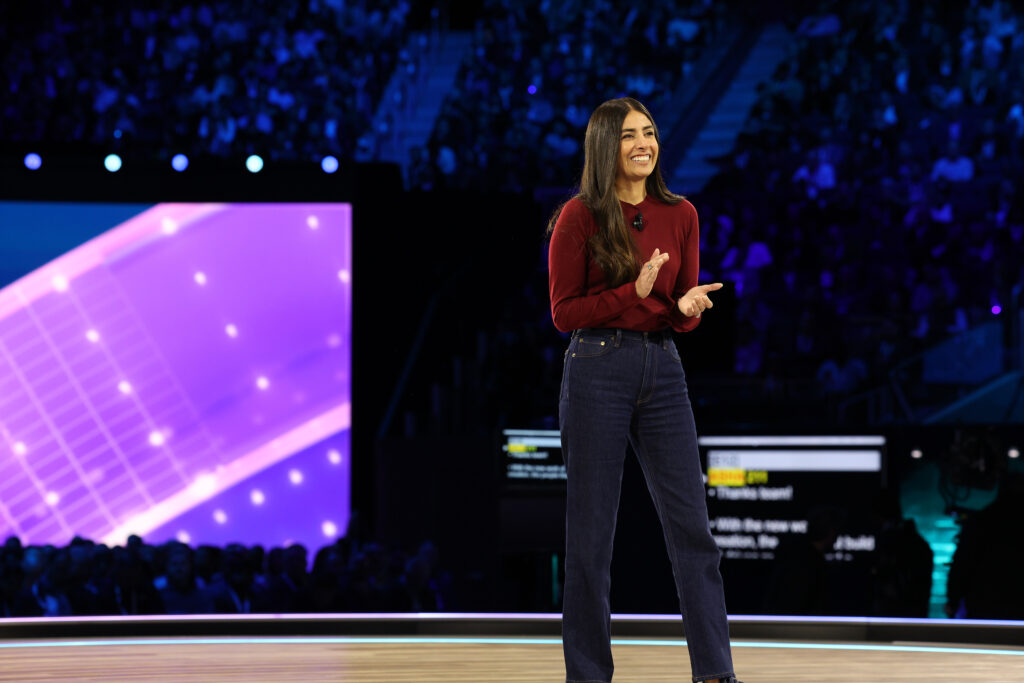
Asha Sharma: The Unlikely New Leader of Microsoft Gaming
In a stunning leadership shakeup that has sent shockwaves through the gaming industry, Microsoft has appointed Asha Sharma as the new CEO of Microsoft Gaming, succeeding Xbox legend Phil Spencer after his remarkable 38-year tenure. The move, announced last Friday, caught industry insiders by surprise, not just because of Sharma’s lack of traditional gaming credentials, but because of the intriguing literary connection that makes her appointment feel almost destined.
A Novel Connection That’s Almost Too Perfect
What makes this story particularly fascinating is Sharma’s well-documented love for Gabrielle Zevin’s 2022 novel Tomorrow, and Tomorrow, and Tomorrow—a book she has read every year for the past three years and describes as “a beautiful story.” The novel chronicles the journey of two friends who build a video game company from scratch, navigating the treacherous waters between artistic vision and commercial success, ultimately struggling with the complexities of scaling a creative business.
“I love it so much,” Sharma revealed during a 2024 interview on Lenny Rachitsky’s podcast, though she notably didn’t mention that the book centers on video games—a detail that has taken on profound significance given her new role.
The parallels are uncanny. Just as the novel’s protagonists must apply their understanding of patterns and coordination across different games, Sharma now faces the challenge of applying her extensive tech platform experience to the intricate world of gaming—a domain she hasn’t previously inhabited professionally.
The Microsoft Gaming Empire at a Crossroads
Microsoft’s gaming division represents a massive ecosystem that spans console, PC, mobile, and cloud platforms. Under Spencer’s leadership, the company made historic acquisitions, including ZeniMax Media ($7.5 billion in 2021) and the record-breaking $69 billion acquisition of Activision Blizzard in 2023. These moves brought legendary franchises like Call of Duty, World of Warcraft, Candy Crush, Diablo, and Overwatch under Microsoft’s umbrella, establishing it as the third-largest gaming company globally by revenue.
However, the financial picture has been challenging. The gaming division saw a 9% revenue decline in the most recent quarter, with hardware revenue plummeting 32%. Despite owning some of the most valuable intellectual property in entertainment, Xbox has faced pressure to meet aggressive profit targets while maintaining its creative soul.
Sharma’s Unconventional Path to Gaming’s Top Seat
At 37, Sharma brings a distinctly non-traditional background to the gaming industry’s highest executive position. Her journey reads like a masterclass in tech leadership versatility:
Early Career Foundation (2000s)
- Interned at Microsoft during college
- Worked in marketing immediately after graduating from University of Minnesota’s Carlson School of Management
- Helped build Porch, a Seattle home services startup, serving as COO during its formative years
Platform Leadership Experience (2010s-2020s)
- VP of Product at Meta, overseeing Messenger and Instagram Direct
- COO of Instacart during a critical growth phase
- Led Microsoft’s CoreAI product organization for the past two years, managing Azure AI Studio, the company’s AI model catalog, and developer tools for Microsoft Copilot
Personal Dimensions
- Second-degree black belt in Taekwondo, describing it as “more mental than physical”
- Board member at Home Depot and Coupang
- Started working at age 17, with early experience at SC Johnson, Cargill, and Deloitte
What’s particularly striking is that Sharma’s Microsoft journey has come full circle—she began her career at the company, left to gain diverse leadership experience across multiple tech verticals, and has now returned to lead one of its most visible consumer brands.
The Challenge: Protecting What Works While Driving Innovation
In her inaugural memo to Microsoft Gaming employees, Sharma laid out a clear vision that directly addressed industry concerns about AI’s role in creative fields. “As monetization and AI evolve and influence this future, we will not chase short-term efficiency or flood our ecosystem with soulless AI slop,” she wrote. “Games are and always will be art, crafted by humans, and created with the most innovative technology provided by us.”
Her three core priorities demonstrate a sophisticated understanding of the gaming ecosystem’s complexities:
- Great games above all else – Emphasizing quality over quantity
- Recommitment to Xbox’s core console fans – Addressing concerns about platform dilution
- The “future of play” – Exploring new business models and collaborative creation platforms
Crucially, she vowed not to treat iconic franchises as “static IP to milk and monetize,” instead expressing desire to return to “the renegade spirit that built Xbox in the first place.” Her first executive action—promoting longtime studio chief Matt Booty to executive vice president and chief content officer—signals her intent to pair her platform expertise with deep gaming industry credibility.
“My first job is simple,” she wrote. “Understand what makes this work and protect it.”
Winning Over a Skeptical Gaming Community
The gaming community’s initial reaction to Sharma’s appointment has been mixed, with skepticism arising from her limited gaming background and absence of traditional industry leadership experience. However, Sharma has launched an aggressive charm offensive to bridge the credibility gap.
Over the weekend, she began direct engagement with Xbox fans on social media, sharing her gamertag (AMRAHSAHSA—her name spelled backwards) and listing her top three games as “Halo, Valheim, Goldeneye.” When one fan accused her social media account of being run by AI, she responded with characteristic wit: “Beep Boop Beep Boop.”
Her Xbox profile activity, quickly dissected by gaming media outlets like IGN and Windows Central, reveals she’s played approximately 30 titles since mid-January, showing particular affinity for narrative-driven indie games like Firewatch, Gone Home, and What Remains of Edith Finch—titles that demonstrate appreciation for games as artistic expression rather than mere entertainment products.
Longtime Xbox executive Aaron Greenberg, the division’s VP of marketing, offered public support, describing Sharma as “exceptionally bright, eager to listen and learn from others, no ego” after spending time with her during the transition week.
The Broader Implications for Tech Leadership
Sharma’s appointment represents a fascinating experiment in cross-industry leadership transfer. Microsoft CEO Satya Nadella explicitly cited her “deep experience building and growing platforms, aligning business models to long-term value, and operating at global scale” as key qualifications for the role.
The implicit message is clear: modern gaming platforms require the same sophisticated operational expertise as any other major tech ecosystem. Xbox spans multiple devices, business models, and user demographics, demanding an executive who can orchestrate complex platform dynamics while preserving creative integrity.
This approach challenges the traditional assumption that gaming companies must be led by industry veterans. Instead, it suggests that the skills required to build and scale major tech platforms—understanding user behavior, optimizing monetization without compromising experience, managing global operations—may be more critical than gaming-specific knowledge.
The Literary Symmetry
There’s something almost poetic about Sharma’s appointment when viewed through the lens of her favorite novel. Tomorrow, and Tomorrow, and Tomorrow explores how creative partnerships evolve as companies scale, how artistic vision must adapt to commercial realities, and how the most successful gaming companies maintain their creative soul while building sustainable businesses.
Sharma now finds herself in precisely the position the novel’s protagonists occupy: tasked with scaling a creative enterprise while preserving its artistic essence, balancing innovation with tradition, and navigating the tension between creative freedom and business necessity.
The fact that she’s been studying this exact dynamic through literature for years suggests she may be uniquely prepared for the challenge, even if her gaming resume is shorter than traditional candidates.
Looking Forward
As Sharma prepares to officially assume her role, the gaming industry watches with a mixture of curiosity and skepticism. Can someone who came to gaming later in life understand its unique culture and community dynamics? Can platform expertise translate into creative leadership? Will her outsider perspective bring fresh insights or miss crucial industry nuances?
The answers to these questions will unfold over the coming months and years. But one thing is certain: Asha Sharma’s appointment represents a bold bet by Microsoft that the future of gaming leadership may look different from its past—and that sometimes, the best preparation for a role is understanding the patterns that connect all games, all platforms, and all creative enterprises.
Her journey from Wisconsin to Redmond, from marketing intern to gaming CEO, from platform executive to creative leader, embodies the kind of non-linear career path that’s becoming increasingly common in tech’s upper echelons. Whether this unconventional choice proves brilliant or misguided, it undeniably makes for one of the most intriguing leadership stories in recent gaming history.
Tags & Viral Phrases:
- Microsoft Gaming CEO shakeup
- Asha Sharma appointed Xbox leader
- Phil Spencer successor named
- Gaming industry leadership change
- Microsoft acquires Activision Blizzard
- Xbox business challenges
- Gaming platform strategy
- Cross-industry tech leadership
- Gaming community reaction
- AI in gaming controversy
- Creative vs commercial gaming
- Xbox Game Pass future
- Gaming industry acquisitions
- Microsoft gaming revenue decline
- Non-traditional gaming CEO
- Platform expertise in gaming
- Tomorrow and Tomorrow and Tomorrow connection
- Satya Nadella leadership decisions
- Xbox community engagement
- Gaming industry skepticism
- Microsoft gaming strategy shift
- Gaming IP monetization debate
- Xbox console future
- Gaming business models evolution
- Creative integrity in gaming
- Gaming industry outsider perspective
- Microsoft gaming leadership transition
- Gaming industry cultural challenges
- Platform operations in gaming
- Gaming community trust building
- Microsoft gaming ecosystem
- Gaming industry innovation pressure
- Xbox brand evolution
- Gaming industry financial pressures
- Creative leadership in tech
- Gaming industry transformation
- Microsoft gaming acquisition strategy
- Gaming community authenticity concerns
- Platform leadership in creative industries
- Gaming industry business model disruption
- Microsoft gaming competitive position
- Gaming industry talent retention
- Xbox community relationship building
- Gaming industry strategic direction
- Microsoft gaming market challenges
- Gaming industry cultural understanding
- Platform expertise translation
- Gaming industry leadership experimentation
- Microsoft gaming future vision
,


Leave a Reply
Want to join the discussion?Feel free to contribute!