
Who will own your company’s AI layer? Glean’s CEO explains
Enterprise AI Is Moving Beyond Chatbots—Glean Bets on Becoming the Invisible Infrastructure Layer
The enterprise AI landscape is undergoing a seismic shift. What began as a wave of chatbot deployments—AI systems designed to answer questions and assist with basic queries—is rapidly evolving into something far more ambitious: autonomous systems capable of executing complex workflows across entire organizations. This transformation raises a critical question that every enterprise is now grappling with: who will own the foundational AI layer that powers all of this intelligence?
Enter Glean, a company that has quietly positioned itself at the heart of this evolution. Originally launched as an enterprise search product designed to help employees find information buried across internal systems, Glean has since transformed into what it calls an “AI work assistant.” But this isn’t just another chatbot or productivity tool—Glean is positioning itself as the connective tissue that sits underneath all other AI experiences within an organization.
The company’s vision is to become the invisible infrastructure layer that connects to every internal system, manages permissions and access controls, and delivers intelligent assistance wherever employees work. Think of it as the operating system for enterprise AI—the platform that makes all those flashy AI applications actually work in the real world of corporate data, security requirements, and complex workflows.
This ambitious vision has clearly resonated with investors. Last year, Glean raised $150 million at a staggering $7.2 billion valuation, according to TechCrunch. This massive funding round came as competition in the enterprise AI space heats up, with tech giants like Microsoft, Google, and Salesforce all racing to bundle AI capabilities into their existing enterprise offerings. But Glean’s bet is that companies will want a neutral, agnostic platform that can work across all these different systems rather than being locked into a single vendor’s ecosystem.
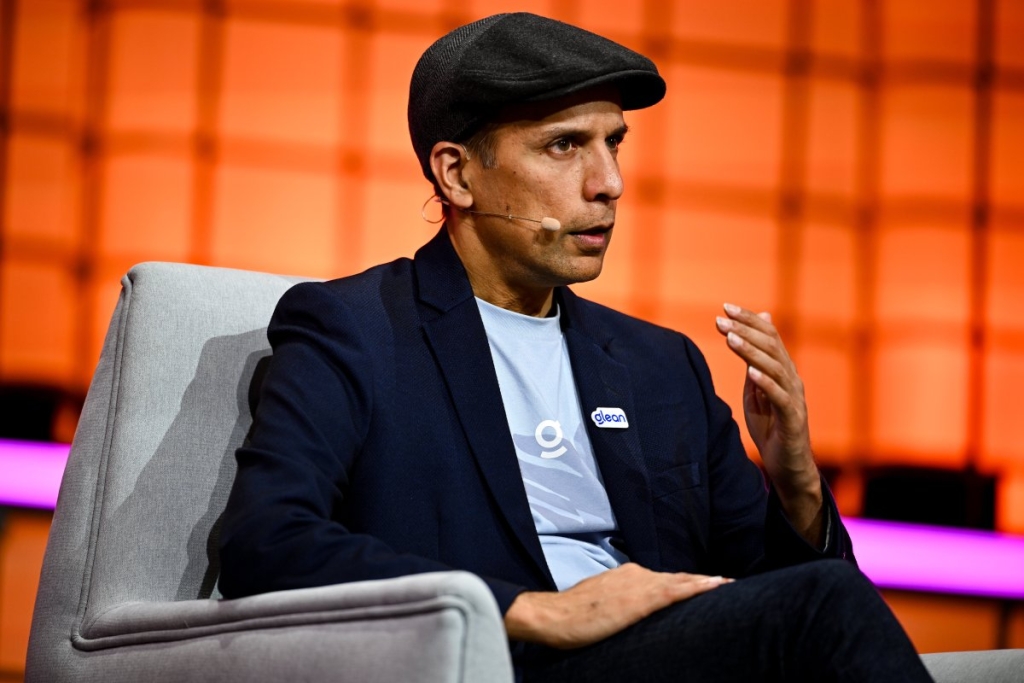
To understand how enterprises are actually thinking about AI architecture and what’s driving this consolidation trend, Rebecca Bellan, host of TechCrunch’s Equity podcast, sat down with Glean’s CEO and founder Arvind Jain at Web Summit Qatar. The conversation delved into the real versus hype in the agent space, how companies are approaching AI infrastructure decisions, and what the future holds for enterprise AI adoption.
The timing of this discussion is particularly relevant as organizations move from experimental AI projects to production deployments at scale. Many companies that rushed to implement chatbots and basic AI assistants are now realizing that true enterprise value requires deeper integration with existing systems, robust security controls, and the ability to handle complex, multi-step workflows.
Glean’s approach addresses these challenges head-on by focusing on the plumbing that makes AI actually useful in enterprise environments. Rather than building another shiny AI application, they’re creating the foundation that allows all those applications to work together seamlessly while maintaining the security and compliance requirements that enterprises demand.
This infrastructure-first approach may prove prescient as the market matures. While consumer AI applications can afford to be standalone experiences, enterprise AI needs to integrate with existing systems, respect organizational hierarchies and permissions, and handle sensitive data appropriately. Glean’s evolution from search to AI assistant to potential AI infrastructure layer reflects a deep understanding of these enterprise realities.
The competition in this space is only going to intensify. As more companies recognize that AI success depends not just on the models themselves but on the infrastructure that supports them, we can expect to see increased investment in platforms that can serve as the connective tissue between AI capabilities and enterprise systems. Whether Glean can maintain its early lead and become the de facto standard for enterprise AI infrastructure remains to be seen, but its vision and execution so far suggest it’s a company worth watching closely.
For those interested in diving deeper into these topics, the full conversation between Rebecca Bellan and Arvind Jain is available on the Equity podcast, which can be found on YouTube, Apple Podcasts, Overcast, Spotify, and other major podcast platforms. The podcast also maintains active communities on X (formerly Twitter) and Threads under the handle @EquityPod.
enterprise AI, Glean, AI infrastructure, workplace AI, autonomous agents, enterprise search, AI work assistant, corporate AI adoption, AI architecture, tech investment, AI valuation, enterprise technology, AI platforms, workplace productivity, AI integration, enterprise systems, AI security, corporate innovation, AI deployment, technology trends
AI transformation, enterprise revolution, invisible infrastructure, AI operating system, workplace intelligence, future of work, AI connectivity, enterprise AI war, AI consolidation, tech giants vs startups, AI permission management, intelligent workplace, AI foundation layer, enterprise AI strategy, AI workflow automation, corporate AI infrastructure, AI ecosystem dominance, workplace AI evolution, AI integration challenges, enterprise AI maturity
The AI layer that will power everything is being built right now. Who controls it controls the future of work. Enterprise AI isn’t about chatbots anymore—it’s about autonomous systems that actually get things done. Glean isn’t building another AI app; they’re building the platform that makes all AI apps work. $7.2 billion valuation signals massive confidence in AI infrastructure plays. The real battle in enterprise AI isn’t about models—it’s about integration and control. Companies are realizing that AI success depends on invisible plumbing, not just flashy interfaces. The future of enterprise AI belongs to platforms that can connect everything while keeping data secure. This is the AI infrastructure arms race you’re not hearing enough about.,


Leave a Reply
Want to join the discussion?Feel free to contribute!