
Whoops: US military laser strike takes down CBP drone near Mexican border
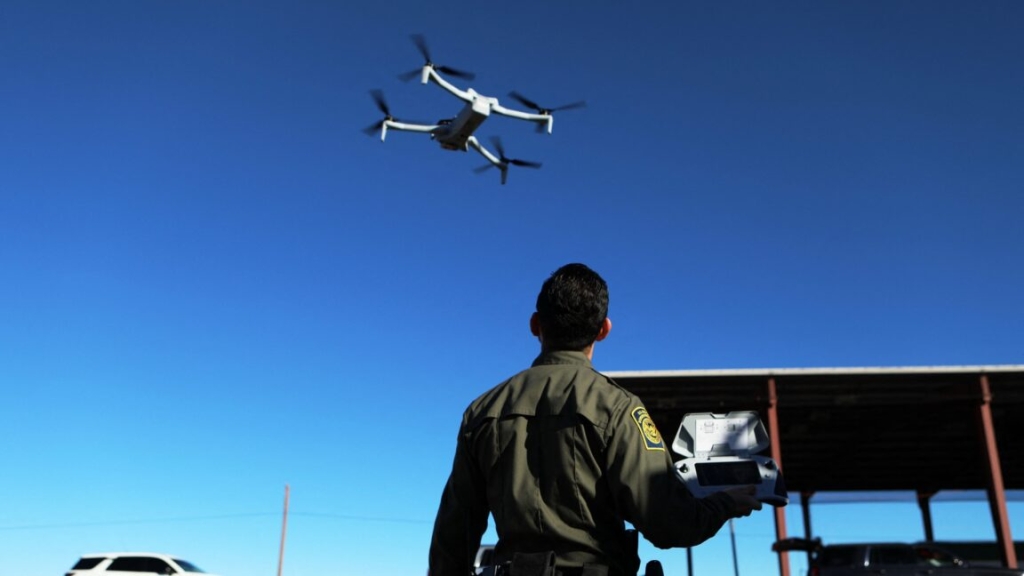
Pentagon’s Laser Misfire: US Military Shoots Down Own Drone in Border Blunder
In a stunning display of technological overreach and bureaucratic miscommunication, the United States military has once again demonstrated that even the most advanced weapons systems can’t compensate for basic operational failures. This time, the casualty was a Customs and Border Protection (CBP) drone—an unmanned aircraft that was mistakenly identified as a hostile target and eliminated by a high-energy laser system along the Texas-Mexico border.
The incident, which occurred near Fort Hancock, Texas, has sent shockwaves through both the defense and aviation communities, raising serious questions about coordination between federal agencies and the safety protocols surrounding experimental weapons deployment.
The Laser Strike That Shouldn’t Have Happened
According to multiple sources within Congress and the defense establishment, the Pentagon deployed a high-energy laser system to neutralize what operators believed was an unauthorized drone incursion. The problem? The aircraft in question was actually a CBP-operated surveillance drone, part of the agency’s ongoing efforts to monitor border activities and track unauthorized crossings.
“The Defense Department didn’t realize the drone was being flown by CBP when it shot it down,” Bloomberg reported, citing anonymous sources familiar with the matter. This fundamental failure of identification systems speaks volumes about the current state of military-civilian coordination—or rather, the lack thereof.
What makes this incident particularly concerning is that the CBP drone operators had not informed the military’s laser unit about their planned flight operations. Without this critical communication, the military’s systems classified the CBP drone as an “unknown drone,” triggering the lethal response. This breakdown in basic information sharing represents a failure at the most fundamental level of operational security.
FAA’s Emergency Response and Ongoing Restrictions
The Federal Aviation Administration’s reaction to the incident was swift and severe. The agency implemented temporary flight restrictions over Fort Hancock, Texas, citing “special security reasons.” The notice, which remains in effect until June 24 (though subject to earlier cancellation), effectively closed a significant portion of airspace along the border.
This isn’t the first time in recent weeks that the FAA has had to respond to military or law enforcement laser operations gone awry. Just two weeks prior, similar technology—also on loan from the military—was deployed in El Paso, Texas, with equally problematic results.
A Pattern of Laser-Related Incidents
The Fort Hancock incident marks at least the second high-profile laser deployment by federal agencies in February alone. On February 10th, CBP personnel using the same military-grade laser technology accidentally targeted what they believed to be a drug-smuggling drone. The actual target? A party balloon floating innocently through the El Paso airspace.
“In both cases, the lasers were used without the FAA’s approval, which many aviation safety experts maintain is a violation of the law,” The New York Times reported. This pattern of unauthorized laser use raises serious legal and safety concerns, particularly given the potential for collateral damage to commercial aircraft, wildlife, and civilian infrastructure.
The February 10th incident was so disruptive that it forced the FAA to close El Paso airspace for several hours, resulting in numerous flight cancellations and delays. Passengers were left stranded, airlines scrambled to reorganize schedules, and the economic impact rippled through the regional aviation network.
The Technology Behind the Blunder
The high-energy laser system in question represents cutting-edge military technology, designed to provide a precise, cost-effective alternative to traditional anti-drone measures like jamming or kinetic interception. These systems can disable or destroy small unmanned aircraft by focusing intense beams of energy on critical components, causing immediate system failure.
However, the very precision that makes these systems attractive also makes them dangerous when deployed without proper coordination. Unlike traditional weapons that might create blast zones or require larger safety margins, lasers can be targeted with extreme accuracy—meaning mistakes can be equally precise and potentially devastating.
The technology’s deployment along the border appears to be part of a broader strategy to combat drug cartels’ increasing use of drones for smuggling operations. Mexican criminal organizations have been documented using unmanned aircraft to transport narcotics, conduct surveillance, and coordinate trafficking operations across the border.
Political Fallout and Congressional Response
The incident has ignited a firestorm of criticism from Democratic lawmakers, who see it as emblematic of the Trump administration’s broader approach to border security and military operations. Senator Tammy Duckworth of Illinois, the ranking member of the Senate Aviation Subcommittee, issued a scathing statement condemning the administration’s handling of the situation.
“The Trump administration’s incompetence continues to cause chaos in our skies,” Duckworth declared. “The situation is alarming and demands a thorough, independent investigation.”
Her comments reflect growing concern among aviation safety experts and civil liberties advocates about the militarization of domestic airspace and the apparent lack of oversight governing experimental weapons deployment. The fact that both incidents involved technology on loan from the military to civilian agencies further complicates the chain of command and responsibility.
Conflicting Timelines and Information Gaps
Adding to the confusion surrounding the incident are conflicting reports about when exactly the Fort Hancock strike occurred. The New York Times reported that the event took place on Thursday, while Bloomberg indicated that the FAA was notified on Wednesday, suggesting the actual strike may have happened earlier.
This discrepancy in timelines highlights another critical failure: the apparent lack of a unified incident reporting system across federal agencies. When different branches of government can’t even agree on basic facts like when an event occurred, it becomes nearly impossible to conduct effective after-action reviews or implement corrective measures.
The Human Element: Operator Error or Systemic Failure?
While initial reports focus on the technical aspects of the incident, the underlying issue appears to be human error compounded by systemic failures. The military operators who fired the laser presumably followed their standard operating procedures, but those procedures clearly didn’t account for friendly aircraft operating without notification.
This raises uncomfortable questions about training, situational awareness, and the assumptions built into military engagement protocols. In an era where domestic agencies increasingly adopt military-grade technology, the traditional boundaries between military and civilian operations have become dangerously blurred.
Economic and Operational Impact
Beyond the immediate safety concerns, these incidents have significant economic implications. Flight cancellations, delays, and airspace closures cost airlines millions of dollars in lost revenue and operational disruptions. Businesses that rely on timely air freight face additional costs and logistical challenges. The tourism industry in border regions suffers as travelers become wary of potential disruptions.
Moreover, the repeated incidents have likely damaged public confidence in both aviation safety and border security operations. When federal agencies can’t reliably distinguish between their own drones and potential threats, it suggests a level of disorganization that extends far beyond any single technological failure.
Looking Forward: Reform or Repeat?
The Fort Hancock incident and its February predecessor represent more than just embarrassing mistakes—they’re warning signs of a system under strain. As federal agencies continue to adopt advanced military technologies for domestic operations, the need for robust coordination mechanisms becomes increasingly critical.
Aviation safety experts are calling for mandatory FAA approval for all laser operations, regardless of the operator’s affiliation. Others advocate for the creation of a centralized coordination center that would track all drone operations along the border and provide real-time information to all potentially affected agencies.
Until such reforms are implemented, the risk of similar incidents remains high. The technology that makes these laser systems so effective against unauthorized drones also makes them potentially catastrophic when deployed without proper oversight and communication.
The Path to Accountability
For now, the investigation into the Fort Hancock incident continues, with Congress demanding answers and the public left to wonder how such a basic failure of identification could occur in an era of supposedly advanced surveillance and tracking technology.
The coming weeks will likely see intense scrutiny of the protocols governing military-civilian coordination, the loan and deployment of military technology to domestic agencies, and the overall strategy for border security operations. Whether this scrutiny leads to meaningful reform or simply fades into the background noise of Washington politics remains to be seen.
What’s clear is that the era of treating domestic airspace as a testing ground for experimental military technology must end. The safety of civilian aircraft, the efficiency of commercial aviation, and the public’s trust in federal agencies all depend on establishing clear boundaries, robust communication protocols, and meaningful accountability for when those systems fail.
Tags: Pentagon laser drone strike, CBP drone shot down, border security blunder, high-energy laser system, FAA airspace closure, military-civilian coordination failure, drone identification error, Fort Hancock Texas incident, anti-drone technology, border surveillance mishap, laser weapon deployment, federal agency miscommunication, aviation safety violation, drug cartel drone operations, experimental weapons testing, Trump administration border policy, congressional oversight demanded, military technology civilian use, airspace restriction emergency, drone warfare domestic, technological overreach consequences
Viral Phrases: “Friendly fire in the skies,” “Laser-guided incompetence,” “When our own drones become targets,” “The border blunder that shot itself in the foot,” “Military tech meets bureaucratic chaos,” “From cutting-edge to catastrophic in seconds,” “The drone that didn’t stand a chance,” “When ‘shoot first, ask questions later’ goes wrong,” “A laser-focused failure of communication,” “The incident that proves even lasers need traffic control,” “Friendly skies turned hostile territory,” “Operation Friendly Fire: How not to use military tech,” “The day our own technology turned against us,” “Border security or border comedy of errors?”
,


Leave a Reply
Want to join the discussion?Feel free to contribute!