
Why and How I am Using Emacs for Writing My Next Novel
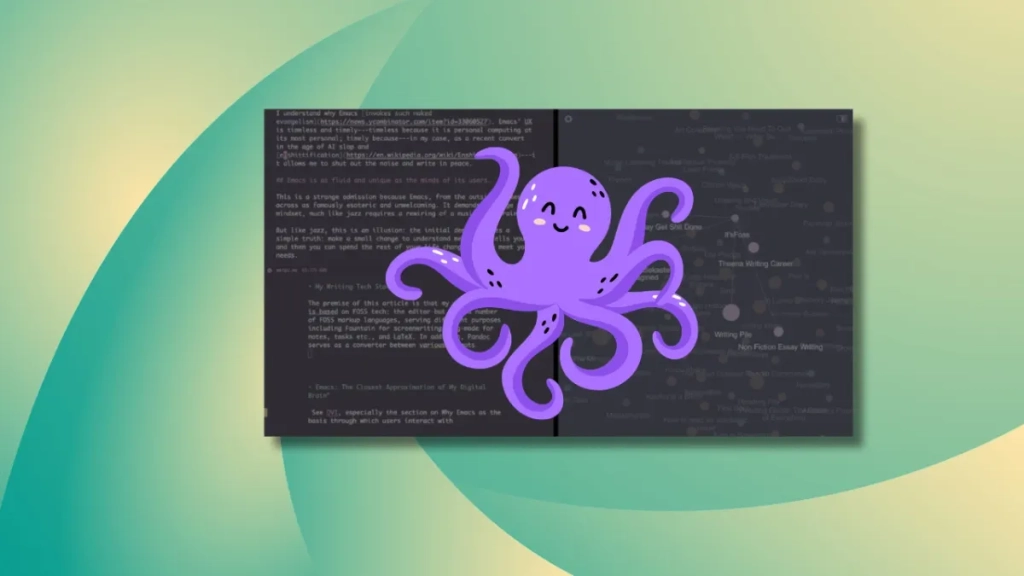
Emacs: The Timeless Text Editor That’s Thriving in the Age of AI and Enshittification
In an era where AI tools are being shoehorned into every conceivable application—from Microsoft Notepad to your grandma’s recipe app—one text editor stands defiantly apart: Emacs. For novelist and filmmaker Theena Kumargurunathan, Emacs isn’t just a tool; it’s a digital habitat, a second brain, and a workshop for crafting stories that span both page and screen.
But what makes Emacs so special in 2026, when the tech world seems obsessed with automating creativity? The answer lies in its philosophy: user agency above all else.
A Brief History of the Future
Emacs’ enduring appeal stems from a simple, stubborn choice made decades ago: let the user shape the tool. Unlike modern apps that dictate how you work, Emacs treats you as the architect of your own workflow. It’s less an application and more a modular Swiss army knife for text-centric tasks.
This user-centric approach wasn’t accidental. When big tech is busy embedding AI into everything—even venerable tools like Notepad—Emacs remains committed to giving users building blocks that are plain, durable, and infinitely customizable. Buffers become workspaces, modes give them purpose, and small add-ons layer in writer-specific features like word counts, spell checks, and exports.
The beauty of Emacs is that you don’t need to learn a new app to switch tasks. Whether you’re brainstorming, researching, or crafting prose, Emacs adapts to your workflow, not the other way around.
Emacs as Hypertextual Ideas and Storage
Before discovering Emacs, Kumargurunathan used Microsoft Word’s hyperlinking function to connect documents and mimic web-like hypertextuality. But as his collection of Word files grew, so did the chaos—dozens of open documents, slow performance, and a frustrating lack of organization.
Emacs solves this elegantly with tools like Org-Roam and Hyperbole. Org-Roam acts as a personal knowledge management system, creating a “second brain” where ideas can be captured, refined, and connected over time. Hyperbole takes a different approach, allowing users to link files, specific line numbers, and automate actions without relying on databases.
The result? A seamless, hyperlinked ecosystem where research, notes, and ideas live in harmony—no more drowning in a sea of Word documents.
Emacs as Workshop for the Written Word
As both a novelist and filmmaker, Kumargurunathan relies on Emacs for two primary file types: LaTeX for manuscripts and Fountain for screenplays. No other writing environment supports long-form writing and screenwriting with such elegance.
But Emacs isn’t just a writing tool—it’s an environment for thinking and making. Its support for note-taking, personal knowledge management, and task management makes it a one-stop shop for creators. Whether you’re brainstorming, drafting, or editing, Emacs adapts to your needs, offering a level of flexibility that modern apps can’t match.
Emacs in the Age of Enshittification
We’re living in the era of “enshittification,” where tech companies prioritize profit over user experience, and AI tools promise to automate creativity. But for Kumargurunathan, Emacs is a digital oasis—a refuge from the slop of modern software.
In a world where big tech is eager to “help” you write your story or create your visuals, Emacs stands as a testament to the power of user agency. It’s not just a tool; it’s a philosophy, a way of working that puts the creator in control.
The Future of Writing
As AI continues to reshape the creative landscape, tools like Emacs remind us that technology doesn’t have to come at the cost of creativity. By prioritizing user agency and flexibility, Emacs offers a glimpse of what’s possible when tools are designed to serve the user, not the other way around.
For Kumargurunathan, Emacs is more than a text editor—it’s a way of life. And in the age of AI and enshittification, that’s a rare and precious thing.
Tags & Viral Phrases:
- Emacs: The Timeless Text Editor
- User Agency in the Age of AI
- Emacs as a Digital Habitat
- Emacs vs. Modern Apps: Why It Still Wins
- Emacs for Writers: A Second Brain
- Emacs in the Era of Enshittification
- Emacs: The Ultimate Writing Workshop
- Emacs vs. AI: Why Human Creativity Still Matters
- Emacs: A Refuge from the Slop of Modern Software
- Emacs: The Future of Writing Tools
- Emacs: Where Ideas Come to Life
- Emacs: The Anti-AI Text Editor
- Emacs: The Tool That Puts You in Control
- Emacs: The Swiss Army Knife of Text Editors
- Emacs: The Digital Oasis for Creators
,


Leave a Reply
Want to join the discussion?Feel free to contribute!