
Why are vertebrate eyes so different from those of other animals?
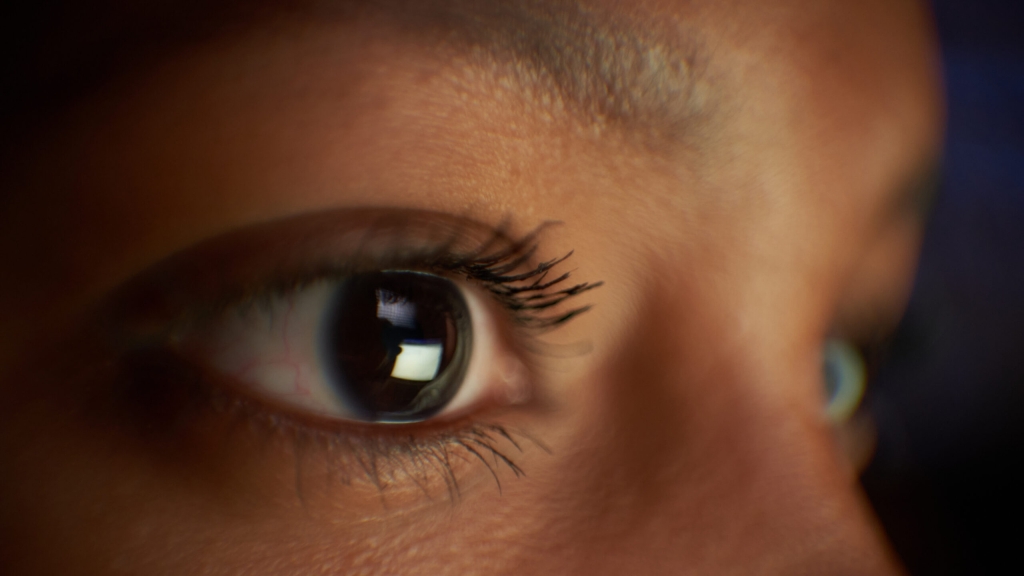
The Ancient Cyclops That Rewrote the Story of Our Eyes
In a groundbreaking study that blends evolutionary biology, developmental neuroscience, and paleontological detective work, researchers have proposed a radical new theory about the origins of vertebrate eyes—one that traces their roots not to a simple light-sensitive patch, but to a single, ancient, cyclopean eye that once belonged to a burrowing, eyeless ancestor.
This isn’t science fiction. It’s the latest chapter in a decades-long quest to understand how we came to see the world in color, depth, and motion. And it all starts with a creature that, according to new research, may have had just one eye in the middle of its head.
The One-Eyed Ancestor: A Vision from the Deep Past
According to Dr. Elias Kafetzis and his team at the University of Crete, the story of our eyes begins in the murky waters of the Cambrian period, over 500 million years ago. At that time, the earliest ancestors of vertebrates—animals with backbones—were likely small, soft-bodied creatures living in the ocean’s depths. These animals, known as deuterostomes, were probably blind, navigating their world through touch and chemical signals rather than sight.
But buried within their genetic code was the potential for something extraordinary: the building blocks of vision. Specifically, two types of light-sensitive cells, or photoreceptors, were present in these ancient animals. One type, called ciliary photoreceptors, uses a protein called opsin to detect light. The other, rhabdomeric photoreceptors, uses a different opsin and is more common in the eyes of insects and other invertebrates.
Here’s where the story gets wild: Kafetzis and his colleagues propose that these two distinct cell types were not separate at first. Instead, they were combined into a single, multifunctional eye—a kind of biological chimera that could both sense light and process images. This “median eye,” as they call it, was the precursor to all vertebrate eyes, including our own.
The Third Eye: A Living Fossil in Our Brains
If you’ve ever heard of the “third eye,” you might think of it as a mystical or spiritual concept. But in biology, the third eye is very real—and it’s hiding in plain sight. Located deep in the brain, the pineal gland (or pineal organ) is a small, pinecone-shaped structure that, in some animals, still functions as a light-sensitive organ.
For years, scientists have noticed striking similarities between the retina (the light-sensitive layer at the back of our eyes) and the pineal gland. Both contain light-sensitive cells, and both are involved in regulating biological rhythms, such as sleep and wakefulness. This has led many to suspect that the two structures share a common evolutionary origin.
Kafetzis and his team take this idea a step further. They argue that the pineal gland isn’t just a simpler version of the retina—it’s a living relic of that ancient, single-eyed ancestor. In other words, the pineal gland is a “fossil” of the original cyclopean eye, preserving features that were later lost or modified in the paired eyes we have today.
The Bipolar Connection: Bridging Two Worlds
One of the most surprising aspects of the new theory involves a type of neuron called the bipolar cell. These cells are found only in the retina, where they act as intermediaries between the light-sensitive rods and cones and the ganglion cells that send visual information to the brain. For a long time, scientists thought bipolar cells were a unique evolutionary invention of vertebrates.
But Kafetzis and his colleagues suggest otherwise. They propose that bipolar cells are not a brand-new invention, but rather a fusion of the two ancient photoreceptor types. In other words, bipolar cells are the evolutionary “bridge” that allowed the two lineages of light-sensitive cells to work together in a single organ.
This idea is supported by recent studies showing that some cells in the pineal gland share features with both ciliary and rhabdomeric photoreceptors, as well as with bipolar cells. If true, this would mean that the blueprint for our complex, two-eyed vision was already present in that ancient, single-eyed ancestor.
Testing the Theory: From Speculation to Science
Of course, such a bold theory needs solid evidence. Kafetzis and his team acknowledge that many aspects of their model are still speculative. For example, the idea that the earliest chordates (the group that includes vertebrates) were burrowing animals is still debated. Likewise, the claim that early bilaterians (animals with bilateral symmetry) already had paired lateral eyes is not yet proven.
To test their ideas, the researchers propose a series of experiments. These include comparing the genes and proteins in pineal and retinal cells, studying how eyes develop in different species of deuterostomes, and looking for more fossils that might shed light on the early evolution of vision.
“We want to put forward some literature-based and inspired hypotheses that are testable,” Kafetzis says. “And now we can go out and test them.”
Why It Matters: More Than Just an Eye-Opener
At first glance, the evolution of eyes might seem like a niche topic, interesting only to biologists and paleontologists. But the story of our eyes is really the story of how life adapts to its environment—and how complex systems can arise from simple beginnings.
Understanding the origins of vision can also have practical applications. For example, it could help scientists develop better treatments for eye diseases, or inspire new technologies in artificial vision and robotics. It might even shed light on the evolution of other complex organs, such as the brain or the ear.
But perhaps most importantly, this new theory reminds us that we are all connected—not just to each other, but to the entire tree of life. The eyes through which we see the world are the product of billions of years of evolution, shaped by ancient creatures that swam in primordial seas, burrowed in ocean mud, and, perhaps, looked out at the world through a single, cyclopean eye.
The Future of Vision Research
As Kafetzis and his colleagues continue their work, the scientific community will be watching closely. If their theory holds up, it could revolutionize our understanding of how complex organs evolve. It might even change the way we think about ourselves and our place in the natural world.
In the meantime, the next time you look into someone’s eyes—or catch a glimpse of your own reflection—remember that you’re seeing the legacy of an ancient, one-eyed ancestor. And that, in the grand story of life, is a truly eye-opening thought.
Tags: ancient eyes, cyclopean vision, vertebrate evolution, pineal gland, bipolar cells, photoreceptors, evolutionary biology, Cambrian explosion, deuterostomes, third eye, vision science, developmental neuroscience, paleontology, genetic fusion, light-sensitive cells, rhabdomeric photoreceptors, ciliary photoreceptors, burrowing ancestors, eye evolution, scientific breakthrough, speculative biology, molecular comparisons, developmental studies, eye diseases, artificial vision, robotics, tree of life, primordial seas, evolutionary adaptation, complex organs, brain evolution, ear evolution, biological rhythms, sleep regulation, ganglion cells, rods and cones, opsin proteins, fossil evidence, bilaterians, scientific testing, hypothesis-driven research, groundbreaking study, evolutionary synthesis, chimeric origin, median eye, ancient ancestor, single-eyed creature, evolutionary innovation, de novo evolution, speculative claims, scientific debate, evidence-based science, testable hypotheses, evolutionary detective work, Cambrian period, soft-bodied creatures, light detection, image processing, biological chimera, living fossil, brain structure, visual information, intermediary neurons, genetic code, evolutionary blueprint, practical applications, eye treatments, technology inspiration, natural world, scientific revolution, complex systems, simple beginnings, biological adaptation, primordial legacy, eye-opening discovery, scientific community, evolutionary legacy, reflection, self-awareness, interconnectedness, billion-year journey, evolutionary milestones, scientific legacy, vision research, future of science, revolutionary understanding, natural history, evolutionary milestones, scientific legacy, vision research, future of science, revolutionary understanding, natural history.
Viral Phrases:
- The ancient cyclops that rewrote the story of our eyes
- From one eye to two: the evolutionary leap that changed everything
- The third eye lives on—inside your brain
- Bipolar cells: the missing link in the evolution of vision
- How a single, ancient eye became the blueprint for all vertebrate sight
- The Cambrian creature that saw the world through a single lens
- Unearthing the secrets of our visual past
- A new theory that could change everything we know about eyes
- The fusion of two worlds: how rhabdomeric and ciliary cells became one
- Why your pineal gland is more than just a brain oddity
- The evolutionary detective story unfolding in our own bodies
- From burrowing in mud to seeing in color: the journey of the vertebrate eye
- How ancient light-sensitive cells became the eyes we see with today
- The surprising truth about the origins of human vision
- A scientific breakthrough that bridges the gap between myth and biology
- The living fossil in your head: what your pineal gland really does
- How a single-eyed ancestor gave rise to the complexity of human sight
- The chimeric origin of our eyes: a tale of fusion and adaptation
- Why the story of our eyes is the story of life itself
- The next frontier in vision research: testing the theory of the ancient cyclops
- From speculation to science: the journey to prove a bold new idea
- How understanding our eyes could unlock new treatments for blindness
- The eyes have it: a window into the deep past of evolution
- The evolutionary innovation that let us see the world in a whole new way
- Why the evolution of eyes is more than just a biological curiosity
- The surprising connection between your pineal gland and your ability to see
- How ancient creatures paved the way for the complexity of human vision
- The fusion of two ancient cell types: the birth of the vertebrate eye
- A single-eyed ancestor: the unlikely hero of our visual story
- The evolutionary leap that turned a simple light sensor into a complex eye
- How the pineal gland holds the secrets of our visual past
- The chimeric cells that made human vision possible
- From the Cambrian seas to your living room: the epic journey of the eye
- Why the story of our eyes is a story of innovation and adaptation
- The ancient blueprint for vision hidden in our genes
- How a single mutation millions of years ago changed everything
- The surprising truth about the third eye and its role in our biology
- Why the evolution of eyes is a window into the history of life on Earth
- The next big question in vision science: what else can we learn from our eyes?
- How the fusion of two ancient cell types gave rise to human sight
- The living legacy of a single-eyed ancestor in every human eye
- Why the story of our eyes is a story of survival and adaptation
- The evolutionary detective work that could rewrite the textbooks
- How understanding our eyes could inspire the next generation of technology
- The surprising connection between ancient creatures and modern vision
- Why the evolution of eyes is a story of innovation and creativity
- The next frontier in biology: uncovering the secrets of our visual past
- How a single-eyed ancestor gave rise to the complexity of human sight
- The chimeric origin of our eyes: a tale of fusion and adaptation
- Why the story of our eyes is the story of life itself
,


Leave a Reply
Want to join the discussion?Feel free to contribute!