
Why did SpaceX just apply to launch 1 million satellites?
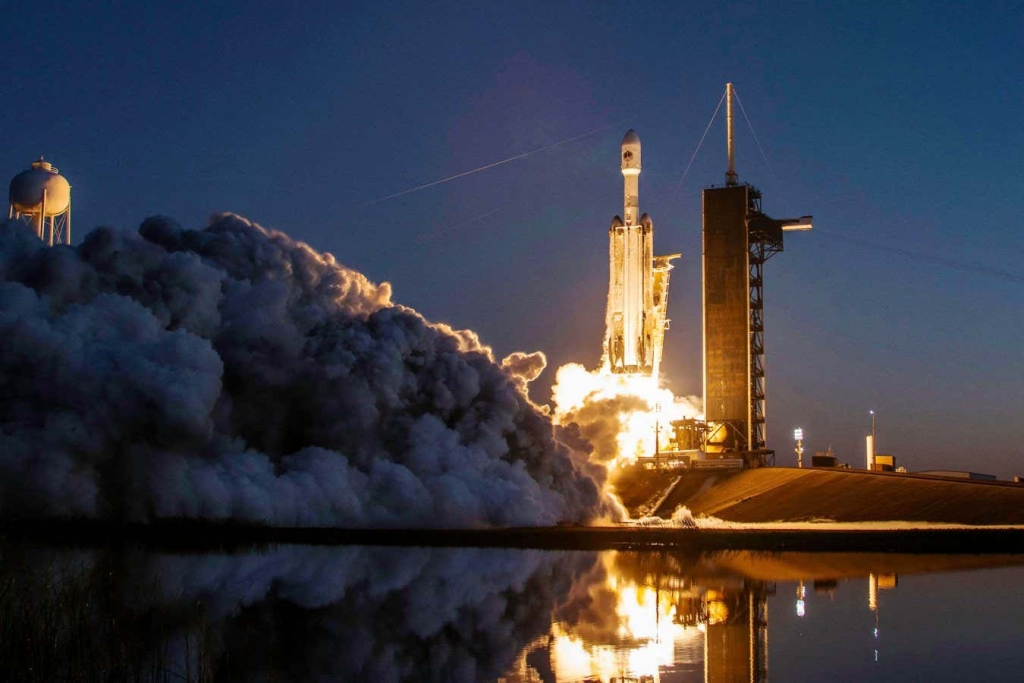
SpaceX’s Bold Vision: A Million-Satellite Mega-Constellation for AI-Powered Orbital Data Centers
In a move that’s sending shockwaves through the aerospace and tech industries, SpaceX has filed an unprecedented request with the US Federal Communications Commission (FCC) to launch 1 million orbital data center satellites. This ambitious plan, revealed in a filing on January 30, 2026, and further detailed in an update by CEO Elon Musk, aims to create vast data centers in space to power artificial intelligence, marking a significant leap in space-based computing infrastructure.
The Scale of Ambition
To put this into perspective, SpaceX’s previous largest filing was for 42,000 Starlink satellites in 2019. The proposed fleet of 1 million satellites would dwarf even that massive undertaking, representing a 2,380% increase in SpaceX’s orbital ambitions. This move comes at a time when SpaceX already operates the largest fleet of satellites in orbit, with about 9,500 Starlink satellites making up nearly 65% of the 14,500 satellites currently in space.
The Kardashev Scale and Space-Based Computing
Elon Musk has framed this project as a crucial step towards becoming a Kardashev II-level civilization. The Kardashev scale, proposed by Soviet astronomer Nikolai Kardashev in 1964, measures a civilization’s technological advancement based on its energy consumption. A Kardashev II civilization can harness the entire energy output of its star, and Musk’s vision of orbital data centers could be seen as a stepping stone towards this ambitious goal.
The Promise of Orbital Data Centers
The concept of launching data centers into space has gained traction in recent years, driven by the skyrocketing energy demands of AI. In the vacuum of space, these data centers could potentially benefit from uninterrupted sunlight for power generation and the natural cooling properties of the cosmic environment. This could lead to more efficient and sustainable computing operations, free from the constraints of Earth’s power grids and cooling systems.
Technical Challenges and Considerations
While the vision is grand, the technical challenges are equally daunting. Each satellite would need to be equipped with large reflective solar panels for power generation and substantial radiators to expel heat into the vacuum of space. The sheer scale of the project would require an unprecedented number of launches, with Musk suggesting that SpaceX’s Starship rocket could potentially launch 200 tons per flight every hour.
Environmental and Astronomical Impact
The proposed mega-constellation raises significant concerns about space debris and its impact on astronomical observations. SpaceX claims it would mitigate these risks by placing satellites into “disposal orbits” at the end of their life, either high above Earth or into an orbit around the sun. However, a study by NASA Ames Research Center found that adding 500,000 satellites to Earth’s orbit would mean “nearly every single telescope image obtained from the ground or space will be contaminated by satellites,” potentially impacting scientific discovery.
Regulatory Hurdles and Timeline
The FCC’s decision on SpaceX’s request will take months, during which time the application will be open to public comments. If approved, SpaceX has requested a waiver of the usual six-year deadline to deploy half the constellation, arguing that the satellites would primarily communicate by optical link rather than radio, reducing potential interference.
The Bigger Picture
This ambitious project comes in the wake of SpaceX’s announcement on February 2, 2026, that it would acquire xAI, another of Musk’s companies that owns the social media site X and the controversial Grok chatbot. This acquisition could potentially integrate AI development more closely with SpaceX’s space-based computing ambitions.
Global Context
SpaceX is not alone in its satellite ambitions. In December 2025, China submitted an application to the International Telecommunications Union (ITU) to launch 200,000 satellites into orbit. This global race to dominate low Earth orbit raises questions about space governance, resource allocation, and the future of space exploration.
The Future of Space-Based Computing
As we stand on the brink of this new era in space technology, the implications are vast and far-reaching. From powering AI to potentially enabling new forms of space exploration and colonization, SpaceX’s vision of a million-satellite mega-constellation could be the first step towards a future where space-based computing becomes as commonplace as cloud computing is today.
Tags: SpaceX, Elon Musk, Orbital Data Centers, AI, Satellite Constellations, Space Technology, Kardashev Scale, FCC, ITU, Space Debris, Astronomy, Starship, xAI, Starlink, Low Earth Orbit, Space Exploration, Future of Computing, Space Governance
Viral Sentences:
– “SpaceX’s plan to launch 1 million satellites could redefine the boundaries of space-based computing and AI.”
– “Elon Musk’s vision of orbital data centers might be the key to unlocking Kardashev II civilization status.”
– “The race to dominate low Earth orbit is heating up, with SpaceX and China leading the charge.”
– “Could space-based data centers be the solution to our growing energy demands for AI and computing?”
– “The future of astronomy hangs in the balance as mega-constellations threaten to crowd the night sky.”
– “SpaceX’s Starship could make history not just as a rocket, but as the vehicle for a new era of space infrastructure.”
– “The line between science fiction and reality blurs as we approach the possibility of millions of satellites in orbit.”
– “Orbital data centers: The next frontier in sustainable, high-performance computing?”
– “As SpaceX aims for the stars, the FCC and ITU face unprecedented challenges in space regulation.”
– “The acquisition of xAI by SpaceX could signal a new era of integrated AI and space technology development.”,

Leave a Reply
Want to join the discussion?Feel free to contribute!