
Why enterprises are replacing generic AI with tools that know their users
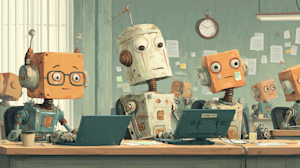
The AI Revolution Just Got Personal: Why Deep Customization is the New Battlefield for Tech Giants
The artificial intelligence landscape is undergoing a seismic shift that goes far beyond simple automation. We’re witnessing the dawn of an era where AI doesn’t just assist—it anticipates, adapts, and aligns itself so intimately with individual users that the line between human and machine collaboration becomes beautifully blurred.
Forget everything you thought you knew about AI personalization. The future isn’t just agentic; it’s deeply, obsessively personal. This isn’t about basic recommender systems that guess what you might like based on crowd behavior. This is about AI that knows you—really knows you—and molds itself around your unique workflow, your specific vocabulary, your exact preferences.
The Personalization Arms Race Has Begun
“Rather than trying to randomize or guess who I am, I tell you directly: this is what I care about,” explains Lijuan Qin, head of product at Zoom AI, in a revealing new conversation on the Beyond the Pilot podcast. This philosophy represents a fundamental pivot in how leading tech companies are approaching AI development.
The stakes couldn’t be higher. Enterprises that master this level of personalization will win customer loyalty in ways we’ve never seen before. Those who lag behind? They risk becoming irrelevant in an AI-first world where users expect technology to bend to their will, not the other way around.
Zoom’s Bold Leap into Hyper-Personalization
Zoom, once synonymous with pandemic-era video calls, has transformed itself into an AI powerhouse with its generative assistant, AI Companion. But this isn’t your grandfather’s virtual assistant.
Beyond basic summarization and smart recordings, Zoom’s AI Companion now tracks opinion divergence during meetings—yes, you read that correctly. It doesn’t just capture what was said; it analyzes where perspectives differ and flags these moments for follow-up. Imagine walking into a meeting knowing exactly where consensus exists and where friction points need addressing. That’s the power of contextual AI.
Users can now customize meeting summaries based on their specific interests. A project manager might want technical details highlighted, while a CEO needs strategic implications front and center. The same meeting, radically different outputs—all generated automatically.
The customization extends to follow-up communications. Create targeted templates for different personas—whether it’s a salesperson needing client-specific talking points or an account executive requiring renewal strategies—and watch as the AI Companion automatically populates these documents post-call with relevant insights pulled directly from conversation transcripts.
The Rise of the Custom Dictionary
Perhaps most impressively, Zoom AI Studio now features a custom dictionary function that processes unique enterprise terminology and vocabulary. This means the AI doesn’t just understand generic business language; it speaks your company’s dialect fluently. Industry-specific jargon, internal acronyms, project codenames—all become part of the AI’s working vocabulary, producing outputs that feel like they came from your most knowledgeable colleague rather than a generic language model.
The deep research mode takes this even further, delivering comprehensive analyses that synthesize “internal expertise and external insights” in seconds rather than hours. Need to understand how a competitor’s new product launch might impact your Q3 strategy? The AI Companion can now provide that analysis, complete with relevant internal data points and market context.
Control: The Human in the Loop
Here’s where Zoom’s approach gets particularly interesting: control remains firmly in human hands. “The human can be very specific and nail down agent permissioning,” Qin emphasizes. Users maintain granular control over what the AI can and cannot do.
Clear controls govern follow-up actions. Can the agent automatically send emails to specific recipients? Should it trigger verification steps when sensitive information is detected in transcripts? These aren’t abstract questions—they’re practical guardrails that users can set based on their comfort level and organizational policies.
The ability to track agent behavior, enable and disable features, and control data access provides essential safeguards. In a world where AI can occasionally “go off the rails,” as Qin puts it, having these controls isn’t just nice to have—it’s essential for building trust.
“The most important thing is we do not assume AI is smart enough to get everything right,” Qin states plainly. This humility in the face of AI’s limitations might be the most refreshing thing about Zoom’s approach.
The Context Gold Rush
“In this new agentic AI age, there’s essentially a land grab for context,” explains Sam Witteveen, co-founder of Red Dragon AI and Beyond the Pilot host. Companies are realizing that the more they know about users—the apps they use, the tasks they perform daily, their communication patterns—the better their AI can serve them.
This “context economy” is where the real competitive advantage lies. Claude Cowork is “really shining” at this, Witteveen notes, while OpenClaw represents another approach where users can customize AI behavior extensively. “With something like OpenClaw, you can customize it in any way you want,” Witteveen explains. “You can chat with it, you can tell it, ‘Hey, at 4 o’clock I want you to do this.'”
The Security Tightrope
But this brave new world of personalization comes with serious security considerations. OpenClaw, despite its impressive capabilities, has been plagued by security issues since launch. The autonomous agent can allegedly bypass enterprise security controls like EDR (Endpoint Detection and Response), DLP (Data Loss Prevention), and IAM (Identity and Access Management) without triggering alerts.
This has prompted many enterprises to either uninstall OpenClaw or ban its use entirely. However, improper uninstallation can inadvertently delete entire enterprise software stacks—a nightmare scenario for IT departments already stretched thin.
The security challenges highlight a crucial tension in the AI personalization race: the more capable and autonomous AI becomes, the more potential it has to cause harm if not properly contained.
The Token Economy Problem
Then there’s the practical reality of token usage. Deep personalization is computationally expensive. “You need to think about the metrics you are tracking,” Witteveen advises. “This is very different from product to product, but metrics around these things are gonna be key.”
Enterprises must balance the desire for hyper-personalization against the reality of token costs. Every customized interaction, every context-aware response, every personalized summary consumes computational resources. In an era where AI companies are racing to optimize their models for efficiency, this becomes a critical business consideration.
The Skills Revolution
Perhaps most intriguingly, the conversation points toward a future where “skills” may matter more than Model Context Protocol (MCP) for enterprise AI. The ability to quickly generate and deploy AI skills—specialized capabilities that address specific business needs—could become the defining competitive advantage.
Companies that don’t experiment with AI skills right now “may be toast,” Witteveen warns bluntly. This isn’t hyperbole; it’s a recognition that AI capabilities are evolving so rapidly that standing still is equivalent to moving backward.
The Personalization Paradox
Here’s the fascinating paradox at the heart of this AI personalization revolution: users want AI that knows them intimately, but they also want control over what that AI knows and does. They want customization without compromise, personalization without privacy concerns, autonomy without risk.
The companies that solve this paradox—that deliver deeply personalized AI experiences while maintaining robust security, clear user controls, and transparent operations—will define the next decade of technology. Zoom’s approach, with its emphasis on human control and gradual capability expansion, represents one promising path forward.
But make no mistake: this is just the beginning. As AI models become more sophisticated, as personalization capabilities expand, and as users become more demanding, the competition to deliver the perfect personal AI assistant will only intensify.
The question isn’t whether AI will become deeply personalized—that’s already happening. The question is which companies will master this transformation and which will be left wondering what happened when users abandoned their generic, one-size-fits-all AI solutions for experiences that truly understand and serve individual needs.
The personalization arms race is on. The only question is: are you ready for an AI that knows you better than you know yourself?
Tags: AI personalization, deep learning, enterprise AI, Zoom AI Companion, agentic AI, machine learning, context awareness, data privacy, security concerns, token economy, AI skills, model context protocol, hyper-personalization, user experience, technology trends, AI customization, enterprise software, artificial intelligence revolution, digital transformation, AI ethics
Viral Sentences:
- “The future of AI isn’t just agentic; it’s deeply personal”
- “Don’t try to randomize, or guess who I am. I tell you, this is what I care about”
- “The most important thing is we do not assume AI is smart enough to get everything right”
- “There’s essentially a land grab for context”
- “Companies that don’t experiment with AI skills right now may be toast”
- “The human can be very specific and nail down agent permissioning”
- “With something like OpenClaw, you can customize it in any way you want”
- “You need to think about the metrics you are tracking”
- “Skills may matter more than MCP for the future of enterprise AI”
- “The companies that master this level of personalization will win customer loyalty”
- “AI that knows you better than you know yourself”
- “The personalization arms race is on”
- “Standing still is equivalent to moving backward in AI”
- “Control remains firmly in human hands”
- “The line between human and machine collaboration becomes beautifully blurred”
,


Leave a Reply
Want to join the discussion?Feel free to contribute!