
Why proper AI governance will be vital for workplaces in 2026
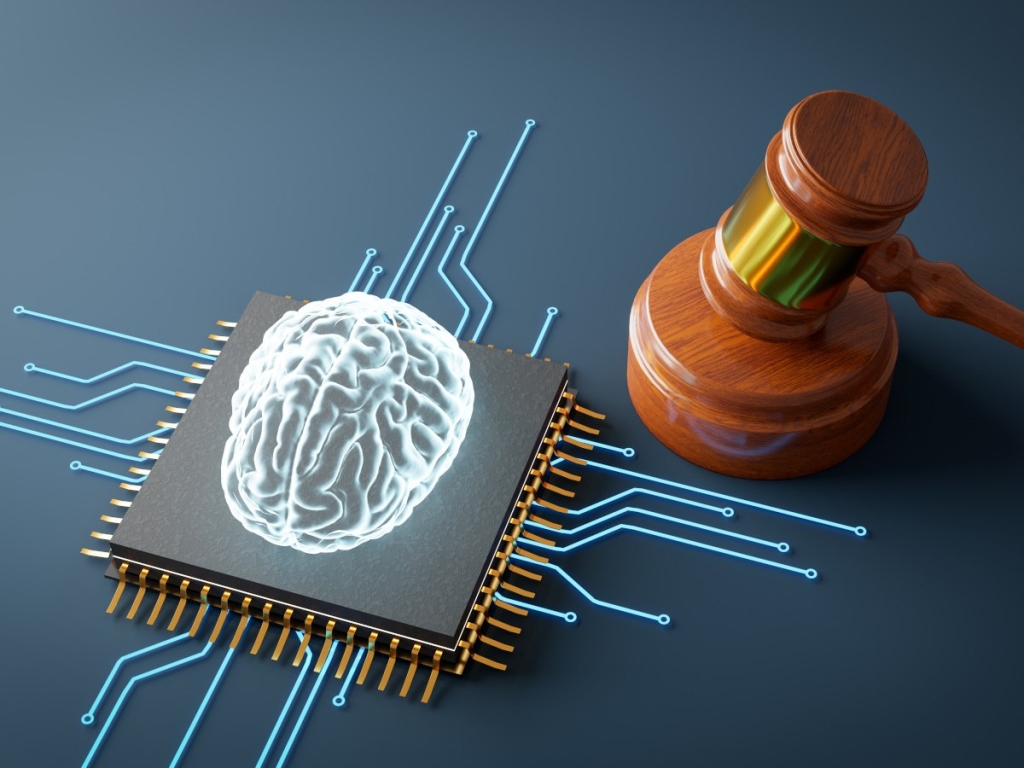
AI in the Workplace: From Experimentation to Operational Reality — What 2026 Holds
The landscape of workplace technology is shifting at breakneck speed, and artificial intelligence is no longer just a futuristic concept—it’s here, it’s operational, and it’s transforming how businesses function. A recent surge in AI adoption across Irish workplaces signals a broader global trend: companies are moving beyond curiosity and experimentation into full-scale integration of AI tools.
According to a September 2025 report from Ibec, the organization representing Irish businesses, AI usage among employees jumped dramatically—from 19% in August 2024 to 40% by July 2025. This rapid adoption underscores a critical turning point: AI is no longer a novelty but a necessity in the modern workplace.
Barry Haycock, senior manager of data analytics and AI at BearingPoint, puts it succinctly: “We’ve moved from experimentation to operational use.” He notes that AI tools like Copilots and intelligent agents are becoming standard, but the real game-changer lies in automating complex knowledge work. “We’re seeing AI take on tasks like contract review, compliance checks, large-scale document processing, and advanced enterprise-wide search,” Haycock explains.
But the transformation doesn’t stop there. Enterprises are now building “AI factories”—dedicated environments designed to automate AI pipelines at scale. Augmented analytics is also empowering business teams to uncover insights without requiring deep technical expertise. Yet, Haycock cautions, sustainable value from AI hinges on three pillars: robust governance, mature data practices, and a skilled workforce. “Without governance and measurable outcomes, pilots stall,” he warns. “AI must be integrated incrementally and aligned directly to business needs.”
Rosie Bowser, a consultant in data analytics and AI at BearingPoint, echoes this sentiment. She observes a common pitfall: organizations rushing to implement AI solutions without first identifying clear problems or workflows. “Starting with the tool is like painting over a structural crack—it may look like progress, but it doesn’t resolve the underlying issue,” Bowser says. She emphasizes that organizational readiness is just as crucial as technological capability. “You need to be as ready as the technology is, and that may well involve acknowledging and rectifying organizational immaturity before rolling out a new AI solution.”
AI as an Accessory, Not an Autonomous Overlord
One of the most persistent fears surrounding workplace AI is job displacement. With high-profile layoffs attributed to AI—such as those at Jack Dorsey’s Block, which cut 4,000 jobs citing AI as a factor—the anxiety is understandable. However, both Haycock and Bowser argue that the real risk isn’t replacement but stagnation.
Haycock believes AI will “reshape” work rather than eliminate it outright. “The real risk is failing to reskill and adapt,” he says. “AI will automate repetitive cognitive tasks, but organizations that invest in workforce capability and reposition people toward higher-value work will benefit most.” Bowser agrees, framing AI as a workflow accelerator rather than an autonomous decision-maker. “The AI system should handle repetitive, rules-based components, but humans must retain oversight and make final decisions,” she explains. “With the AI Act’s emphasis on traceability and model provenance, this human-in-the-loop approach will be critical moving forward.”
Governance: The Backbone of Responsible AI
As AI becomes more deeply embedded in business operations, governance is emerging as the linchpin of responsible adoption. Haycock predicts that in 2026, AI governance will shift from pilot projects to proof of value. “With the EU AI Act taking effect and Ireland’s National Digital and AI Strategy 2030 setting clear expectations, organizations will need to demonstrate documentation, transparency, and auditability,” he says.
Customer expectations are also rising, and companies must meet this demand while ensuring oversight is proportionate to risk and embedded into daily operations. “The differentiator will be scalable governance that enables innovation while standing up to regulatory and public scrutiny,” Haycock adds.
Bowser emphasizes that governance must feel practical and tangible. “It’s not just about having rules on paper—it’s about making them actionable,” she says. Clear guidelines on data handling, audit trails, fallback steps, and understanding what the model is actually doing are essential. “The key is making governance practical enough that people can follow it without friction.”
She also highlights a critical insight: many organizations already have documentation in place, but frontline employees often don’t know where to find it or who the data owners are. “Organizations need to be aware of how people have adopted AI in their daily lives and how they expect to bring it into their work lives,” Bowser warns. “Otherwise, you end up with AI shadow practices that could introduce significant risk. Now that the EU AI Act is in force, these risks could be considerable.”
The Road Ahead
As we look toward 2026, the message is clear: AI is here to stay, but its success depends on thoughtful integration, robust governance, and a commitment to workforce development. Companies that embrace these principles will not only thrive in the age of AI but also set the standard for responsible innovation.
Tags & Viral Phrases:
AI in the workplace, workplace AI adoption, AI governance 2026, EU AI Act, AI Act compliance, AI-driven layoffs, AI automation, AI factories, augmented analytics, AI workforce transformation, responsible AI adoption, AI shadow practices, AI traceability, model provenance, data governance, AI reskilling, AI operational use, AI workflow accelerator, AI risk management, AI transparency, AI auditability, AI documentation, AI oversight, AI regulatory compliance, AI innovation, AI strategy 2030, AI pilots to proof, AI incremental integration, AI organizational readiness, AI human-in-the-loop, AI ethical AI, AI sustainable value, AI enterprise AI, AI business needs, AI measurable outcomes, AI executive sponsorship, AI data maturity, AI workforce capability, AI complex knowledge work, AI contract review, AI compliance checks, AI document processing, AI enterprise search, AI pipeline automation, AI business teams, AI technical expertise, AI governance enablers, AI security, AI regulatory exposure, AI explainability, AI organizational immaturity, AI clearly defined problems, AI workflow accelerator, AI autonomous decision-maker, AI repetitive tasks, AI rules-based components, AI human oversight, AI final decisions, AI AI Act emphasis, AI traceability model provenance, AI governance practical tangible, AI data handling, AI audit trails, AI fallback steps, AI model understanding, AI governance actionable, AI frontline employees, AI data owners, AI AI shadow practices, AI significant risk, AI EU AI Act force, AI considerable risks, AI responsible innovation, AI age of AI, AI standard for responsible innovation.
,


Leave a Reply
Want to join the discussion?Feel free to contribute!