
Why Retail Is Moving From Crypto To Stock: Will They Comeback?
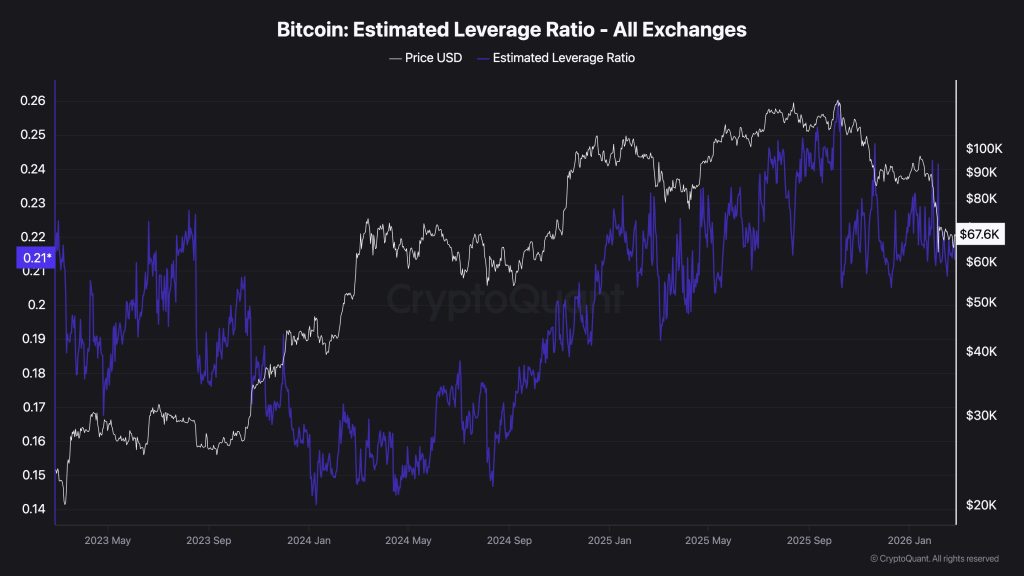
Crypto’s Retail Exodus: The $4.7 Billion Question Everyone’s Asking
The crypto market is bleeding retail traders—and they’re not just sitting on the sidelines. They’re fleeing to Wall Street in record numbers, leaving Bitcoin and altcoins to fend for themselves in what’s shaping up to be the most dramatic capital rotation since the 2021 cycle.
The Numbers Don’t Lie: Crypto’s Speculative Engine Has Stalled
Let’s talk hard data. Estimated Leverage Ratios—the canary in the coal mine for retail speculation—have collapsed 28%, plummeting from 0.1980 to 0.1414 in just weeks. This isn’t a minor correction; it’s a full-blown deleveraging event that’s wiped billions off the table.
Binance, the world’s largest crypto exchange, has seen daily volumes crater by $4.71 billion—a staggering 16.4% drop that brings total daily trading down to approximately $24 billion. Without the manic retail participation that defined 2024’s parabolic run, Bitcoin’s price action has become anemic, bouncing weakly off support levels that once triggered explosive rallies.
The “digital gold” narrative has lost its luster among the very traders who once treated Bitcoin like the hottest tech IPO. After watching BTC shed 46% from its $126,000 peak, the buy-the-dip reflex that powered previous cycles has evaporated. The leverage reset tells us everything we need to know: the YOLO crowd that turned crypto into a cultural phenomenon has either been liquidated or found greener pastures.
Wall Street’s Open Arms: Where the Money’s Actually Going
Here’s where it gets interesting. Retail traders aren’t moving to cash—they’re moving to stocks, and they’re doing it with unprecedented aggression. January 2026 saw record inflows of $350 million into cash equities and over $300 million into options contracts. This isn’t rotation; it’s a full-scale migration.
The BTC-to-Nasdaq volatility ratio has collapsed below 2x, meaning stocks now offer comparable price action with dramatically smaller drawdowns. After experiencing crypto’s signature 50%+ corrections, that trade-off suddenly looks incredibly rational to burned traders.
Institutional players are still active through ETFs, but they’re playing a different game entirely. They’re accumulating quietly, providing price floors rather than viral upside. They don’t create the kind of FOMO that sends Dogecoin to the moon or turns obscure tokens into household names overnight.
Meanwhile, the speculative energy that once powered crypto is now flowing into AI-driven equities. Traders are deploying language models to dissect earnings reports and identify asymmetric opportunities in stocks. Compared to this, crypto currently looks like yesterday’s news—opaque, momentum-starved, and lacking the narrative fuel that drives retail frenzies.
The New Normal: Why Crypto Might Stay Range-Bound
Analysts are calling for a “sideways summer” through mid-2026 as retail capital remains firmly sidelined. Without the leverage-fueled buying pressure that once created vertical price moves, Bitcoin and major altcoins are likely to trade within increasingly tight ranges.
The old crypto playbook—where every dip was a buying opportunity and every rally felt inevitable—has been rewritten. In its place is a market that trades more like traditional assets, with institutional flows dominating and retail participation limited to occasional bursts of enthusiasm rather than sustained buying pressure.
This isn’t necessarily bearish for crypto’s long-term prospects, but it represents a fundamental shift in market dynamics. The days of effortless 10x returns fueled by retail FOMO may be on pause, replaced by a more mature, institutionally-driven market that prizes stability over speculation.
What Happens Next?
The million-dollar question: will retail traders return to crypto, or has the migration to stocks become permanent? History suggests that crypto’s volatility and narrative-driven rallies will eventually lure back the speculative crowd, but the timing remains anyone’s guess.
For now, the market is in a holding pattern, waiting for the next catalyst that could reignite retail enthusiasm. Whether that comes from regulatory clarity, technological breakthroughs, or simply the cyclical nature of market sentiment remains to be seen.
One thing is certain: the crypto market has changed, and the players driving it have changed with it. The question isn’t whether crypto will recover—it’s whether it will ever regain the retail-driven momentum that once made it the most exciting asset class on the planet.
Tags & Viral Phrases
crypto retail exodus, Bitcoin losing momentum, Wall Street stealing crypto traders, estimated leverage ratios crash, Binance volume collapse, digital gold narrative dying, retail traders moving to stocks, BTC to Nasdaq volatility ratio, institutional vs retail crypto flows, sideways summer prediction, crypto leverage reset, 46% Bitcoin correction impact, AI equities rotation, language models in trading, crypto maturity phase, institutional ETF accumulation, YOLO crowd liquidated, buy the dip reflex gone, crypto market structure change, next crypto catalyst, retail FOMO returns, crypto 10x opportunities on hold, institutional dominance in crypto, crypto trading volumes down, leverage flushed crypto, equities rotation record inflows, crypto vs stocks volatility comparison, crypto narrative fuel shortage, mature crypto market dynamics
,


Leave a Reply
Want to join the discussion?Feel free to contribute!