
Why the US is using a cheap Iranian drone against the country itself
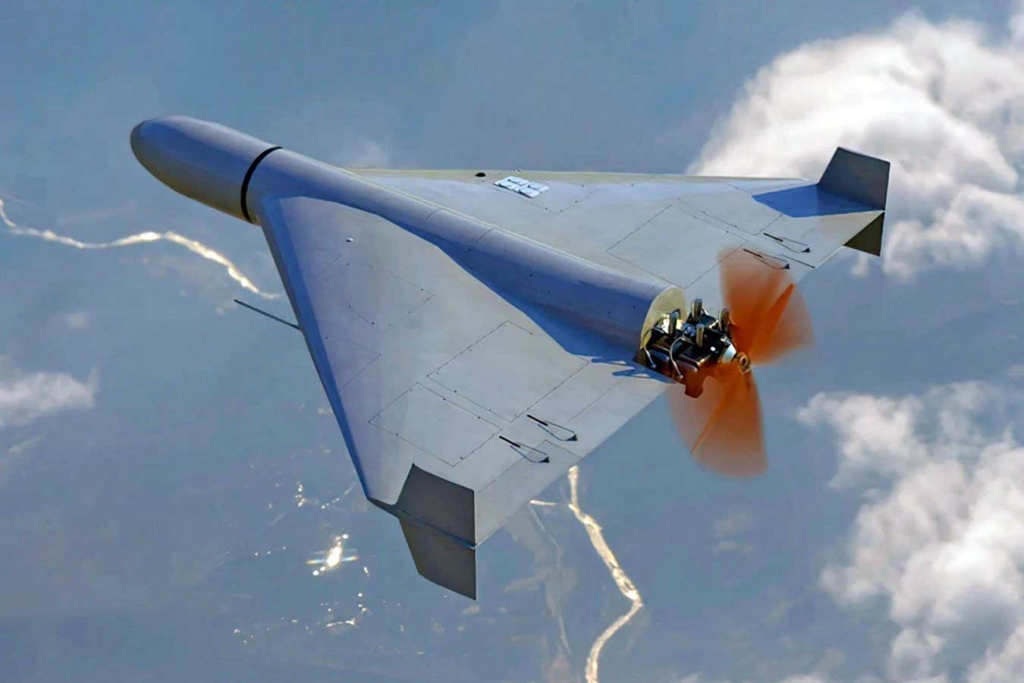
The Shahed 136: How a $50,000 Iranian Drone Is Redefining Modern Warfare
In a stunning twist of military irony, the United States has deployed a reverse-engineered version of an Iranian-designed drone against its creators in combat—marking a bizarre new chapter in asymmetric warfare. The Shahed 136, originally developed by Iran’s Shahed Aviation Industries, has become the unlikely centerpiece of a global drone arms race that’s rewriting the economics of conflict.
The Humble Origins of a Game-Changing Weapon
The Shahed 136 is deceptively simple: just 2.6 meters long, powered by a motorcycle engine, and capable of carrying 15-kilogram payloads over 2,500 kilometers at a modest 185 km/h. But here’s the kicker—it costs as little as $50,000 per unit. That’s not just cheap; it’s revolutionary.
“It’s essentially a modern doodlebug,” explains Anthony King, a military technology expert at the University of Exeter. The comparison to Nazi Germany’s V-1 flying bombs isn’t casual—both weapons share the same fundamental philosophy: overwhelming an enemy through sheer numbers rather than sophistication.
The Economics of Annihilation
What makes the Shahed truly terrifying is its economic asymmetry. When Russia fires hundreds of these drones at Ukrainian targets daily, defending against them becomes prohibitively expensive. Each Shahed requires sophisticated air defense systems—Patriot missiles, fighter jets, interceptor drones—that can cost millions per engagement.
“You’re knocking them out of the sky with ordnance that’s way more expensive,” King notes. “Sometimes it’s more expensive than the thing that the Shahed is actually hitting.” This creates a vicious cycle where defending against cheap attacks drains resources faster than the attackers can spend them.
From Iran to the High Seas
The drone’s journey from Iranian innovation to American weapon is a masterclass in military adaptation. After capturing units from Iranian-backed militias in Iraq and Syria, the U.S. military reverse-engineered the design, producing the Low-cost Uncrewed Combat Attack System (LUCAS), also known as the FLM 136—a clear nod to its Iranian predecessor.
In a historic first, LUCAS was deployed from a U.S. Navy ship against Iranian targets, meaning Iran’s own technology is now being used to attack Iran. The irony isn’t lost on military analysts.
A Cold War Ghost Returns
Here’s where it gets even more interesting: the Shahed 136 might itself be a copy. In the 1980s, a joint U.S.-German project created the Die Drohne Antiradar (“the anti-radar drone”), designed to strike Soviet radar stations or protect other aircraft by drawing fire. The resemblance to the Shahed is striking, suggesting Iran may have reverse-engineered a reverse-engineered weapon.
The New Calculus of War
Ian Muirhead, a military veteran and researcher at the University of Manchester, puts it bluntly: “If it costs you 10 times more for your defense than it is for your attackers, you’re never going to be able to outpace the other side.”
This economic reality is driving Western militaries to adopt similar weapons. “A lot of modern weapons are extremely complex and expensive,” Muirhead explains. “If you’re having large-scale conflicts like this, having lots of cheap, expendable weapons—particularly if you don’t have big armies anymore—is more effective.”
Why This Matters
The Shahed 136 represents more than just another weapon system. It’s a fundamental shift in how wars are fought and won. Traditional military thinking emphasized quality over quantity, but the drone revolution is flipping that equation.
In conflicts from Ukraine to Yemen, where Houthi forces have deployed Shaheds against Saudi targets, we’re seeing the emergence of a new doctrine: swarm warfare. The goal isn’t to create perfect weapons but to create enough imperfect ones that defenses crumble under the weight of numbers.
The Future of Conflict
As Western militaries study the war in Ukraine and adopt similar technologies, we’re likely to see an explosion of cheap, expendable drones across all domains—land, sea, air, and even space. The age of the $50,000 drone that can take down a $3 million missile system is just beginning.
The Shahed 136’s journey—from Iranian design to Russian weapon to American countermeasure—illustrates a broader truth about modern warfare: in an era of economic constraints and technological diffusion, sometimes the simplest solutions are the most effective. And sometimes, your own weapons come back to haunt you.
Tags: drone warfare, asymmetric warfare, military technology, Shahed 136, LUCAS, Iran-US conflict, Ukraine war, cheap drones, swarm tactics, military economics, reverse engineering, V-1 flying bomb, Houthi rebels, air defense, expendable weapons, modern warfare, Spektreworks, Shahed Aviation Industries, Die Drohne Antiradar, doodlebug, Patriot missiles, expendable ordnance, military innovation, Gulf conflict, Yemen conflict, Russian military, Ukrainian defense, naval warfare, missile defense, warfare economics
Viral Phrases: “$50,000 game-changer,” “the drone that’s rewriting war,” “Iran’s weapon comes home to haunt it,” “cheap drones vs expensive missiles,” “the economics of annihilation,” “swarm warfare revolution,” “reverse-engineered revenge,” “the doodlebug returns,” “overwhelm the defenses,” “military irony at its finest,” “the $3 million problem,” “quantity over quality,” “the drone that changed everything,” “from Iran to America and back again,” “the weapon that costs less than your coffee,” “warfare’s great equalizer,” “the math of modern conflict,” “when your own tech turns against you,” “the future is cheap and expendable,” “the Shahed effect”
,


Leave a Reply
Want to join the discussion?Feel free to contribute!