
Why would Elon Musk pivot from Mars to the Moon all of a sudden?
SpaceX Abandons Mars Dream: Elon Musk Shifts Focus to Building a “Self-Growing” Lunar City in Less Than a Decade
In a stunning pivot that sent shockwaves through the aerospace and tech communities, SpaceX founder Elon Musk revealed late Sunday evening that the company is abandoning its long-held goal of Mars settlement in favor of constructing a “self-growing” city on the Moon—potentially achievable within the next decade.
While over 120 million viewers tuned in for Super Bowl kickoff, Musk took to his social platform X to drop what may be the most consequential announcement in SpaceX’s 25-year history. “For those unaware, SpaceX has already shifted focus to building a self-growing city on the Moon, as we can potentially achieve that in less than 10 years, whereas Mars would take 20+ years,” Musk wrote, effectively rewriting the company’s founding mission statement.
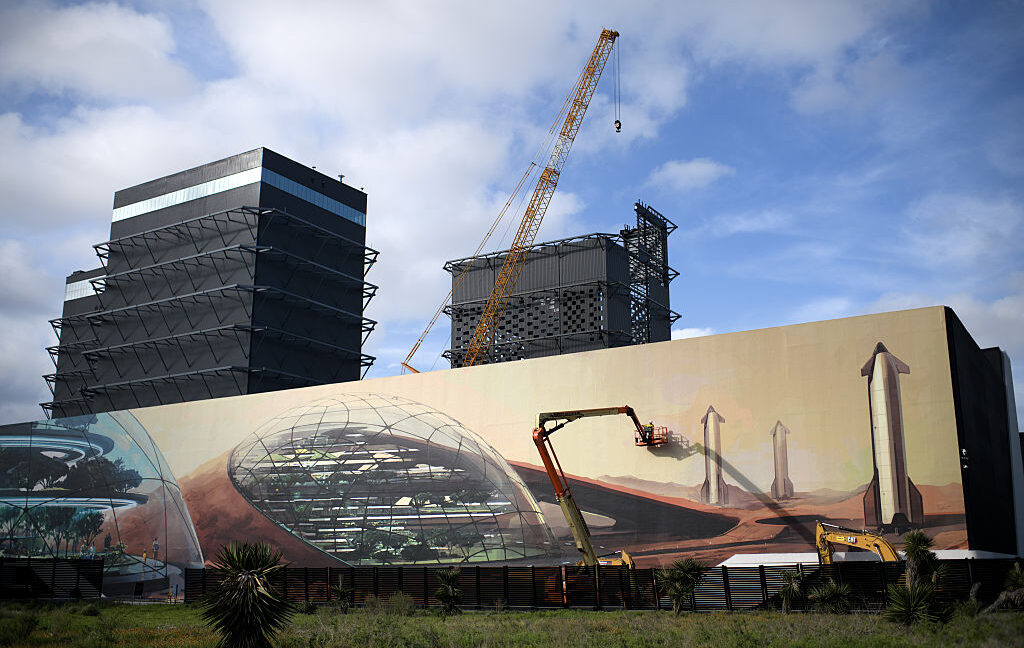
The announcement represents a seismic shift for a company that was literally built on the promise of Mars colonization. When Musk founded SpaceX in 2002, the company’s mission was unambiguous: make humanity a multi-planetary species by establishing a permanent settlement on Mars. The vision was so central to SpaceX’s identity that even the carpet in Musk’s executive conference room at the company’s Texas Starship factory is rust red—matching the surface of the red planet itself.
Gwynne Shotwell, SpaceX’s president and chief operating officer, described her first interview with Musk in 2002 as “borderline messianic.” She recalled Musk speaking passionately about his “Mars Oasis” project, explaining that he wanted to demonstrate that life on Mars was achievable and that humanity needed to go there. That vision remained unchanged for two and a half decades, through SpaceX’s transformation from an obscure startup to the world’s most valuable private company.
The Practical Calculus Behind the Pivot
Musk’s decision, while jarring to longtime followers, reflects a pragmatic assessment of technological and logistical realities. The Moon’s proximity—just three days away compared to Mars’s six to nine months—makes it a far more accessible target for establishing humanity’s first off-world settlement. The reduced distance also means faster emergency response times, easier resupply missions, and significantly lower costs.
A lunar city could potentially leverage resources like water ice discovered in permanently shadowed craters at the Moon’s poles, which could be converted into drinking water, oxygen, and even rocket fuel. The Moon’s lower gravity (about one-sixth of Earth’s) would also make launching spacecraft from its surface more energy-efficient than from Earth.
Mars Settlement Still on the Horizon
Despite the shift in immediate priorities, Musk emphasized that Mars remains in SpaceX’s long-term plans. The 20+ year timeline for Mars settlement reflects the enormous challenges involved: longer travel times, more complex life support systems, greater radiation exposure, and the need for more advanced terraforming technologies.
SpaceX’s Starship vehicle, currently under active development and testing at the company’s Texas facility, is being designed to serve both lunar and Martian missions. The massive stainless-steel rocket, which has already demonstrated multiple successful test flights, could potentially transport hundreds of tons of cargo—or dozens of passengers—to either destination.
Industry Reactions and Implications
The announcement has sparked intense debate within the aerospace community. Some experts view the lunar pivot as a sensible stepping stone, arguing that mastering off-world living on the Moon would provide invaluable experience for eventual Mars colonization. Others worry that abandoning the Mars focus could slow technological development needed for the more challenging mission.
NASA, which has its own Artemis program aiming to return humans to the Moon, may find itself with an unexpected ally in SpaceX. The company’s shift could accelerate lunar development efforts and potentially reduce costs through commercial competition and innovation.
What “Self-Growing” Actually Means
Musk’s concept of a “self-growing” city suggests an ambitious vision where the lunar settlement would develop its own industrial capacity, agricultural systems, and population growth independent of Earth. This would require breakthroughs in closed-loop life support, in-situ resource utilization, and autonomous construction technologies.
The timeline—less than 10 years—is extraordinarily aggressive by space industry standards. It would require not just successful Starship development and testing, but also the creation of entirely new technologies for lunar mining, manufacturing, and habitat construction.
The End of an Era?
For those who have followed SpaceX’s journey from its earliest days, the announcement marks the end of a defining chapter. The company that was founded to make Mars settlement possible is now betting on the Moon as the more achievable near-term goal. Whether this represents a temporary tactical shift or a permanent strategic realignment remains to be seen.
What’s certain is that humanity’s expansion into space has just entered a new and unpredictable phase. With SpaceX’s resources, technological capabilities, and Musk’s track record of defying conventional timelines, the dream of a lunar city—once the realm of science fiction—may be closer to reality than anyone imagined possible.
SpaceX #ElonMusk #Mars #Moon #LunarCity #SpaceExploration #SpaceXNews #NASA #Artemis #Starship #MultiPlanetary #SpaceTech #FutureOfSpace #ElonTweets #SpaceRace #MoonColony #MarsColony #SpaceIndustry #Aerospace #Innovation #Technology #Science #SpaceNews #BreakingNews #SpaceXLaunch #LunarSettlement #SelfGrowingCity #SpaceSettlement #SpaceDevelopment #SpaceEconomy #MoonMission #MarsMission #SpaceFrontier #SpaceAge #SpaceFuture #SpaceVision #SpaceGoals #SpaceDreams #SpaceReality #SpacePossibility #SpaceAchievement #SpaceMilestone #SpaceHistory #SpaceLegacy #SpaceFutureNow #SpaceNow #SpaceToday #SpaceTomorrow #SpaceForever
,

Leave a Reply
Want to join the discussion?Feel free to contribute!