
Why You Shouldn’t Buy the Next MacBook Pro
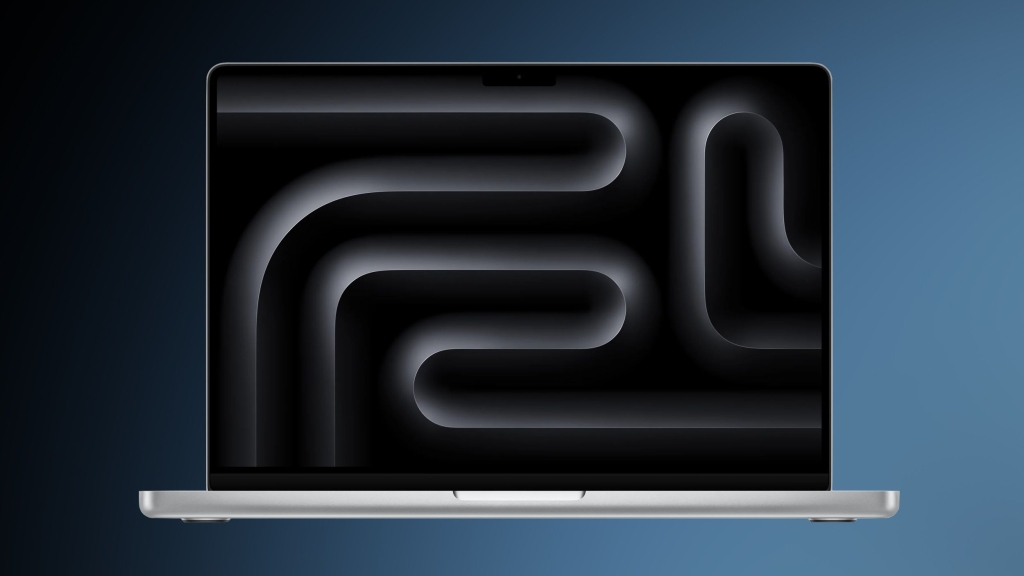
The MacBook Pro Dilemma: Why You Should Hold Off on the M5 and Wait for the Game-Changing OLED Revolution
Apple’s product release calendar has always been a carefully orchestrated dance of innovation and timing, but 2026 is shaping up to be one of the most unusual years in recent Mac history. With rumors swirling about not one, but two major MacBook Pro updates coming this year, consumers are facing a critical decision that could significantly impact their computing experience and wallet for years to come.
The Spring Surprise: M5 Pro and M5 Max
According to multiple industry sources, Apple is preparing to launch new 14-inch and 16-inch MacBook Pro models featuring the next-generation M5 Pro and M5 Max chips as early as March 2026. On paper, these machines promise substantial performance improvements over their predecessors, with enhanced CPU and GPU capabilities that would satisfy even the most demanding creative professionals and power users.
However, here’s where the plot thickens. These M5-powered MacBook Pros are expected to be evolutionary rather than revolutionary. The design language will remain largely unchanged, the display technology will stay the same, and the overall form factor will be virtually identical to current models. Essentially, we’re looking at a processor bump with minimal other changes – a classic “tick” in Apple’s traditional “tick-tock” innovation cycle.
The Real Game-Changer: OLED MacBook Pros Arriving Later in 2026
This is where things get genuinely exciting. Industry analysts and supply chain insiders are reporting that Apple has something much more ambitious planned for the latter half of 2026. The company is reportedly preparing to launch the first-ever OLED MacBook Pro models, and these machines are expected to represent the most significant leap forward for Apple’s laptop lineup since the transition to Apple Silicon in 2020.
The OLED MacBook Pros are rumored to feature:
Revolutionary Display Technology: Moving from traditional LCD to OLED represents a quantum leap in display quality. OLED panels offer perfect blacks, infinite contrast ratios, wider color gamuts, and potentially higher refresh rates. For creative professionals working in photography, video editing, and graphic design, this could be transformative.
Design Refresh: Apple is expected to introduce subtle but meaningful design updates to complement the new display technology. While we don’t have concrete details yet, Apple typically uses major internal upgrades as opportunities to refine the external aesthetics as well.
M6 Chip Architecture: The OLED models will reportedly debut Apple’s 2-nanometer chip technology, representing a significant advancement in semiconductor manufacturing. This could translate to even better performance-per-watt ratios, potentially offering laptop-class performance with unprecedented battery life.
Touch Screen Capabilities: Perhaps the most surprising rumor is that Apple is finally bringing touch screen functionality to the MacBook Pro lineup. This marks a dramatic shift in Apple’s long-standing position against touch-enabled Macs, a stance that executives like Phil Schiller defended for years. The integration of touch capabilities could fundamentally change how users interact with macOS, blending traditional mouse and keyboard input with direct touch manipulation.
Cellular Connectivity: In another first for the Mac lineup, these OLED MacBook Pros might include built-in cellular capabilities. This would allow users to stay connected without relying on Wi-Fi networks, similar to how iPads with cellular connectivity function today.
The Strategic Implications for Consumers
This dual-release strategy presents a fascinating dilemma for potential MacBook Pro buyers. The M5 models arriving in spring will undoubtedly be capable machines, but they risk becoming obsolete much faster than usual, given the transformative nature of the OLED models expected later in the year.
For users who need a new MacBook Pro immediately and cannot wait, the M5 models will still represent significant performance improvements over current options. However, for those who can exercise patience, waiting for the OLED models could provide substantially more value and future-proofing.
Market Context and Historical Precedent
Apple has occasionally released multiple MacBook Pro updates within a single year, though it’s relatively uncommon. The most recent example was in 2023, when Apple introduced M2 Pro and M2 Max models in January, followed by M3 Pro and M3 Max versions in October. However, the scale of changes expected between the M5 and OLED models in 2026 appears to be much more significant than the typical annual refresh cycle.
The timing also aligns with Apple’s broader strategy of gradually introducing OLED technology across its product lineup. The iPhone has used OLED displays since the iPhone X in 2017, and the iPad Pro received OLED treatment in 2024. The MacBook Pro represents the natural next step in this technological progression.
Pricing Considerations and Market Segmentation
One crucial factor to consider is pricing. OLED technology, while increasingly common in smartphones and tablets, remains more expensive to produce at laptop scales. Industry analysts suggest that the OLED MacBook Pros could command a significant premium over their LCD counterparts – potentially $300 to $500 more depending on the configuration.
This pricing dynamic may result in OLED technology being limited to the higher-end 14-inch and 16-inch models, while the standard 13-inch MacBook Pro continues with LCD technology for the foreseeable future. Even within the larger models, there’s speculation that OLED might initially be limited to the most expensive configurations due to cost constraints.
The Bottom Line: Patience Pays Off
For most consumers, especially those considering high-end MacBook Pro models, the calculus strongly favors waiting for the OLED models. The combination of display technology advancement, potential touch capabilities, 2-nanometer chip architecture, and possible cellular connectivity represents too significant an upgrade cycle to ignore.
The only scenarios where purchasing an M5 model makes sense would be for users who need immediate replacement of a failed machine, those who don’t require the advanced features of the OLED models, or educational institutions and businesses that need to standardize on current technology for deployment purposes.
As we move through 2026, the technology landscape will become clearer, and Apple will likely provide more concrete details about both product cycles. Until then, the smart money is on exercising patience and preparing for what could be the most exciting MacBook Pro generation in years.
Tags and Viral Phrases:
- MacBook Pro 2026
- OLED MacBook Pro
- M6 chip Apple
- Touch screen Mac
- Apple 2nm processor
- MacBook Pro cellular
- Apple OLED laptop
- M5 vs M6 MacBook
- MacBook Pro redesign 2026
- Apple touch screen Mac
- MacBook Pro buying guide
- Apple Silicon 2026
- MacBook Pro OLED rumors
- Apple laptop revolution
- MacBook Pro spring 2026
- Apple MacBook Pro 2026
- OLED display MacBook
- MacBook Pro M6 chip
- Apple touch Mac 2026
- MacBook Pro technology 2026
- Apple laptop innovation
- MacBook Pro future features
- Apple 2026 product lineup
- MacBook Pro display upgrade
- Apple Silicon evolution
- MacBook Pro premium features
- Apple laptop cellular
- MacBook Pro next generation
- Apple display technology
- MacBook Pro performance 2026
,


Leave a Reply
Want to join the discussion?Feel free to contribute!