
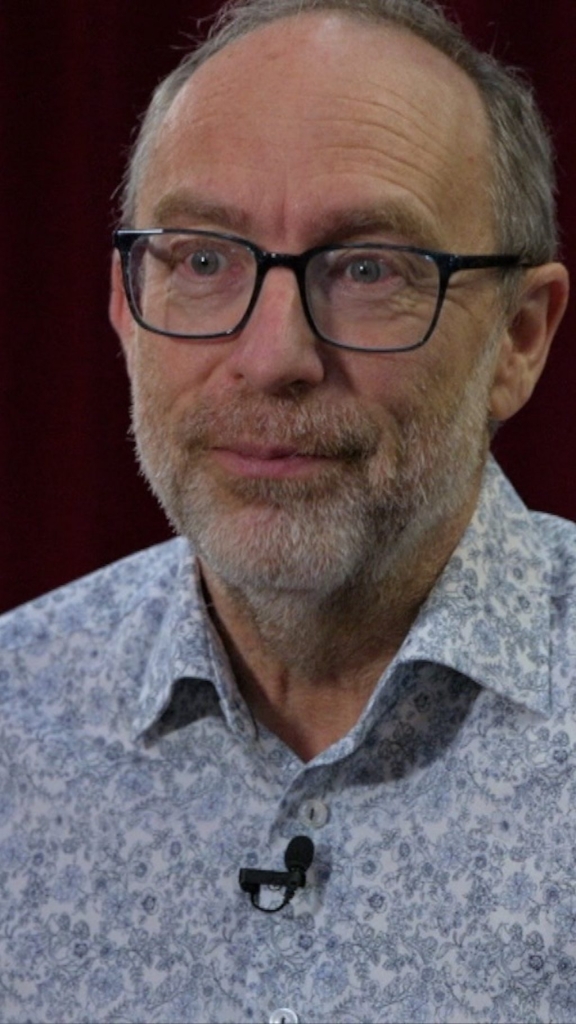
Wikipedia's Jimmy Wales on where the name comes from
Wikipedia Turns 25: A Quarter-Century of Democratizing Knowledge and Shaping the Digital Age
As the clock struck midnight on January 15, 2025, Wikipedia, the world’s largest free online encyclopedia, celebrated its 25th anniversary. What began as a bold experiment in collaborative knowledge-sharing has grown into a global phenomenon, with over 60 million articles in more than 300 languages and billions of page views every month. To mark this milestone, the BBC sat down with Jimmy Wales, the site’s co-founder, to reflect on Wikipedia’s journey, its impact on the internet, and the challenges it faces in an era of misinformation and artificial intelligence.
A Vision Born in the Early Days of the Internet
In 2001, the internet was still in its infancy, and the idea of a free, user-generated encyclopedia seemed almost utopian. Wales, along with Larry Sanger, launched Wikipedia with the mission of making knowledge accessible to everyone, everywhere. “The idea was simple: empower people to share what they know,” Wales told the BBC. “We wanted to create a platform where anyone could contribute, and anyone could learn.”
At the time, traditional encyclopedias like Encyclopædia Britannica were the gold standard, but they were expensive, static, and limited in scope. Wikipedia, by contrast, was dynamic, free, and open to contributions from anyone with an internet connection. This radical approach quickly gained traction, and within a few years, Wikipedia had become a go-to resource for millions of users worldwide.
The Power of Collaboration
One of Wikipedia’s defining features is its reliance on volunteer editors, known as Wikipedians, who contribute their time and expertise to create and maintain articles. Today, there are over 300,000 active editors worldwide, each playing a crucial role in ensuring the accuracy and reliability of the platform. “It’s a testament to the power of collaboration,” Wales said. “People from all walks of life come together to build something greater than themselves.”
However, this collaborative model hasn’t been without its challenges. Wikipedia has faced criticism over the years for issues like vandalism, bias, and the occasional inaccuracy. To address these concerns, the platform has implemented strict editorial guidelines, citation requirements, and a robust system of checks and balances. “We’ve learned a lot over the years,” Wales admitted. “But at its core, Wikipedia remains a community-driven project, and that’s what makes it so special.”
Wikipedia in the Age of Misinformation
As the internet has evolved, so too have the challenges facing Wikipedia. The rise of misinformation, fake news, and deepfakes has made it more important than ever for platforms like Wikipedia to uphold the highest standards of accuracy. “We take this responsibility very seriously,” Wales emphasized. “In a world where misinformation spreads like wildfire, Wikipedia is a beacon of truth.”
To combat misinformation, Wikipedia has doubled down on its commitment to reliable sourcing. Articles must be backed by credible references, and editors are encouraged to flag any content that appears dubious. Additionally, Wikipedia has partnered with organizations like the Wikimedia Foundation to promote media literacy and critical thinking among its users.
The Role of AI in Wikipedia’s Future
As artificial intelligence continues to reshape the digital landscape, Wikipedia is exploring ways to harness this technology to enhance its platform. From automated fact-checking to AI-powered translation tools, the possibilities are endless. “AI has the potential to revolutionize how we create and consume knowledge,” Wales said. “But it’s important to remember that AI is a tool, not a replacement for human judgment.”
One area where AI is already making a difference is in the fight against vandalism. Wikipedia’s automated systems can now detect and revert malicious edits in real time, ensuring that the platform remains a reliable source of information. Looking ahead, Wales envisions a future where AI and human editors work hand in hand to create an even more robust and inclusive encyclopedia.
A Global Impact
Over the past 25 years, Wikipedia has had a profound impact on the way we access and share knowledge. From students and researchers to journalists and policymakers, millions of people rely on Wikipedia every day. “It’s incredible to think about how far we’ve come,” Wales reflected. “What started as a small project has grown into a global movement.”
Wikipedia’s influence extends beyond the digital realm. In many parts of the world, it has become a lifeline for those without access to traditional educational resources. For example, in regions with limited internet connectivity, Wikipedia’s offline apps and partnerships with local organizations have brought knowledge to millions who might otherwise be left behind.
Looking Ahead: The Next 25 Years
As Wikipedia enters its next quarter-century, the challenges and opportunities are as vast as the knowledge it seeks to catalog. From expanding its reach in underserved communities to adapting to the rapid pace of technological change, the platform has its work cut out for it. But if there’s one thing that’s clear, it’s that Wikipedia’s mission remains as relevant as ever.
“The internet has changed a lot since 2001, but the core idea of Wikipedia hasn’t,” Wales said. “We’re here to make knowledge free and accessible to everyone. And as long as there are people who believe in that mission, Wikipedia will continue to thrive.”
Tags and Viral Phrases:
Wikipedia 25th anniversary, Jimmy Wales interview, democratizing knowledge, collaborative encyclopedia, free online encyclopedia, global knowledge-sharing, Wikipedia editors, combating misinformation, AI in Wikipedia, automated fact-checking, Wikipedia’s impact, Wikimedia Foundation, media literacy, Wikipedia’s future, next 25 years, Wikipedia’s mission, free knowledge for all, Wikipedia’s global reach, Wikipedia’s challenges, Wikipedia’s success story, Wikipedia’s influence, Wikipedia’s community, Wikipedia’s reliability, Wikipedia’s growth, Wikipedia’s legacy.
,


Leave a Reply
Want to join the discussion?Feel free to contribute!